Decoding 5G+: The Next-Gen Mobile Leap Beyond Standard 5G Speeds
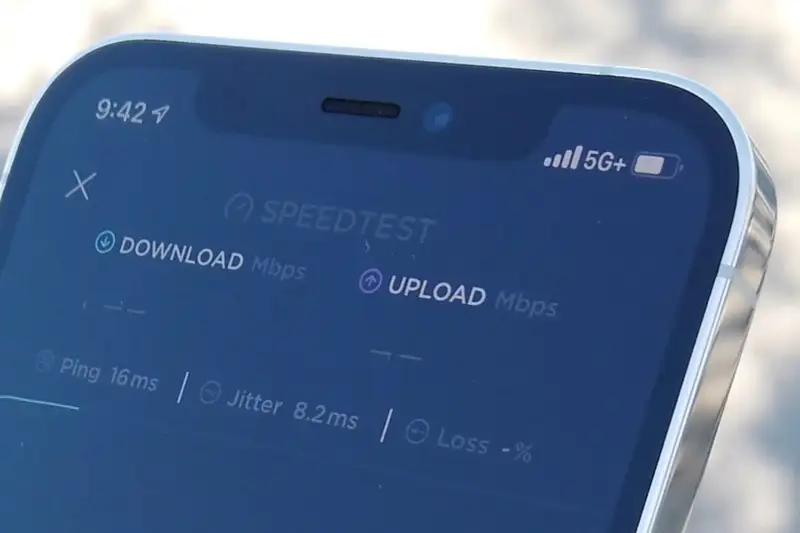
- The '5G+' symbol signifies a connection to an advanced, standalone (SA) 5G network, often leveraging millimeter-wave (mmWave) technology for superior performance.
- This next-gen network delivers significantly faster speeds, potentially up to 3 Gbps, which is triple that of conventional 5G, alongside enhanced stability and throughput.
- Unlike initial 5G which relied on 4G infrastructure, 5G+ operates on an independent 5G core, enabling full 5G capabilities like ultra-low latency and higher capacity.
- While offering unparalleled performance, 5G+ (especially mmWave) has a more limited coverage range due to the propagation characteristics of high-frequency spectrum.
Imagine navigating your city streets when suddenly, a '5G+' symbol illuminates on your smartphone's status bar. For many, this momentary flash might seem like a minor interface update, but for those in the know, it signals access to a significant advancement in mobile connectivity – a peek into the true potential of fifth-generation wireless technology. This '+' isn't just a marketing gimmick; it denotes a superior network experience, distinct from the broader 5G rollout that has become increasingly common worldwide.
Quick summary
- The '5G+' symbol indicates connection to a next-generation, standalone (SA) 5G network, often employing millimeter-wave (mmWave) technology.
- This advanced connectivity offers significantly faster download speeds, potentially reaching up to 3 Gbps, tripling the performance of conventional 5G.
- 5G+ networks are designed for enhanced stability and higher throughput, even during peak usage times, due to their independent infrastructure.
- While offering superior performance, 5G+ (especially mmWave) has a more limited coverage range, requiring proximity to dedicated transmission points.
Why it matters
The distinction between standard 5G and 5G+ is more than just a speed bump; it represents a fundamental shift in what mobile networks can deliver. For consumers, this translates into unprecedented speed for downloads, ultra-smooth streaming of high-resolution content, and virtually lag-free experiences in cloud gaming or augmented reality applications. Imagine downloading a full-length high-definition movie in mere seconds, or participating in a video conference with zero interruptions even in a crowded urban environment. This enhanced capacity and reliability transform everyday digital interactions.
Beyond individual users, the implications for various industries are profound. Sectors like manufacturing can leverage 5G+ for real-time control of robotic systems and industrial IoT devices, enabling smarter factories. Healthcare could see advancements in remote surgery and high-fidelity telemedicine. Autonomous vehicles, which require instantaneous data exchange for safety and navigation, will benefit immensely from the ultra-low latency and high bandwidth of true 5G. The robust and predictable performance of 5G+ fosters innovation across the board, supporting critical applications that demand unwavering connectivity and immense data throughput.
Background
The journey to advanced mobile connectivity has been a gradual evolution. Prior to the full realization of 5G, the world relied heavily on 4G LTE, a robust network that brought high-speed mobile internet to the masses. The initial rollout of 5G, often referred to as Non-Standalone (NSA) 5G, still depended on this existing 4G LTE core infrastructure. While it offered incremental speed improvements over 4G, it couldn't fully unlock 5G's true potential in terms of ultra-low latency and massive machine-type communications.
The transition to Standalone (SA) 5G marks a pivotal moment. Unlike its NSA predecessor, SA 5G operates with its own dedicated 5G core network, decoupling it entirely from 4G infrastructure. This independent architecture is crucial for delivering the full promise of 5G, including network slicing, edge computing, and truly transformative speeds. The '5G+' symbol, particularly as seen with carriers like AT&T in the United States, often signifies this move towards SA 5G, specifically leveraging millimeter-wave (mmWave) spectrum.
mmWave frequencies, operating in the high-band spectrum (e.g., 24 GHz to 100 GHz), offer enormous bandwidth, enabling multi-gigabit speeds. However, these waves have a much shorter range and are more susceptible to physical obstructions like buildings and even foliage, compared to lower frequency bands. This characteristic necessitates a dense deployment of small cells to achieve effective coverage. In contrast, standard 5G can operate on low-band (wide coverage, lower speed) and mid-band (balanced coverage and speed) spectrums, which offer broader geographical reach but typically do not achieve the peak speeds of mmWave. The global deployment of 5G, including in countries like Vietnam, is progressively moving towards a hybrid model, balancing wide area coverage with targeted high-speed zones.
Qnews24h insight
The emergence of the '5G+' designation highlights a critical, often confusing, reality in the global 5G rollout: not all 5G is created equal. While widespread 5G coverage has become a key selling point for mobile carriers, the underlying technology and user experience can vary dramatically. This fragmentation poses both a marketing challenge for operators and a potential source of confusion for consumers, who might expect uniform performance across all '5G' connections.
From an editorial perspective, the strategic imperative for telecommunications companies is clear: to evolve beyond initial 5G deployments and invest heavily in standalone 5G core networks and millimeter-wave infrastructure where it makes economic sense. This targeted deployment of 5G+ capabilities, despite its geographical limitations, is crucial for showcasing the cutting-edge potential of the technology and catering to demanding enterprise and urban applications. The current landscape suggests a future where users will experience a tiered 5G service – ubiquitous, reliable mid-band 5G for general use, complemented by pockets of ultra-fast 5G+ for specific high-density areas or critical industrial applications. This nuanced approach will define the competitive edge for carriers and the future of digital innovation.
Sources
Understanding 5G+ and Its Impact
What makes 5G+ different from standard 5G?
The primary difference lies in the underlying network architecture and the spectrum used. Standard 5G initially rolled out as Non-Standalone (NSA) 5G, which still relied on existing 4G LTE infrastructure. 5G+, however, typically refers to Standalone (SA) 5G, operating on its own dedicated 5G core, and often leverages millimeter-wave (mmWave) spectrum. This independent infrastructure and high-frequency spectrum enable significantly faster speeds, lower latency, and greater stability compared to early 5G deployments.
What kind of speeds can I expect with 5G+?
With 5G+, particularly when utilizing mmWave technology, users can expect theoretical download speeds that can reach up to 3 gigabits per second (Gbps). This is a substantial leap from standard 5G, which typically offers speeds around 1 Gbps or less, though actual speeds will always vary based on network congestion, signal strength, device capabilities, and location.
Where is 5G+ available, and how can I access it?
5G+ is not as widely available as standard 5G. Its availability is concentrated in specific urban areas, dense public venues, and particular locations where carriers have deployed the necessary mmWave infrastructure. To access 5G+, your smartphone must support mmWave technology, and you need to be within the coverage area of a 5G+ base station. Carriers often indicate 5G+ zones through specific symbols on your phone's status bar or via their coverage maps.
What are the limitations of 5G+?
The main limitation of 5G+ using mmWave is its shorter range and susceptibility to obstructions. Millimeter-waves have difficulty penetrating walls, windows, and even leaves, meaning coverage can be spotty and requires a high density of small cell towers to provide consistent service. This makes widespread deployment more challenging and costly than lower-band 5G, leading to its more localized availability.
Why it matters
The advent of 5G+ is a pivotal moment for mobile connectivity, fundamentally altering user experiences and industrial capabilities. For consumers, it means truly instantaneous downloads, seamless ultra-HD streaming, and robust performance for demanding applications like cloud gaming and augmented reality, even in high-traffic areas. For businesses and industries, 5G+ unlocks transformative potential for IoT, smart cities, autonomous systems, and advanced enterprise solutions, driving efficiency and innovation through its low latency and massive bandwidth. Its targeted deployment underscores a future where connectivity is tailored to specific, high-demand needs, pushing the boundaries of...
Background
The evolution of mobile technology saw 4G LTE as a dominant force before the introduction of 5G. Early 5G implementations, known as Non-Standalone (NSA) 5G, were a stepping stone, leveraging existing 4G core networks while introducing 5G radio access technology. This approach provided incremental speed boosts but couldn't unlock 5G's full promise. The crucial shift came with Standalone (SA) 5G, which operates on a completely independent 5G core network, paving the way for truly advanced features. The '5G+' symbol often denotes this SA 5G, particularly when coupled with millimeter-wave (mmWave) spectrum. mmWave, characterized by its high-frequency bands, delivers immense bandwidth and...
The '5G+' distinction reveals a growing stratification within the global 5G landscape, moving beyond a monolithic perception of fifth-generation connectivity. This technological differentiation presents a dual challenge for mobile operators: how to effectively market diverse 5G offerings without confusing consumers, and how to strategically invest in high-cost mmWave infrastructure in a way that maximizes return on investment. The insight here is that the future of 5G will likely involve a multi-layered approach: widespread, reliable mid-band 5G for general consumption, complemented by hyper-dense pockets of ultra-fast 5G+ (mmWave) in critical urban centers and industrial zones. This...
References
Editorial information
The editorial team reviews sources, adds context, and structures stories so readers can understand the news more clearly.
Article from QNEWS24H
Comments
(0)No comments yet. Be the first to share your thoughts.