Crunchyroll Draws the Line: No AI Subs or Dubs, But Creators Can Choose Their Own Tech
- Crunchyroll CEO Rahul Purini confirmed the company does not intend to use generative AI for its own subtitling or dubbing workflows, prioritizing creative authenticity and human...
- The streaming platform will not restrict or police Japanese creators and animation studios from using whatever technology they deem appropriate, including AI, during the actual...
- The firm stance follows a series of shifting public comments from leadership, as well as an embarrassing Spring 2025 incident where a third-party vendor leaked obvious...
The global anime boom has turned international localization into a high-stakes race against the clock. With millions of fans demanding instantaneous, high-quality translations of Japanese broadcasts, streaming platforms face immense pressure to scale their operations without alienating their highly vocal core audiences. In this rapidly shifting landscape, Crunchyroll has officially staked its position in the ongoing debate over generative artificial intelligence. By drawing a clear boundary between internal distribution efforts and the broader creative production pipeline, the company seeks to protect artistic intent while acknowledging the technological evolution occurring at the studio level.
Quick summary
- No AI in Local Translation: Crunchyroll CEO Rahul Purini confirmed the company does not intend to use generative AI for its own subtitling or dubbing workflows, prioritizing creative authenticity and human performance.
- Autonomy for Creators: The streaming platform will not restrict or police Japanese creators and animation studios from using whatever technology they deem appropriate, including AI, during the actual animation production phase.
- A History of Mixed Signals: This absolute stance follows a series of shifting public comments from leadership, as well as an embarrassing Spring 2025 incident where a third-party vendor leaked obvious ChatGPT-generated subtitles onto the platform.
Why it matters
The distinction between localization and production is a critical compromise for the anime industry. For localization professionals—including voice actors, translators, and adapters—Crunchyroll's rejection of AI dubbing and subtitling offers a sigh of relief. This decision stands in stark contrast to other industry giants, such as Amazon, which have actively pursued automated AI dubbing solutions despite receiving heavy backlash from creative communities. By keeping humans at the center of the translation process, Crunchyroll is making a calculated bet on quality, recognizing that cultural nuance, local humor, and precise lip-syncing require a level of creative adaptation that machine learning algorithms cannot yet reliably replicate.
However, by giving Japanese animation studios a free pass to utilize AI in production, Crunchyroll avoids a highly complicated geopolitical and logistical conflict. As a major investor in Japanese anime production committees, the platform relies heavily on external partners. Attempting to audit and police the multi-layered subcontracting networks of Japanese animation studios for AI usage would be an operational nightmare. Consequently, Crunchyroll's policy protects its own brand reputation from localization controversies while allowing the technological evolution of animation production to proceed unchecked.
Background
Crunchyroll's public relationship with artificial intelligence has been far from static. In 2024, Rahul Purini told media outlets that the company was actively testing speech-to-text AI tools for subtitling and closed captioning. The goal at the time was clear: streamline the localization process to launch translated episodes as close to the Japanese television broadcast as possible. While Purini was hesitant about AI dubbing due to the creative complexities of adapting humor and timing, the door for automated translations appeared wide open.
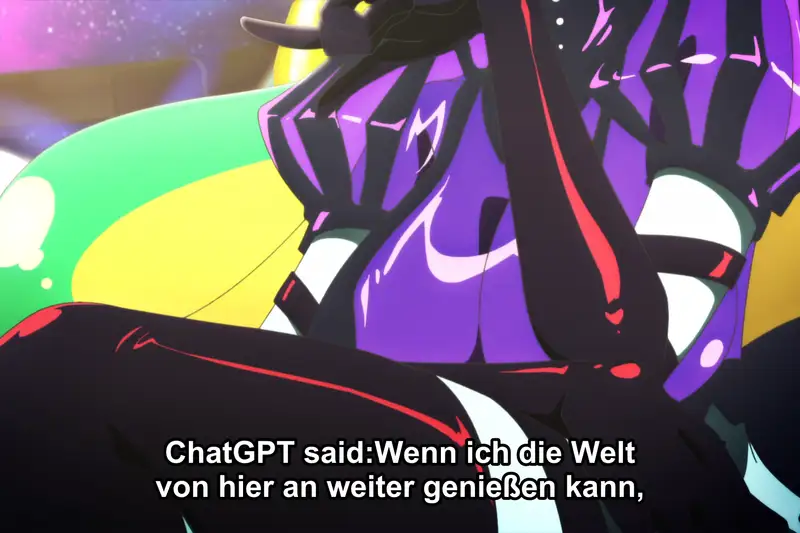
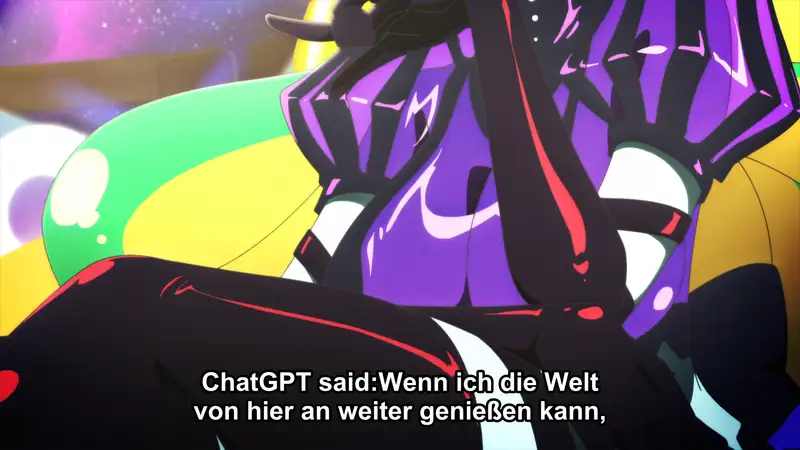
By early 2025, the narrative began to shift. In an interview with Forbes, Purini stated that the company was not considering AI in its creative processes, including voice acting, though questions regarding subtitle automation remained unanswered. This ambiguity was shattered in Spring 2025 during the streaming of Necronomico and the Cosmic Horror Show. Viewers noticed that the English subtitles featured bizarre phrasing, including the telltale error: "ChatGPT said: [...]". Crunchyroll quickly addressed the scandal, stating that the use of generative AI violated its strict agreements with third-party translation vendors and launching an internal investigation.
Adding to the complexity is Crunchyroll's corporate parentage. As a subsidiary of the Sony Group, Crunchyroll operates alongside sister companies like Aniplex, A-1 Pictures, and CloverWorks. These exact animation studios have openly developed machine learning tools to automate laborious production tasks, such as lip-syncing and frame in-betweening. This close relationship makes any outright ban on AI production tools by Crunchyroll highly impractical, as it would directly conflict with the technological initiatives of its own corporate family.
Qnews24h insight
At first glance, Crunchyroll’s decision to ban AI translation while permitting AI animation looks like a clean, ethical compromise. In reality, it is a brilliant exercise in corporate risk management. Localization is the direct interface between Crunchyroll and its global subscriber base. When a translation fails—as it did with the ChatGPT subtitle leak—the criticism falls squarely on Crunchyroll. Consumers do not blame the obscure offshore subcontractor; they blame the platform they pay for every month. By keeping localization human-centric, Crunchyroll safeguards its primary consumer touchpoint and maintains a positive relationship with western voice actors and translators who are highly organized and sensitive to technological displacement.
Conversely, the animation production pipeline is shrouded in layers of industry outsourcing. By designating animation technology as the sole domain of the "creator's intent," Crunchyroll successfully insulates itself from any ethical controversies surrounding automated art, labor exploitation in Japanese studios, or the displacement of traditional animators. It allows Sony-owned production companies to cut costs via automation under the banner of "creative choice," while Crunchyroll presents a public-facing image of human-first, authentic storytelling. It is a dual-track strategy designed to satisfy both the cost-cutting demands of corporate shareholders and the artistic sensibilities of the global anime community.
Sources
This report is based on executive interviews and corporate statements originally published by Radio Times, The Verge, Forbes, and industry reporting compiled by Anime Corner.
Frequently Asked Questions
Does Crunchyroll use AI to translate anime?
No. Under its current official policy, Crunchyroll does not use artificial intelligence for its internal subtitling, closed captioning, or dubbing workflows. However, the company does utilize machine learning and AI for back-end operations such as content recommendations, platform personalization, and search discovery.
What was the ChatGPT subtitle controversy on Crunchyroll?
In Spring 2025, during the simulcast of Necronomico and the Cosmic Horror Show, viewers discovered that the subtitles included raw system text reading "ChatGPT said: [...]". Crunchyroll clarified that the subtitles were provided by an external third-party vendor, and that using generative AI violated their active vendor agreement. The platform launched an investigation into the incident.
Is Crunchyroll banning anime studios from using AI?
No. Crunchyroll CEO Rahul Purini explicitly stated that the platform respects "creator intent" and will allow Japanese animation studios to use whatever technology they choose in the production process, which includes generative AI and machine learning automation tools.
Why it matters
This policy draws a critical line between localization (which faces intense fan scrutiny and relies heavily on cultural nuances) and production (where automation can lower costs for strained Japanese animation studios). It keeps Crunchyroll in the good graces of voice actors and localizers while avoiding a costly conflict with production committees and parent company Sony, which is actively developing AI automation tools.
Background
In 2024, Crunchyroll admitted to testing speech-to-text AI for faster subtitling to meet tight simulcast deadlines. However, a Spring 2025 incident involving the series 'Necronomico and the Cosmic Horror Show'—where a subcontractor mistakenly left 'ChatGPT said:' in the public subtitles—forced the platform to enforce strict human-only localization agreements. Meanwhile, Sony Group entities like Aniplex and CloverWorks continue to integrate automation into their animation pipelines.
Crunchyroll's strategy is a masterclass in corporate risk compartmentalization. By labeling studio-side AI as 'creator intent,' the platform avoids policing the complex, multi-tiered Japanese subcontracting system and benefits from cheaper production methods. Simultaneously, maintaining human-only localization protects its direct consumer-facing brand from translation blunders and keeps the platform insulated from western industry backlashes against automated voice acting.
References
Editorial information
The editorial team reviews sources, adds context, and structures stories so readers can understand the news more clearly.
Article from QNEWS24H
Comments
(0)No comments yet. Be the first to share your thoughts.