COMAC C919 Faces Real Test on the Ground in Global Battle with Boeing and Airbus

- COMAC operated its first commercial cross-border flight with the C919 to Ulaanbaatar, Mongolia, utilizing bilateral regulatory recognition.
- The primary challenge facing the C919 lies in ground support, manufacturing scale, and Western airworthiness certification rather than cabin design.
- China's top three carriers have flown over 7.5 million passengers across 57 domestic routes on the C919, logging more than 130,000 safe flight hours.
- Airbus order backlogs stretching past 2030 and ongoing Western supply constraints create an entry window for COMAC in emerging regional markets.
When the Commercial Aircraft Corporation of China (COMAC) dispatched its single-aisle C919 jetliner on its inaugural cross-border international service, the destination was neither London, Singapore, nor Frankfurt, but Ulaanbaatar, Mongolia. The choice of route signaled an essential truth in modern civil aviation: while Chinese engineers have built a competitive narrow-body passenger aircraft capable of delivering modern cabin comfort in the skies, the real barrier separating COMAC from Western aerospace giants Boeing and Airbus remains anchored firmly to the ground.
Quick summary
- COMAC marked a major milestone by deploying the domestically developed C919 on its first cross-border international route to Ulaanbaatar, Mongolia.
- The gap separating the C919 from Airbus and Boeing is primarily defined by production throughput, global maintenance networks, and Western regulatory approval rather than airborne passenger comfort.
- With cumulative C919 deliveries exceeding 40 units by July 2026, COMAC is scaling manufacturing while domestic carriers have already flown over 7.5 million passengers across 57 routes.
- Global supply crunches, filled Airbus order backlogs beyond 2030, and Boeing delivery headwinds provide COMAC with a tactical window to court prospective carriers in emerging markets.
Why it matters
For more than half a century, the commercial passenger aviation industry has operated as a tightly controlled Western duopoly. Airlines worldwide have had little choice outside the Boeing 737 and Airbus A320 families when planning narrow-body fleet expansion. The C919 represents the first viable third challenger to enter passenger service in decades.
Yet building a flyable commercial jet is only half the battle. International air carriers evaluate aircraft based on lifecycle reliability, on-demand spare part logistics, and cross-border regulatory certification. If COMAC can successfully overcome supply bottlenecks, expand maintenance repair and overhaul (MRO) networks, and validate its domestic CJ-1000A engine, it could permanently alter global aerospace supply chains and provide regional airlines with vital fleet alternatives.
Background
Commercial aviation manufacturing represents one of the most capital-intensive and technologically demanding sectors in global industry. For decades, Western manufacturers established an entrenched ecosystem of certified suppliers, global flight schools, and worldwide spare part distribution hubs.
China launched its mainline commercial jet program to reduce reliance on foreign transport technology. The C919 entered domestic revenue service with major Chinese carriers, steadily building operational records across tier-one and tier-two domestic routes. However, expanding beyond Chinese borders required overcoming regulatory hurdles, leading Beijing to leverage bilateral airworthiness agreements with neighboring partners such as Mongolia to establish its first international operating footprint.
The Scale Chasm: Manufacturing and Delivery Velocity
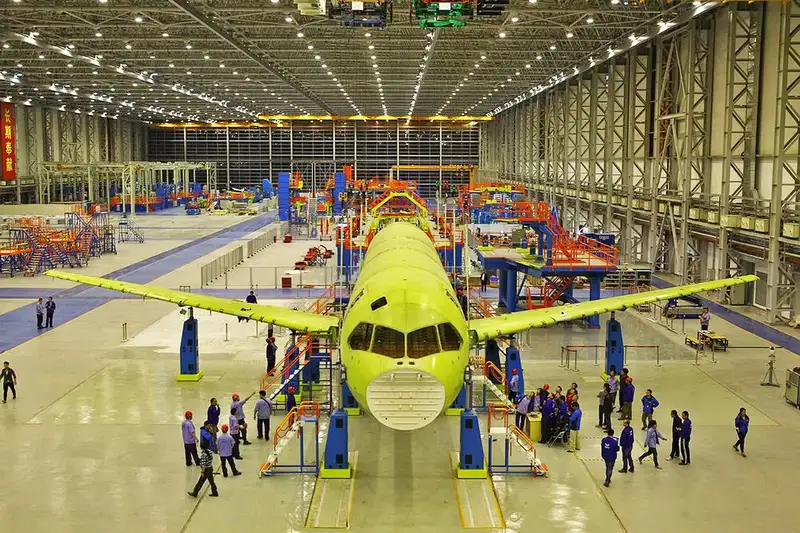
The foremost hurdle facing COMAC is the sheer disparity in production capacity. By the end of 2025, COMAC had delivered a total of 32 C919 airframes, with cumulative handovers rising past 40 aircraft by July 2026. While representing steady progress for a nascent program, these figures highlight the industrial chasm when contrasted with Western output.
In 2025 alone, Airbus delivered 793 commercial aircraft to global customers, while Boeing handed over nearly 600 jets despite ongoing supply chain constraints. For international airlines managing complex route networks, predictable multi-year delivery cadences are critical. Until COMAC can scale its assembly lines in Pudong and streamline component flow, global carriers cannot rely on the C919 for large-scale fleet replacement.
Ground Support and Maintenance: The Lifecycle Ecosystem
Beyond purchasing an airframe, an airline's operational viability depends heavily on maintenance, repair, and overhaul (MRO) support. When an aircraft encounters technical faults at an international airport, delays translate into millions of dollars in losses unless certified technicians and spare parts are immediately accessible.
Boeing and Airbus benefit from over seven decades of continuous global expansion. Both manufacturers operate hundreds of authorized maintenance stations, maintain millions of pre-positioned spare parts in global bonded warehouses, and manage comprehensive pilot and technician certification pipelines. In contrast, COMAC's overseas support ecosystem remains in its infancy, largely restricted to regional cross-border agreements and nascent logistics outposts.

The Certification Chessboard and Market Windows
Regulatory certification represents the most formidable barrier to global market penetration. Neither the US Federal Aviation Administration (FAA) nor the European Union Aviation Safety Agency (EASA) has granted type validation for the C919. Without Western validation, mainstream global flag carriers are legally unable to add the airframe to their international registries.
Consequently, COMAC's strategy relies on accumulating millions of safe operational flight hours across domestic networks and through bilateral airworthiness pacts. This accumulated real-world data serves as the foundation needed to satisfy foreign regulators over time.
Simultaneously, a rare strategic opening has emerged. Persistent manufacturing delays and technical scrutiny have hampered Boeing's delivery timelines, while Airbus's single-aisle order books are virtually sold out beyond 2030. This structural shortage has prompted carriers across Southeast Asia, Central Asia, and the Middle East to evaluate the C919 as a practical fleet diversification option.
Domestic Foundations and Engine Autonomy
To sustain long-term competitiveness, China is pursuing a dual approach: maximizing domestic market absorption while localizing critical propulsion technology. By early August 2026, China's top three state-owned carriers operated the C919 across 57 domestic routes connecting 25 cities. The aircraft transported more than 7.5 million passengers, logging over 130,000 safe flight hours with passenger load factors occasionally surpassing 86%.
On the propulsion front, the C919 currently relies on LEAP-1C turbofans supplied by the French-American CFM International joint venture. Meanwhile, development of the indigenous CJ-1000A high-bypass turbofan continues through rigorous testing and airworthiness certification, targeting commercial service entry between 2028 and 2030. The domestic powerplant provides a critical strategic hedge, safeguarding production schedules against external supply disruptions.
Qnews24h insight
The trajectory of the C919 mirrors China's historical playbook in consumer electronics, telecommunications, and electric vehicles: establish technical viability, deploy at scale within a massive domestic home market, refine product reliability, and incrementally expand into bilateral overseas corridors. Breaking a century-old aerospace duopoly will not happen overnight. However, by establishing reliable flight hours across non-Western routes and maturing domestic sub-tier supply chains, COMAC is positioning itself for a generational industrial transformation.
Frequently Asked Questions
Why did COMAC choose Mongolia for the C919's first international route?
China and Mongolia share bilateral aviation agreements that recognize regulatory certifications, allowing the C919 to fly commercially across borders without requiring FAA or EASA validation.
What engines currently power the COMAC C919?
The C919 currently operates using CFM International LEAP-1C engines, while China continues testing its indigenous CJ-1000A engine, aimed for operational readiness between 2028 and 2030.
How does C919 production compare to Airbus and Boeing?
By July 2026, cumulative C919 deliveries exceeded 40 units. In comparison, Airbus delivered 793 commercial aircraft and Boeing delivered nearly 600 jets during 2025 alone.
Sources
Source report based on commercial aviation operational data and industry analysis published by Soha News (soha.vn).
Why it matters
The commercial single-aisle aircraft market has been monopolized by Boeing and Airbus for decades. The operational expansion of the C919 introduces a long-term third option for airlines navigating persistent delivery backlogs, while testing whether non-Western aerospace supply chains can sustain global commercial operations.
Background
COMAC developed the C919 to give China a homegrown competitor against the Boeing 737 and Airbus A320. After entering domestic commercial passenger service, COMAC expanded fleet numbers across major Chinese airlines, accumulating operational data while working toward bilateral recognition with neighboring countries to enable international routes.
Breaking into global commercial aviation is a multi-decade ground game rather than a pure aeronautical contest. COMAC is systematically leveraging China's massive domestic market to build operational hours, refine reliability metrics, and develop the domestic CJ-1000A engine before confronting Western regulatory arenas.
References
Editorial information
The editorial team reviews sources, adds context, and structures stories so readers can understand the news more clearly.
Article from QNEWS24H
Comments
(0)No comments yet. Be the first to share your thoughts.