China's High-Orbit Radar Satellite and Gallium Monopoly Challenge US Strategic Dominance
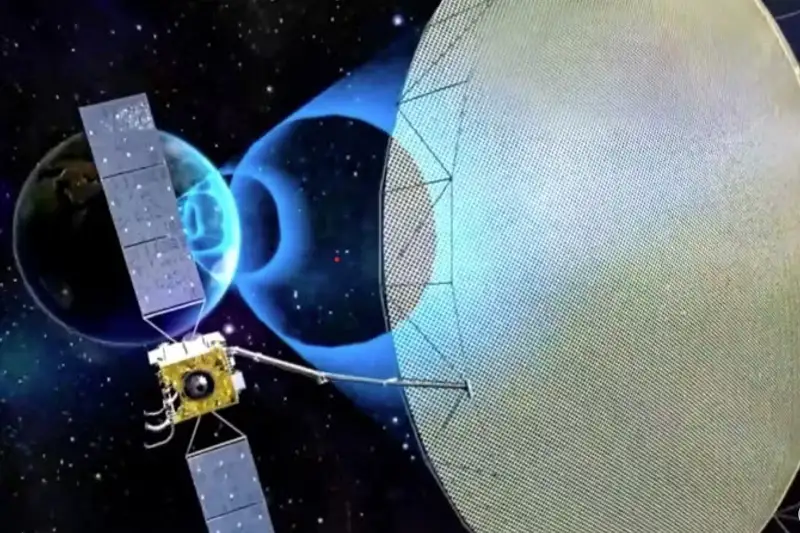
- China's Ludi Tance-4 01 is the world's only high-orbit radar satellite powered by gallium nitride (GaN) semiconductors.
- The satellite generates over 18,000 watts of power to provide continuous 24/7 radar surveillance over one-third of Earth's surface.
- China leverages its 95% monopoly on primary gallium supply to restrict exports to the US while expanding its space assets.
When China deployed the Ludi Tance-4 01 satellite into high orbit in August 2023, space analysts recognized a significant shift in orbital intelligence capabilities. Capable of keeping one-third of the Earth's surface under continuous 24/7 observation, the satellite relies on a technological breakthrough in semiconductor design that is deeply intertwined with Beijing's control over global critical mineral supply chains.
Quick summary
- The Ludi Tance-4 01, launched in August 2023, is the world's only high-orbit radar satellite using advanced gallium nitride (GaN) semiconductors.
- Equipped with high electron mobility transistors generating over 18,000 watts of combined power, the satellite maintains continuous 24/7 synthetic aperture radar monitoring over one-third of the planet.
- China controls over 95% of primary global gallium production and nearly blocked all gallium exports to the United States by late 2024 following the satellite's deployment.
Why it matters
Space-based radar observation historically faced a major tradeoff: low Earth orbit satellites offer crisp imagery but brief observation windows over specific targets, while high-orbit satellites offer persistent coverage but require immense power to push microwave signals across tens of thousands of kilometers. China's successful application of high-power GaN semiconductors at high orbit solves this distance-power dilemma. Simultaneously, because gallium is produced as a byproduct of aluminum refining—an industry dominated by Chinese output—Beijing holds unprecedented leverage over the hardware foundation required for next-generation active electronically scanned array (AESA) radars, electronic warfare platforms, and orbital surveillance systems worldwide.
Background
Prior to the deployment of Ludi Tance-4 01, synthetic aperture radar (SAR) imaging satellites operated overwhelmingly in low Earth orbit (LEO). Moving a SAR platform to high orbit requires vast microwave transmission energy to penetrate atmospheric interference, generate high-definition 2D and 3D radar maps, and resist electronic countermeasures. Traditional silicon or gallium arsenide electronics could not produce the necessary wattage efficiently without excessive heat and weight. Following the August 2023 launch, Beijing escalated its strategic mineral diplomacy, tightening global export controls on raw gallium and culminating in a near-total export block on gallium products to the US by late 2024.
Qnews24h insight
The convergence of advanced satellite engineering and mineral dominance highlights a asymmetric advantage in high-tech defense competition. China did not merely build an advanced radar platform; it engineered a high-orbit capability built on a supply chain that it almost exclusively controls. As Western defense contractors seek alternative sources for high-power radar components, China's tight export restrictions on raw gallium demonstrate how raw material monopolies can directly bottleneck an adversary's ability to mirror equivalent space and radar technologies.
Overcoming the Distance Barrier: The Power Mechanics of GaN Transistors
Operating a radar system in high orbit presents severe physical challenges. Signal strength dissipates dramatically over vast distances, making standard low-orbit radar systems ineffective at higher altitudes. To establish persistent surveillance capable of generating sharp two-dimensional and three-dimensional Synthetic Aperture Radar (SAR) imagery, satellite engineers needed power amplification levels never before deployed in space-based radar systems.
The solution rested on Solid-State Power Amplifiers built with Gallium Nitride High Electron Mobility Transistors (GaN HEMT). Unlike traditional semiconductor materials, GaN operates at significantly higher voltages, temperatures, and power densities. In the Ludi Tance-4 01 array, individual amplifier units produce 800 watts of transmission power. Combined across the satellite's radar payload, the system delivers an overall output exceeding 18,000 watts.
This massive power output serves three operational functions:
- High-Resolution Imaging: Generates continuous, clear 2D and 3D topographic and target data through clouds and darkness.
- Target Identification Accuracy: Boosts signal-to-noise ratios, allowing automated classification of objects on the ground and at sea.
- Anti-Jamming Resilience: Overpowers adversarial electronic jamming attempts, maintaining signal integrity across vast distances.
The Gallium Bottleneck: Monopoly in the Raw Material Supply Chain
The technical success of the Ludi Tance-4 01 rests entirely on raw gallium availability. Unlike iron or copper, gallium is not extracted directly from dedicated primary mines. Instead, it exists as a minor trace element recovered during the industrial processing of bauxite into alumina (aluminum oxide).
Because China dominates global aluminum refining capacity, it naturally controls the refining infrastructure needed to capture and purify primary gallium. Currently, China produces more than 95% of the world's primary raw gallium output. This near-total control leaves global semiconductor supply chains highly exposed to unilateral export policy shifts from Beijing.
Escalating Export Restrictions and Global Defense Implications
Following the August 2023 launch of Ludi Tance-4 01, Beijing systematically altered its export control framework governing strategic metals. Throughout late 2023 and 2024, Chinese regulators tightened licensing rules for raw gallium and gallium compounds, culminating in nearly a complete cessation of gallium exports to US defense and commercial technology entities by the end of 2024.
Gallium nitride is not only critical for orbital radar arrays like Ludi Tance-4 01, but serves as the backbone for modern ground-based, naval, and airborne Active Electronically Scanned Array (AESA) radar systems. By curtailing raw material exports while expanding its own high-orbit radar constellations, Beijing has effectively secured a dual advantage: operational superiority in persistent space surveillance and strategic disruption over Western semiconductor supply chains.
Frequently Asked Questions
What makes the Ludi Tance-4 01 satellite unique?
It is currently the world's only high-orbit satellite utilizing gallium nitride (GaN) high electron mobility transistors to power a synthetic aperture radar (SAR) platform capable of covering one-third of the Earth's surface continuously.
Why is Gallium Nitride preferred over traditional semiconductors?
GaN semiconductors can operate at significantly higher voltages, power densities, and thermal limits than conventional silicon, allowing the satellite to generate over 18,000 watts of microwave power needed for long-distance radar imaging.
How does China control the global gallium supply?
Gallium is produced exclusively as a byproduct of aluminum refining. As the world's largest producer of aluminum, China naturally holds over 95% of global primary gallium refining output.
Sources
- Soha News / Original Reportage (Source Link)

Why it matters
High-orbit continuous radar eliminates the coverage gaps inherent to low Earth orbit satellites. Coupled with China's 95% market control over primary gallium output, Beijing holds both technological leadership in persistent orbital surveillance and structural leverage over global defense radar manufacturing.
Background
Synthetic aperture radar satellites traditionally operated in low Earth orbit due to power limitations over long distances. In August 2023, China launched Ludi Tance-4 01 into high orbit using solid-state GaN HEMT power amplifiers. Following the launch, Beijing introduced strict export licenses on raw gallium, culminating in a near-total block on exports to the US by late 2024.
China's deployment of Ludi Tance-4 01 highlights a deliberate strategic fusion between industrial mineral monopolies and defense innovation. By controlling 95% of primary gallium refining while deploying high-power GaN radar arrays into orbit, Beijing creates a technological barrier that restricts Western countermeasures while securing persistent space surveillance.
References
- 1.soha.vn
Editorial information
The editorial team reviews sources, adds context, and structures stories so readers can understand the news more clearly.
Article from QNEWS24H
Comments
(0)No comments yet. Be the first to share your thoughts.