China and Russia Prepare to Launch Tianwan Unit 7, Pushing Plant to Record 9 GW Capacity
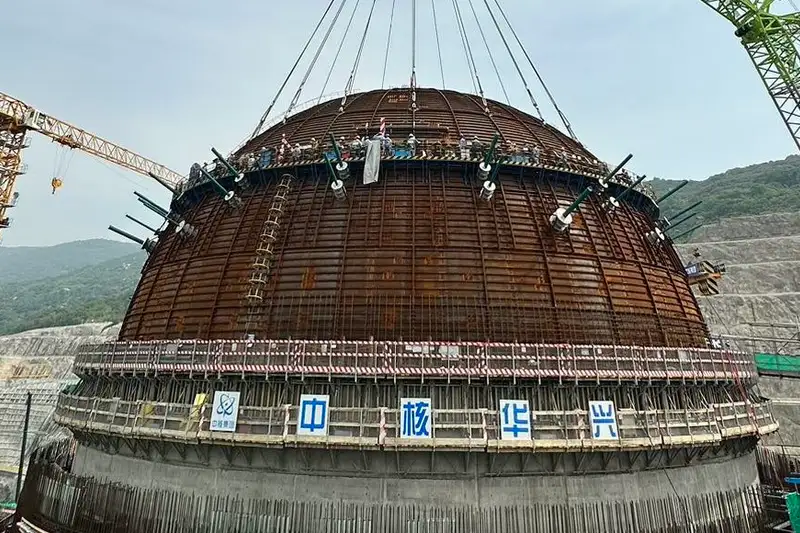
- Tianwan Nuclear Power Plant on China's coast is entering startup operations for Unit 7, moving closer to a world-leading 9 GW total capacity.
- The plant's expansion utilizes Russian VVER-1200 Generation 3+ pressurized water reactors engineered for a 60-year service lifecycle.
- The project highlights a strategic division of labor, with Russia supplying core technology for 6 units while China builds 2 domestic units and manages site infrastructure.
The global nuclear energy landscape is nearing a significant capacity milestone on China's eastern seaboard. State atomic energy corporation Rosatom and its Chinese partners are preparing to launch physical startup operations for Unit 7 at the Tianwan Nuclear Power Plant in Jiangsu province. Upon completion and integration of Units 7 and 8, the coastal installation will achieve a total power output of 9 gigawatts, establishing itself as the largest operating nuclear generation facility on the planet.
Quick summary
- World-leading output: Tianwan Nuclear Power Plant on the Yellow Sea coast is slated to reach 9 gigawatts of total operational capacity once Units 7 and 8 are fully integrated into the electrical grid.
- Advanced technology: The expansion utilizes Russia's VVER-1200 Generation 3+ nuclear reactors, featuring passive safety systems engineered for a 60-year operational lifecycle.
- Strategic division of labor: Across all eight planned units at Tianwan, Russian technology powers six core reactors, while two rely on Chinese domestic designs.
Why it matters
The operational addition of Unit 7 carries substantial energy, economic, and industrial weight. Jiangsu province serves as one of China's primary manufacturing hubs, requiring continuous and reliable electricity to sustain high industrial throughput. Integrating a 9 GW zero-emission baseload facility directly into the East China power grid helps protect energy-intensive industries from power shortages while accelerating regional efforts to curb greenhouse gas emissions.
From an international engineering standpoint, the successful execution of the Tianwan expansion validates the commercial scalability of Generation 3+ reactor designs under complex cross-border joint execution models. At a time when global power grids face escalating demands driven by industrial electrification and expanding digital infrastructure, large-scale nuclear complexes demonstrate how massive baseload energy can be stabilized without increasing fossil fuel combustion.
Background
The development of the Tianwan complex spans several operational phases that highlight the long-term energy cooperation agreement between Russia and China. Early project formulation established a multi-unit plant intended to combine international reactor technology with Chinese civil engineering capabilities. Across the site's eight-unit master plan, Russia's state nuclear company Rosatom was tasked with supplying primary reactor systems and core nuclear equipment for six units, while Chinese engineers integrated domestic nuclear technology into two units.
Central to this latest expansion phase is the VVER-1200 reactor architecture. Rosatom began developing the VVER-1200 platform in 2005, seeking to create an upgraded Generation 3+ pressurized water reactor based on earlier VVER designs. Designed with a rated thermal capacity of 3,200 MW and an electrical output of 1,200 MW per unit, the VVER-1200 prototype completed its initial commercial rollout at the Novovoronezh-2 station in Russia in 2016. Since then, the design has served as the anchor technology for Russian international nuclear energy exports.
Engineering Breakdown and Safety Innovations
The VVER-1200 technology installed at Tianwan Unit 7 represents a significant engineering evolution over previous-generation designs. At the core of the Generation 3+ standard is the integration of passive safety systems that function independently of external power sources or manual operator intervention. In critical emergency situations, these passive cooling and core heat removal systems utilize natural physical forces, including gravity, convection, and pressure differentials, to maintain core stability.
In addition to passive safety mechanisms, the structural housing incorporates double-walled containment structures built to withstand severe external impacts and seismic events. The reactor pressure vessels and associated components are engineered for a continuous service lifespan of 60 years, providing structural predictability for grid management. This reliability allows the plant to supply consistent power across peak industrial demand cycles.
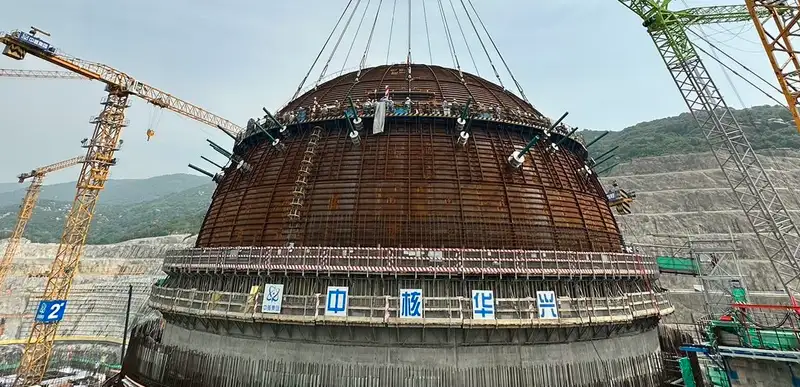
Engineers prepare advanced components at the Tianwan nuclear power installation on China's coast. Source: Rosatom
Expanding the Russo-Chinese Energy Axis
The execution of Tianwan Unit 7 is part of a broader industrial alignment between Moscow and Beijing. By dividing responsibilities—where Russian suppliers provide specialized nuclear steam supply systems and reactor internals while Chinese state firms handle civil construction and balance-of-plant infrastructure—the project has maintained predictable delivery timelines relative to global nuclear infrastructure standards.
Beyond Tianwan, technical collaboration between the two nations extends across nuclear technology transfers, fuel supply cycles, and joint research initiatives. This synergy allows China to rapidly expand its clean energy generation footprint along key industrial zones while providing Rosatom with a prominent commercial showcase for its flagship export architecture.
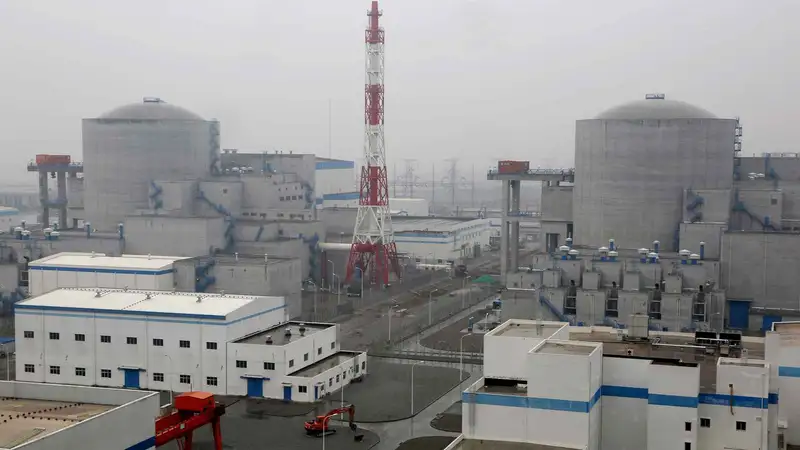
Overview of the coastal nuclear complex in Jiangsu, projected to reach 9 GW total output. Source: CGTN
Qnews24h insight
The commissioning progress at Tianwan Unit 7 illustrates a distinct contrast in project delivery speed between East Asian infrastructure projects and Western nuclear construction schedules. While major nuclear installations in Europe and North America have frequently encountered supply chain bottlenecks, regulatory delays, and budget growth, the Tianwan project highlights the efficiency of standardized reactor design and unified state-level backing.
However, the long-term dynamics of this technological partnership are shifting. As China's domestic nuclear engineering capacity advances—evidenced by its deployment of proprietary reactor designs elsewhere—Beijing's reliance on imported primary technology is likely to decrease over time. Future developments may see China transition from an importer of foreign nuclear designs into a dominant international exporter, competing directly with Russian nuclear vendors in third-country markets.
Sources
Information in this report is grounded in statements and disclosures from Rosatom CEO Alexey Likhachev, CGTN, and reporting published by Soha.vn (Soha Source Article).
Frequently Asked Questions
What makes the Tianwan Nuclear Power Plant the world's largest facility?
Once Units 7 and 8 fully enter commercial operation, the combined total electrical generation capacity across all eight units will reach 9 gigawatts (GW), making it the largest operating nuclear power complex globally by installed capacity.
What reactor technology is utilized in Unit 7 at Tianwan?
Unit 7 utilizes the Russian VVER-1200 Generation 3+ pressurized water reactor developed by Rosatom, which features passive safety systems and a 60-year operational design life.
How are responsibilities shared between Russia and China at Tianwan?
Russia supplies the primary nuclear reactor technology and core components for six of the eight units at Tianwan, while China provides domestic nuclear technology for two units alongside handling civil construction, site logistics, and grid integration.
Why it matters
The commissioning of Tianwan Unit 7 provides massive, uninterrupted zero-carbon power to the heavy industrial economy of Jiangsu province. It reinforces the viability of standardized Generation 3+ nuclear reactors in meeting global baseload electricity demands while reducing carbon emissions.
Background
Rosatom developed the VVER-1200 reactor design starting in 2005, introducing its first operational unit at Russia's Novovoronezh-2 plant in 2016. Under bilateral agreements with China, Tianwan was planned as an eight-unit facility combining Russian core nuclear supply with Chinese construction execution and domestic reactor additions.
The execution speed at Tianwan demonstrates how standardized reactor engineering and state-backed supply chains avoid the delays common in Western nuclear builds. However, as China's domestic nuclear manufacturing capability matures, Beijing will increasingly compete directly with Russia in global nuclear technology exports.
References
Editorial information
The editorial team reviews sources, adds context, and structures stories so readers can understand the news more clearly.
Article from QNEWS24H
Comments
(0)No comments yet. Be the first to share your thoughts.