China's Long March 7A Rocket Explodes Post-Liftoff: A Setback in Space Ambitions
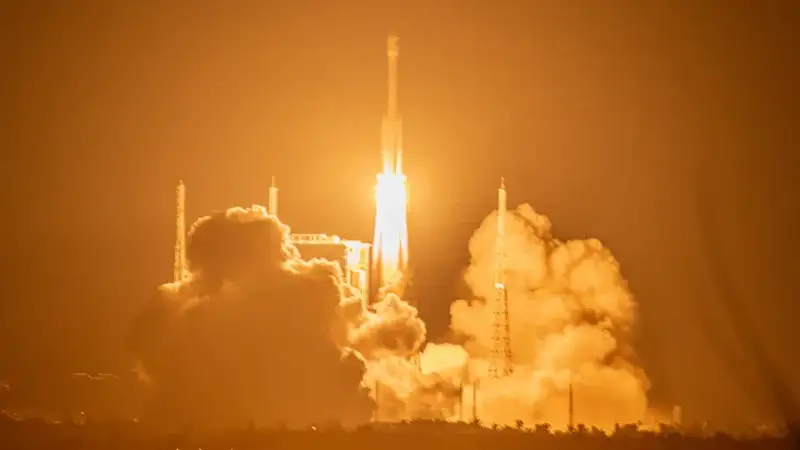
- A Chinese Long March 7A rocket exploded approximately 85 seconds after launch.
- The failure occurred during the Max-Q phase, pointing to critical engineering challenges.
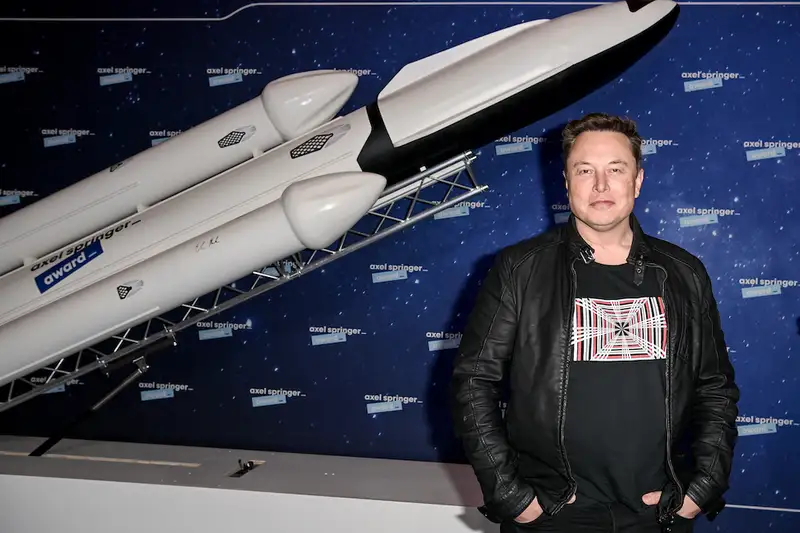
- SpaceX CEO Elon Musk commented on the extreme difficulty of rocket manufacturing.
- This is the Long March 7A's second failure, but it previously recovered from a 2020 incident.
In a stark reminder of the immense complexities inherent in space exploration, a Chinese Long March 7A rocket experienced a catastrophic failure less than 90 seconds after liftoff. The dramatic explosion occurred during a critical phase of flight, sending shockwaves through the international space community and casting a temporary shadow on Beijing’s otherwise rapidly accelerating cosmic ambitions.
Quick summary
- A Chinese Long March 7A rocket exploded approximately 85 seconds after launch, failing to deliver its satellite payload.
- The incident took place during the Max-Q phase, suggesting potential issues with the rocket's propulsion, structural integrity, or flight control systems.
- SpaceX CEO Elon Musk commented on the inherent difficulty of rocket manufacturing, highlighting a universal challenge in the aerospace industry.
- This marks a renewed setback for the Long March 7A variant, which previously failed in its inaugural flight in 2020 but subsequently achieved a series of successful missions.
Why it matters
This incident is more than just a financial loss; it carries significant implications for China's ambitious space agenda and the broader global space race. For Beijing, a program that has seen remarkable successes with its Tiangong space station, lunar probes, and Mars missions, a high-profile launch failure can delay critical satellite deployments, impact future mission schedules, and potentially erode confidence in specific launch vehicles. The Long March 7A is designed for sending satellites to geosynchronous transfer orbit (GTO), vital for communication, navigation, and reconnaissance. A prolonged grounding or extensive redesign could slow China's ability to expand its orbital infrastructure.
Moreover, in an increasingly competitive commercial space market, reliability is paramount. While such failures are a stark reality across all spacefaring nations and private enterprises, repeated setbacks for a particular rocket model can influence international perceptions of its trustworthiness and technical maturity. For other countries and private companies eyeing similar advanced launch capabilities, this event serves as a potent reminder of the thin margin for error in rocket science, reinforcing the need for rigorous testing and continuous innovation.
Background
China's Long March rocket family is the backbone of its space program, with various variants designed for different orbital requirements. The Long March 7A, an enhanced version of the Long March 7, was specifically developed to launch heavier payloads, particularly satellites, into geosynchronous transfer orbit (GTO). Its introduction was part of China's strategy to expand its capacity for high-orbit missions, complementing its capabilities for low-Earth orbit deployments.
However, the Long March 7A has a checkered history. Its inaugural flight in March 2020 also ended in failure due to technical issues, a significant blow at the time. Yet, China's aerospace sector demonstrated remarkable resilience and a capacity for rapid problem-solving. Following an intensive investigation and necessary modifications, the Long March 7A returned to flight in March 2021, successfully deploying its payload. This quick turnaround was hailed as a testament to China's engineering prowess and commitment to its space goals, leading to a string of subsequent successful missions for the variant.
This latest explosion, occurring less than 90 seconds into the flight, places it squarely within the critical 'Max-Q' phase – the point of maximum dynamic pressure. During Max-Q, the rocket experiences the highest combination of aerodynamic stress and speed, making it a common point for structural or control system failures if any components are compromised. The timing of the explosion therefore immediately directs investigative efforts towards the rocket's first-stage propulsion, structural integrity, or flight control mechanisms.
The incident also drew a concise yet poignant observation from Elon Musk, CEO of SpaceX, who simply stated, 'Chế tạo tên lửa cực kỳ khó' (Building rockets is extremely difficult). This remark, coming from a figure whose own company has experienced numerous high-profile test failures before achieving unprecedented reliability, underscores a universal truth in the aerospace industry: no entity, regardless of its resources or technological advancement, is immune to the formidable challenges of rocket engineering. Such failures are, paradoxically, often crucial learning opportunities that drive future improvements and safety enhancements across the industry.
It is important to note that China’s overall space program has been on an impressive trajectory. In recent years, Beijing has celebrated major milestones, including the completion and operation of its Tiangong space station, successful lunar sample return missions, and a groundbreaking Mars orbiter and rover mission. This latest Long March 7A failure, while a setback, must be viewed within the context of a program that has demonstrated consistent ambition and a proven ability to overcome technical hurdles.
The current investigation will undoubtedly focus on identifying the root cause. If the fault lies in a standardized component or system shared across other Long March variants, such as the Long March 5 or Long March 8, it could necessitate a broader temporary grounding of multiple rocket types for comprehensive technical inspections. Such a scenario would introduce further delays into China's ambitious launch manifest.
Qnews24h insight
The recent Long March 7A failure serves as a potent reminder of the razor-thin margin separating success from catastrophic failure in the unforgiving domain of spaceflight. While undoubtedly a setback for China's impressive space program, which has otherwise garnered international acclaim for its rapid advancements, it is crucial to view this incident not as a singular isolated event but as an integral part of the iterative, trial-and-error process inherent in pushing technological boundaries. China's past rapid recovery from the Long March 7A's 2020 failure demonstrates its robust problem-solving capabilities and resilience. The true measure of its space program's strength will be its transparency in identifying the root cause, implementing corrective measures, and ultimately returning the Long March 7A, and potentially other affected variants, to reliable flight. This incident underscores that even for a rising space superpower, the fundamental challenges of rocket science remain a leveler, demanding continuous vigilance, meticulous engineering, and an unwavering commitment to learning from every flight, successful or otherwise.
Sources

Why it matters
The Long March 7A explosion impacts China's satellite deployment schedule and its ambitious space agenda, which includes lunar, Mars, and Tiangong station missions. While failures are part of space exploration, repeated issues for a specific rocket model can affect global perceptions of reliability in an increasingly competitive commercial space market. The incident highlights universal engineering challenges and the critical need for rigorous investigation and improvements to ensure future mission success and safety, potentially influencing other nations' and companies' approaches to advanced launch systems.
Background
The Long March 7A is a vital part of China's rocket fleet, designed to launch heavy payloads into geosynchronous transfer orbit (GTO) to support communication, navigation, and Earth observation. Its first flight in March 2020 also ended in failure due to technical issues. However, China's space program quickly recovered, successfully returning the Long March 7A to service in 2021 after extensive modifications and achieving several successful GTO deployments. This latest explosion, occurring during the Max-Q phase, a point of maximum aerodynamic stress, signals a new technical challenge. Elon Musk's observation about the difficulty of rocket building places this event in the broader context...
The Long March 7A's latest explosion underscores a fundamental truth in aerospace: the conquest of space remains an immensely challenging endeavor where even advanced nations face setbacks. This incident, while an undeniable blow to China's immediate launch manifest, must be viewed through the lens of a resilient space program that has historically demonstrated a robust capacity for rapid learning and recovery. The crucial insight lies not just in the failure itself, but in the ensuing investigation and the speed and thoroughness of China's response. The ability to transparently identify and rectify the root cause will be paramount, reinforcing its reputation as a serious contender in the...
References
Editorial information
The editorial team reviews sources, adds context, and structures stories so readers can understand the news more clearly.
Article from QNEWS24H
Comments
(0)No comments yet. Be the first to share your thoughts.