China's LandSpace Achieves Historic Rocket Booster Recovery, Signals Commercial Space Surge
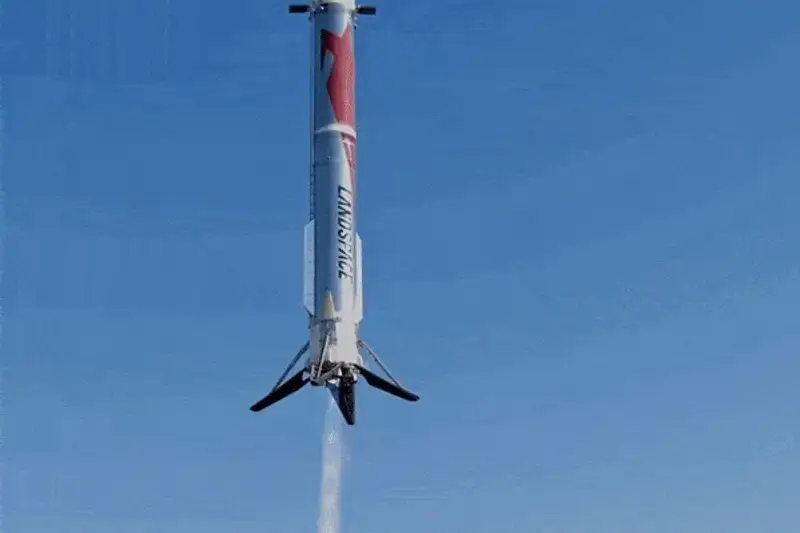
- LandSpace's Zhuque-3 rocket successfully deployed the Honghu-3 satellite into orbit before its first stage performed a vertical landing in Gansu province.
- This makes LandSpace the first private Chinese company to achieve a successful rocket booster recovery, a major milestone for China's commercial space sector.
- The achievement came on the second flight of the Zhuque-3, following an unsuccessful landing attempt in December where an engine restart failure was identified.
- The company implemented design modifications, including fewer engines for landing, improved control systems, and enhanced thermal protection, which contributed to this success.
In a significant stride for China's burgeoning private space industry, LandSpace, a Beijing-based aerospace firm, has successfully recovered the first stage of its Zhuque-3 rocket after it delivered a satellite into orbit. This accomplishment marks a pivotal moment, as LandSpace becomes the first private Chinese company to achieve a vertical landing and recovery of a rocket booster, a feat previously exclusive to state-backed endeavors or international giants. The successful mission, which also deployed the Honghu-3 satellite, was particularly notable given it came on the company's second attempt, demonstrating a rapid learning curve and technical prowess.
Quick summary
- LandSpace's Zhuque-3 rocket successfully deployed the Honghu-3 satellite into orbit before its first stage performed a vertical landing in Gansu province.
- This makes LandSpace the first private Chinese company to achieve a successful rocket booster recovery, a major milestone for China's commercial space sector.
- The achievement came on the second flight of the Zhuque-3, following an unsuccessful landing attempt in December where an engine restart failure was identified.
- The company implemented design modifications, including fewer engines for landing, improved control systems, and enhanced thermal protection, which contributed to this success.
Why it matters
The successful recovery of the Zhuque-3's first stage carries profound implications for China's commercial space ambitions and the global launch industry. For the first time, a private Chinese entity has demonstrated the capability to recover a rocket booster, a crucial step towards reducing launch costs and increasing launch frequency. This achievement could significantly enhance China's competitiveness in the rapidly expanding global satellite market, making space access more affordable for domestic and international clients alike. It empowers the private sector to innovate and compete, fostering a more dynamic and diversified space ecosystem within China, traditionally dominated by state-owned enterprises. Furthermore, it signals China's determined pursuit of advanced space capabilities, directly impacting the evolving international space race and the economics of orbital access.
Background
The journey to this landmark recovery for LandSpace was not without its challenges. The Zhuque-3's inaugural flight in December faced an unexpected setback when its first stage encountered an engine restart failure approximately three kilometers above the ground, preventing a successful landing. This initial failure underscored the technical complexities inherent in achieving vertical rocket recovery, a challenge that many global space companies have grappled with. Following this incident, LandSpace embarked on a period of intensive analysis and design refinement. Key modifications included optimizing the number of engines used during the landing phase, enhancing the autonomous safety control systems, and strengthening the thermal protection for the rocket stage during atmospheric re-entry.

This development unfolds against a broader backdrop of China's aggressive push into reusable rocket technology. While LandSpace now leads the private sector, the state-owned China Aerospace Science and Technology Corporation (CASC) had previously demonstrated booster recovery with its Long March-10B rocket. However, CASC's method involved capturing the booster using a vast sea-based net, a stark contrast to LandSpace's vertical, legged landing system. These parallel developments highlight China's multi-pronged approach to mastering reusability, with both state and private entities exploring distinct technological pathways to achieve more efficient space access.
LandSpace's Breakthrough: A Deep Dive into Zhuque-3's Design
The Zhuque-3, the rocket at the heart of LandSpace's success, is engineered specifically with reusability in mind. Designed to recover its first stage after satellite deployment, the rocket's architecture leverages advanced propulsion and guidance systems to ensure precision. The recent mission saw the Zhuque-3 successfully ferry the Honghu-3 satellite into its designated orbit. Crucially, after payload separation, the first stage executed a controlled descent, culminating in a precise vertical touchdown at a pre-determined site within Gansu province. This marks the first instance where a commercial Chinese rocket has not only reached orbit but also successfully brought its primary booster back to Earth.
The technical adjustments made after the December failure proved critical. By reducing the number of engines firing during the final landing burn, LandSpace likely aimed to achieve finer control and conserve fuel. Improvements to the automatic safety control system would have enhanced the rocket's ability to correct its trajectory and maintain stability during the perilous re-entry and landing phases. Furthermore, strengthened thermal protection is vital for safeguarding the booster's integrity against the extreme heat generated upon re-entering Earth's atmosphere at high speeds. These combined refinements were instrumental in transforming a previous failure into a resounding success.
China's Dual Approach to Reusability
China's strategy for achieving reusable launch capabilities appears to be a dual-track effort, involving both its established state-owned aerospace giants and an increasingly agile private sector. The contrast between CASC's Long March-10B, which employs a maritime net capture, and LandSpace's Zhuque-3, with its vertical land-based landing, underscores the diverse technical philosophies being explored. This parallel innovation allows for different approaches to be tested and refined, potentially accelerating overall progress in reusable rocket technology for the nation. While CASC's approach might offer certain advantages for large, heavy-lift rockets and offshore operations, LandSpace's method aligns more closely with the proven efficiency of vertical landings that have revolutionized the commercial space sector globally.
This internal competition and diversified investment signify a robust commitment to securing a leading position in the future of space travel and commerce. The success of a private company like LandSpace validates the potential of non-state actors to contribute significantly to national strategic goals, driving innovation and potentially fostering a more competitive ecosystem that benefits from different scales of operation and risk tolerance.
Qnews24h insight
LandSpace's successful booster recovery is undoubtedly a significant engineering achievement for China's private space industry, marking a crucial step towards the cost-saving potential of reusable launch vehicles. However, it's vital to place this accomplishment within a broader global context. While recovery is a necessary prerequisite, it does not equate to full reusability, which involves the ability to rapidly inspect, refurbish, and re-fly a booster multiple times. The current leader in this domain, SpaceX, has demonstrated an unparalleled operational cadence, with hundreds of successful landings and individual boosters flying dozens of times. This highlights a considerable gap between LandSpace's inaugural recovery and the mature, high-frequency reusability demonstrated by industry pioneers.
Nevertheless, this milestone unequivocally signals the rapid maturation and aggressive investment within China's commercial space sector. It indicates a clear intention to challenge established players and develop an independent, cost-effective launch capability. The learning curve demonstrated by LandSpace, transforming a failure into a success in its second attempt, suggests a high level of technical competence and determination. While the immediate impact on global launch services might be limited until LandSpace proves its ability to achieve frequent reuse, this event firmly establishes China's private firms as serious contenders in the long-term race for accessible and affordable space transportation.
The Path Ahead: From Recovery to Full Reusability
With the successful recovery under its belt, LandSpace has articulated ambitious goals for the future. The company aims to reuse the recovered booster and target a launch frequency of approximately 10 missions per year for the Zhuque-3. Achieving this ambitious rate would necessitate not just consistent recovery but also a streamlined process for inspection, refurbishment, and re-certification of the rocket stages. This transition from a single successful recovery to a reliable, high-cadence reusable system presents the next significant engineering and operational challenge.

The global benchmark set by SpaceX, with Falcon 9 boosters routinely completing upwards of 36 flights and supporting over 150 launches annually, illustrates the formidable journey that lies ahead. LandSpace's success now positions it at the beginning of this journey, where the focus will shift from proving the initial concept of recovery to demonstrating the economic viability and operational reliability of repeated reuse. The ability to achieve this will ultimately determine if this technical milestone evolves into a transformative model for commercial space launches in China and beyond.
Sources
Frequently Asked Questions
What is the significance of LandSpace's recent achievement?
LandSpace has become the first private Chinese company to successfully recover the first stage of a rocket booster (Zhuque-3) after it delivered a satellite to orbit. This is a crucial step towards developing reusable rocket technology in China's commercial space sector, potentially leading to lower launch costs and increased launch frequency.
How does LandSpace's recovery method compare to others?
LandSpace's Zhuque-3 uses a vertical landing system with legs, similar to SpaceX's Falcon 9. This contrasts with the state-owned CASC's Long March-10B, which previously demonstrated booster recovery using a large net at sea. Both methods represent different approaches to achieving reusability.
What challenges remain for LandSpace in achieving full reusability?
While LandSpace has successfully recovered a booster, the next challenge is to transition from recovery to full reusability, which involves rapidly inspecting, refurbishing, and re-flying the rocket stage multiple times. This process requires significant engineering, operational, and financial investment to achieve the high flight cadence and reliability demonstrated by leading global players like SpaceX.
Why it matters
The successful recovery of the Zhuque-3's first stage carries profound implications for China's commercial space ambitions and the global launch industry. For the first time, a private Chinese entity has demonstrated the capability to recover a rocket booster, a crucial step towards reducing launch costs and increasing launch frequency. This achievement could significantly enhance China's competitiveness in the rapidly expanding global satellite market, making space access more affordable for domestic and international clients alike. It empowers the private sector to innovate and compete, fostering a more dynamic and diversified space ecosystem within China, traditionally dominated by...
Background
The journey to this landmark recovery for LandSpace was not without its challenges. The Zhuque-3's inaugural flight in December faced an unexpected setback when its first stage encountered an engine restart failure approximately three kilometers above the ground, preventing a successful landing. This initial failure underscored the technical complexities inherent in achieving vertical rocket recovery, a challenge that many global space companies have grappled with. Following this incident, LandSpace embarked on a period of intensive analysis and design refinement. Key modifications included optimizing the number of engines used during the landing phase, enhancing the autonomous safety...
LandSpace's successful booster recovery is undoubtedly a significant engineering achievement for China's private space industry, marking a crucial step towards the cost-saving potential of reusable launch vehicles. However, it's vital to place this accomplishment within a broader global context. While recovery is a necessary prerequisite, it does not equate to full reusability, which involves the ability to rapidly inspect, refurbish, and re-fly a booster multiple times. The current leader in this domain, SpaceX, has demonstrated an unparalleled operational cadence, with hundreds of successful landings and individual boosters flying dozens of times. This highlights a considerable gap...
References
Editorial information
The editorial team reviews sources, adds context, and structures stories so readers can understand the news more clearly.
Article from QNEWS24H
Comments
(0)No comments yet. Be the first to share your thoughts.