Bruno Fernandes Lights Up Fantasy Premier League as Rule Changes Reshape Defender Value
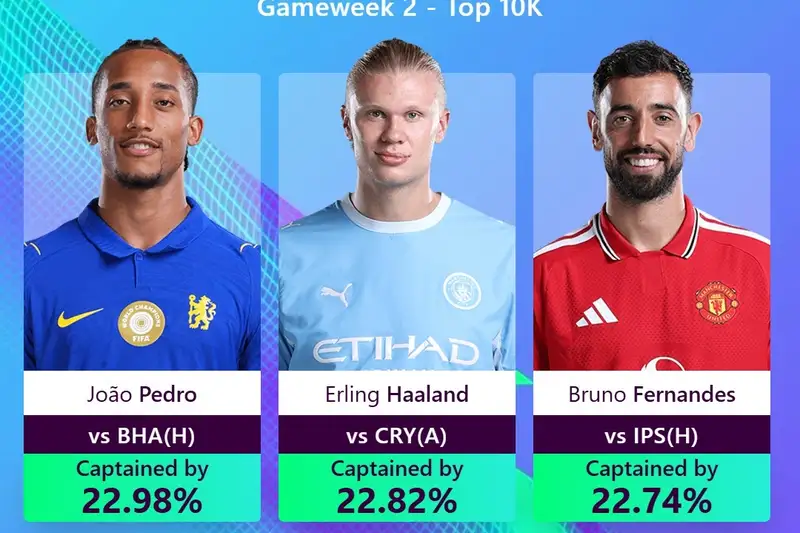
- Bruno Fernandes delivered a record-breaking FPL performance in Gameweek 2, earning 23 points from a hat-trick and an assist.
- Over 1.7 million FPL managers who captained Fernandes saw their points doubled to 46, with some achieving 69 points via a Triple Captain chip.
- The new FPL Bonus Point System (BPS) adjustments are significantly enhancing the FPL value of attacking defenders and wing-backs.
- Young Newcastle defender Lewis Hall, priced at 5 million pounds, is emerging as a highly sought-after FPL asset due to the revised scoring and his attacking potential.
The virtual battlegrounds of Fantasy Premier League (FPL) roared to life in Gameweek 2, as millions of managers grappled with their squad selections and captaincy dilemmas. Amidst the swirling drama, one player emerged as a clear hero: Manchester United's Bruno Fernandes, whose sensational performance sparked an unprecedented points haul and reshaped the fortunes of countless teams. His explosive display not only highlighted his individual brilliance but also underscored the evolving strategic landscape of FPL, particularly with recent adjustments to the game's scoring mechanics favoring a broader range of player roles.
Quick summary
- Bruno Fernandes delivered a record-breaking FPL performance in Gameweek 2, earning 23 points from a hat-trick and an assist.
- Over 1.7 million FPL managers who captained Fernandes saw their points doubled to 46, with some achieving 69 points via a Triple Captain chip.
- The new FPL Bonus Point System (BPS) adjustments are significantly enhancing the FPL value of attacking defenders and wing-backs.
- Young Newcastle defender Lewis Hall, priced at 5 million pounds, is emerging as a highly sought-after FPL asset due to the revised scoring and his attacking potential.
Why it matters
For the millions of dedicated Fantasy Premier League managers, Gameweek 2 offered a compelling look into the season's strategic nuances. Bruno Fernandes' monumental points tally didn't just win individual managers their mini-league match-ups; it provided a powerful reminder of the immense impact a correctly chosen captain can have on overall rank. The difference between 23 points and 46 or even 69 points in a single gameweek can be season-defining, highlighting the high-stakes gamble inherent in captaincy decisions.
More broadly, the performance of attacking full-backs like Lewis Hall and Amar Dedic, coupled with their significant point hauls, signals a crucial shift in FPL's tactical meta. The FPL's adjustment to the Bonus Point System directly addresses previous seasons' feedback, aiming to create a more balanced scoring environment across positions. This change promises to open up new avenues for differential picks and budget-friendly strategies, potentially moving away from an over-reliance on premium midfielders and strikers. Managers are now compelled to reconsider their defensive allocations, looking for value in players who contribute both defensively and offensively, thereby diversifying team structures and injecting fresh strategic depth into the game.
Background
Fantasy Premier League has grown into a global phenomenon, captivating millions of football enthusiasts who compete by selecting a squad of real-life Premier League players. Each gameweek, these players earn points based on their actual performances, from goals and assists to clean sheets and bonus points. The strategic core of FPL lies in navigating player form, injury news, fixture schedules, and the judicious use of chips like 'Captain' (doubles points) and 'Triple Captain' (triples points).
In previous seasons, there was persistent feedback from the FPL community regarding the scoring balance, particularly for defenders. While clean sheets provided a base, attacking contributions from full-backs and wing-backs often felt undervalued in the overall Bonus Point System (BPS). This system rewards players for positive on-field actions, but its previous iteration sometimes struggled to adequately capture the comprehensive impact of players contributing across both ends of the pitch.
Responding to this, FPL developers implemented specific adjustments for the current season. While the defensive contribution metric (DEFCON) remains, the allocation of bonus points has been refined. The stated goal was to limit instances where a single player disproportionately benefited from both DEFCON and BPS, and instead, to more equitably reward players across various positions, with a particular emphasis on enhancing the scoring potential of attacking defenders. This contextualizes the stellar performances seen in Gameweek 2, as managers begin to see the tangible effects of these new scoring mechanisms in action.
Qnews24h insight
Gameweek 2 of Fantasy Premier League should serve as a clear indicator that the game's landscape is actively evolving, moving beyond established wisdom. The FPL development team's commitment to refining the Bonus Point System is not merely a technical tweak; it's a strategic pivot designed to inject fresh tactical dimensions and reward a wider spectrum of on-pitch contributions. This represents a conscious effort to prevent the FPL meta from becoming stale or overly predictable, forcing managers to think more broadly than just premium attackers.
The emphasis on attacking full-backs, as evidenced by the strong showings from players like Lewis Hall and Amar Dedic, suggests a genuine opportunity for 'differential' picks – players owned by a low percentage of managers who can provide significant point advantages. This development will likely lead to more diverse team compositions and a less template-driven approach, especially among top-tier managers. While premium strikers like Erling Haaland will always command a significant portion of the FPL budget due to their consistent goal-scoring prowess, the revised BPS means that savvy managers can now find substantial value and explosive potential in overlooked defensive assets. The cautious insight here is that overlooking these defensive shifts could prove detrimental, as the path to FPL success may now involve a more holistic squad construction, where a dynamic, attacking defender can be just as crucial as a prolific striker in accumulating those vital points.
Bruno Fernandes' Explosive Return
After a relatively subdued opening gameweek, Bruno Fernandes, often dubbed Manchester United's 'talisman', unleashed a performance that sent shockwaves through the FPL community. Facing Ipswich Town at Old Trafford, Fernandes spearheaded a dominant 5-2 victory for the Red Devils. His individual statistics were staggering: a clinical hat-trick of goals coupled with a crucial assist for Bryan Mbeumo's strike. Playing the full 90 minutes and earning the 'man of the match' accolade from the FPL system, Fernandes accumulated an astounding 23 points.
This individual masterclass translated into a massive points boost for over 1.7 million FPL managers who had entrusted him with the 'Captain' armband, effectively doubling his tally to 46 points. For the even bolder few who deployed their 'Triple Captain' chip, a rare and powerful boost used only once per season, Fernandes delivered an incredible 69 points. This marked a new personal record for the Portuguese midfielder in his 232 Premier League appearances and underscored the high-risk, high-reward nature of captaincy choices in FPL.
United's Offensive Outburst and Other Star Performers
It wasn't just Fernandes shining for Manchester United. The entire attacking contingent enjoyed a fruitful Gameweek 2. Bryan Mbeumo, with a goal and an assist, contributed a healthy 10 points. Matheus Cunha, providing two assists, added another 10 points. Together, this trio of Manchester United attackers delivered a remarkable 43 points, rewarding the faith of managers who invested heavily in the club's offensive assets.
Beyond Old Trafford, other premium and value players also delivered. Erling Haaland (15.5 million pounds), the prolific Manchester City striker, continued his impressive form against Crystal Palace, scoring two goals in a 4-1 victory. His consistent returns remain a cornerstone for many FPL teams. Chelsea's Cole Palmer (9.6 million pounds) and Joao Pedro (7.6 million pounds) also made their mark in a thrilling 4-3 win against Brighton. Palmer bagged 7 points, while Joao Pedro, despite an unfortunate own goal, still managed to secure 9 points with a goal and an assist. Alexander Isak, a popular forward choice, also delivered 8 points for his managers.
The Ascent of Attacking Defenders: A New FPL Paradigm
Perhaps the most significant revelation of Gameweek 2, beyond individual heroics, was the tangible impact of the FPL's revised Bonus Point System on defensive players. The source explicitly states that the adjustments aim to better balance scoring across positions, particularly favoring attacking defenders who contribute to both clean sheets and offensive plays.
A prime example of this shift came from Newcastle United's defensive duo, Amar Dedic and Lewis Hall. In Newcastle's 2-0 victory over Tottenham, these full-backs collectively delivered an impressive 22 points. This performance serves as a testament to the FPL's strategic intent: to make defensive players, especially those with an attacking impetus, more attractive and viable FPL options. The new system is designed to more accurately reward their contributions, which often go beyond just preventing goals.
Lewis Hall: A Budget Goldmine in the Making?
Among the standout defensive performers, Lewis Hall (5 million pounds) is highlighted as a player poised for a significant surge in FPL ownership. The 21-year-old Newcastle defender, with his attacking tendencies, perfectly embodies the type of player who benefits most from the new bonus point mechanics. His relatively low price point makes him an exceptional value proposition, allowing managers to free up funds for premium assets elsewhere in their squad.
The source also briefly touches upon Newcastle's efforts to retain Hall, with manager Matthias Jaissle reportedly promising him a significant role to ward off interest from clubs like Manchester United. This off-field context underscores Hall's perceived real-world value, which now, thanks to the FPL rule changes, is more accurately reflected in his potential FPL returns. As the season progresses, Hall, along with other attacking full-backs, is expected to become a hot commodity, potentially redefining optimal defensive strategies for FPL managers.
Sources
FAQ
- What was Bruno Fernandes' FPL points haul in Gameweek 2?
Bruno Fernandes scored 23 points in Gameweek 2, earning 46 points for managers who used the Captain chip and 69 points for those who used the Triple Captain chip. - How have the FPL rules changed for defenders this season?
The Fantasy Premier League has adjusted its Bonus Point System (BPS) to more effectively reward attacking defenders and wing-backs. These changes aim to balance scoring across positions and enhance the FPL value of players who contribute offensively in addition to their defensive duties. - Why is Lewis Hall considered a good FPL pick this season?
Lewis Hall is considered a strong FPL pick due to his attacking potential, relatively low price point (5 million pounds), and the new FPL Bonus Point System which now better rewards contributions from attacking defenders, making him a valuable differential option. - Which other players performed well in FPL Gameweek 2?
Alongside Bruno Fernandes, notable performers included Manchester United's Bryan Mbeumo and Matheus Cunha, Manchester City's Erling Haaland, Chelsea's Cole Palmer and Joao Pedro, Alexander Isak, and Newcastle defenders Amar Dedic and Lewis Hall.





Why it matters
For the millions of dedicated Fantasy Premier League managers, Gameweek 2 offered a compelling look into the season's strategic nuances. Bruno Fernandes' monumental points tally didn't just win individual managers their mini-league match-ups; it provided a powerful reminder of the immense impact a correctly chosen captain can have on overall rank. The difference between 23 points and 46 or even 69 points in a single gameweek can be season-defining, highlighting the high-stakes gamble inherent in captaincy decisions. More broadly, the performance of attacking full-backs like Lewis Hall and Amar Dedic, coupled with their significant point hauls, signals a crucial shift in FPL's tactical meta....
Background
Fantasy Premier League has grown into a global phenomenon, captivating millions of football enthusiasts who compete by selecting a squad of real-life Premier League players. Each gameweek, these players earn points based on their actual performances, from goals and assists to clean sheets and bonus points. The strategic core of FPL lies in navigating player form, injury news, fixture schedules, and the judicious use of chips like 'Captain' (doubles points) and 'Triple Captain' (triples points). In previous seasons, there was persistent feedback from the FPL community regarding the scoring balance, particularly for defenders. While clean sheets provided a base, attacking contributions from...
Gameweek 2 of Fantasy Premier League should serve as a clear indicator that the game's landscape is actively evolving, moving beyond established wisdom. The FPL development team's commitment to refining the Bonus Point System is not merely a technical tweak; it's a strategic pivot designed to inject fresh tactical dimensions and reward a wider spectrum of on-pitch contributions. This represents a conscious effort to prevent the FPL meta from becoming stale or overly predictable, forcing managers to think more broadly than just premium attackers. The emphasis on attacking full-backs, as evidenced by the strong showings from players like Lewis Hall and Amar Dedic, suggests a genuine...
References
Editorial information
The editorial team reviews sources, adds context, and structures stories so readers can understand the news more clearly.
Article from QNEWS24H
Comments
(0)No comments yet. Be the first to share your thoughts.