Boeing 747's Iconic Hump: Why Modern Aircraft Won't Replicate a Design Masterpiece
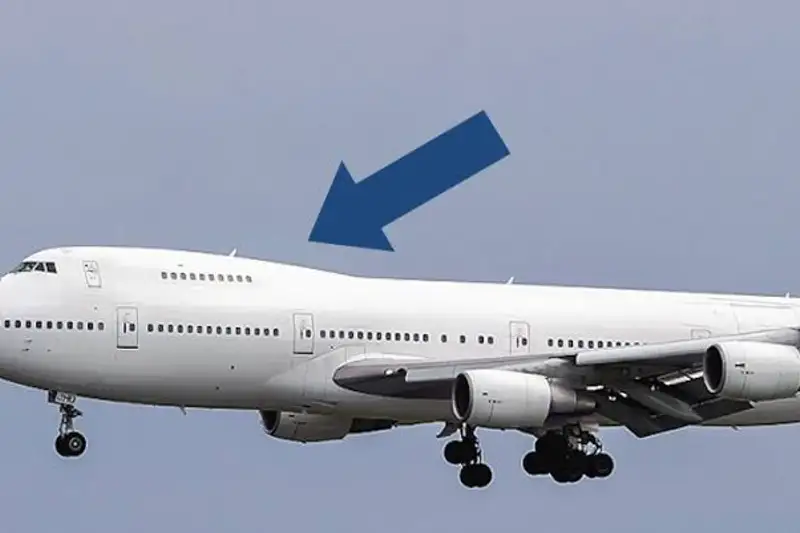
- The Boeing 747's unique upper deck, or 'hump,' was primarily a functional design choice to facilitate conversion into a cargo freighter with a nose-loading capability.
- Contemporary aircraft prioritize aerodynamic efficiency and fuel economy, making the complex, drag-inducing structure of a multi-deck hump economically unviable.
- Strict modern safety regulations, particularly emergency evacuation standards, present significant challenges for certifying aircraft with complex, multi-level cabin...
- Shifts in air cargo logistics have largely eliminated the original market need for a passenger-cargo hybrid aircraft with a front-opening nose, further diminishing the rationale...
For decades, the Boeing 747, affectionately known as the 'Queen of the Skies,' commanded attention with its majestic presence and instantly recognizable silhouette. Its distinctive upper deck, often referred to as a 'hump,' became a symbol of luxury air travel and a testament to ambitious engineering. Yet, as the aviation industry evolves, fueled by relentless demands for efficiency and innovation, this iconic design feature is increasingly understood as a relic of a bygone era, unlikely to be replicated in future aircraft generations.
Quick summary
- The Boeing 747's unique upper deck, or 'hump,' was primarily a functional design choice to facilitate conversion into a cargo freighter with a nose-loading capability.
- Contemporary aircraft prioritize aerodynamic efficiency and fuel economy, making the complex, drag-inducing structure of a multi-deck hump economically unviable.
- Strict modern safety regulations, particularly emergency evacuation standards, present significant challenges for certifying aircraft with complex, multi-level cabin configurations.
- Shifts in air cargo logistics have largely eliminated the original market need for a passenger-cargo hybrid aircraft with a front-opening nose, further diminishing the rationale for such a design.
Why it matters
The story of the Boeing 747's unique design is more than just an engineering anecdote; it reflects a profound shift in aviation priorities. For airlines, the decision to opt for simpler, more fuel-efficient twin-engine wide-bodies over complex, four-engine giants like the 747 directly impacts operational costs, ticket prices, and routes. For passengers, this means a more standardized, though often less spacious, flying experience. For the aerospace industry, it signifies a move away from bespoke, highly specialized designs towards optimized, general-purpose platforms where every curve and component is meticulously refined for maximum efficiency. Understanding this evolution helps illuminate the economic and regulatory forces shaping the future of air travel, emphasizing a trade-off between the engineering marvels of the past and the commercial imperatives of the present.
Background
The genesis of the Boeing 747's distinctive shape dates back to the optimistic yet uncertain 1960s. The global aviation community at the time was captivated by the promise of supersonic transport (SSTs) like the Anglo-French Concorde, which many believed would soon render conventional subsonic passenger jets obsolete for long-haul routes. Faced with the potential obsolescence of their traditional commercial aircraft lines, Boeing, in a audacious collaboration with the then-leading airline Pan Am, embarked on a colossal gamble.
Their vision was to create a 'jumbo jet' that could serve dual purposes: a luxury passenger carrier, but crucially, one that could be easily converted into a dedicated cargo plane should the passenger market dwindle. This inherent versatility was the cornerstone of the 747's design philosophy. To fulfill the cargo requirement, engineers needed a clear, unobstructed cargo hold from nose to tail, allowing the aircraft's entire nose section to swing open for loading oversized freight. The only viable solution was to elevate the cockpit, placing it above the main cargo deck. Initially, Boeing considered a full double-deck configuration, but concerns over emergency evacuation standards led to a compromise. The upper cabin was significantly shortened, inadvertently giving rise to the characteristic 'hump' that became the aircraft's signature. To mitigate aerodynamic drag, this elevated section was gracefully tapered rearward, transforming a purely functional engineering solution into an enduring aesthetic icon.
Modern Design Philosophy and the Pursuit of Efficiency
Today's international airports are dominated by a new breed of aircraft: sleek, twin-engine wide-body jets such as the Boeing 777X, 787 Dreamliner, and Airbus A350. The prominent 'hump' of the 747 is conspicuously absent from their designs, a clear indication of a fundamental shift in aviation engineering philosophy. The primary drivers for contemporary aircraft development are economic performance and fuel efficiency, which have become paramount in a fiercely competitive industry.
A structural 'hump' is far more than a stylistic flourish; it represents a complex architectural element. It substantially increases the aircraft's wetted area – the surface directly exposed to airflow – thereby generating more aerodynamic drag. Furthermore, constructing and integrating such a feature requires additional structural reinforcement, adding considerable weight. In an era marked by volatile fuel prices and increasingly stringent environmental regulations concerning emissions, bearing the burden of extra weight and drag for a non-essential architectural feature is an economic non-starter for any airline.
Modern aircraft are meticulously optimized for maximum aerodynamic performance. Designers leverage advanced computational fluid dynamics (CFD) and wind tunnel testing to achieve near-perfect laminar flow over the fuselage and wings, striving to save every drop of fuel over every mile flown. Every curve, every joint, and every component is designed to contribute to the lowest possible drag and weight, a paradigm that directly conflicts with the inherent inefficiencies of the 747's multi-level structure.
Technical Barriers and Economic Hurdles for Multi-Deck Structures
Beyond aerodynamics, stringent modern aviation safety regulations present formidable obstacles to any resurgence of complex multi-deck cabin designs. Certification authorities, such as the Federal Aviation Administration (FAA) in the U.S. and the European Union Aviation Safety Agency (EASA), mandate that all passengers must be able to evacuate an aircraft completely within 90 seconds, even if half of the emergency exits are rendered unusable. For a multi-level cabin, whether a partial upper deck like the 747 or a full double-decker like the Airbus A380, this requirement introduces immense design complexities.
The logistics of passenger flow, the placement and functionality of stairwells, and ensuring rapid egress from an upper deck significantly complicate the design and certification process. A manufacturer attempting to reintroduce a similar multi-deck structure would face the daunting prospect of investing billions of dollars in research, development, and extensive testing to re-certify a complex cabin layout. This enormous investment would yield no discernible commercial advantage in today's market, making it financially unjustifiable.
Moreover, the global air cargo industry has fundamentally transformed since the 1960s. The vast majority of modern air freight is economically transported in the spacious belly holds of conventional wide-body passenger aircraft, or by dedicated freighter aircraft that are often direct conversions of single-deck airframes. The original rationale for a 'hybrid' aircraft capable of both passenger travel and nose-loading cargo, as envisioned for the 747, has largely evaporated. The market simply no longer demands a passenger jet that can transform into a nose-loading freighter.
More than half a century after its inaugural flight, the Boeing 747 production line has officially closed, marking the end of an era. The 'Queen's' hump stands not just as a testament to the mechanical ingenuity of the last century, but as a symbol of a more romantic and audacious age of aviation. It was a time when engineers were empowered to fundamentally reshape the form of a colossal machine to push boundaries and solve unique challenges. In an aviation world now dominated by computer algorithms optimizing every curve for peak efficiency and commercial viability, that iconic, functional hump will forever remain a singular masterpiece—a design too complex, too costly, and too specific to its time to ever be truly replicated or reinvented.
Qnews24h insight
The Boeing 747's distinctive upper deck embodies a unique period in aviation history, characterized by ambitious engineering and a willingness to embrace complex, versatile designs. Its origin as a strategic solution for cargo conversion highlights a past where future adaptability was prioritized over raw, immediate efficiency. Today's aerospace landscape, however, is driven by an intense focus on operational economics, environmental impact, and streamlined manufacturing. This shift means that while the 747's 'hump' will forever be recognized as an iconic design, its underlying rationale—a blend of multi-purpose functionality and less stringent efficiency demands—is unlikely to inspire new aircraft architectures. The era of designing such visibly unique, functionally derived complexities has given way to a world where form is almost entirely dictated by the relentless pursuit of fuel economy and simplified regulatory compliance, marking a transition from engineering artistry to computational optimization.
Sources
- {"title": "Boeing sở hữu một thiết kế độc bản, bất kỳ quốc gia nào dù có muốn cũng khó lòng sao chép được", "url": "https://soha.vn/boeing-so-huu-mot-thiet-ke-doc-ban-bat-ky-quoc-gia-nao-du-co-muon-cung-kho-long-sao-chep-duoc-198260707213052389.htm"}
FAQ
- Why was the Boeing 747 designed with a "hump"?
The 747's distinctive upper deck, or "hump," was primarily designed to allow the aircraft's nose to open for front-loading cargo. This enabled its easy conversion from a passenger jet to a dedicated freighter, addressing concerns that supersonic transports might render conventional passenger planes obsolete. The cockpit was placed above the main deck to facilitate an unobstructed cargo hold. - What are the main reasons modern aircraft don't have a similar multi-deck design?
Modern aircraft prioritize fuel efficiency, optimal aerodynamics, and lower operational costs. A multi-deck design like the 747's hump adds weight, increases aerodynamic drag, and complicates manufacturing. Additionally, strict modern safety regulations for emergency evacuation make certifying complex multi-level cabins significantly more challenging and costly. - How did safety regulations impact the design of the 747 and future aircraft?
Safety regulations, particularly the requirement for rapid emergency evacuation (e.g., 90 seconds with half exits blocked), heavily influenced the 747's design by preventing a full double-deck configuration. For future aircraft, these regulations continue to favor simpler, single-deck fuselage designs, as they streamline passenger flow and simplify the complex certification process for emergency exits and escape routes.

Why it matters
The story of the Boeing 747's unique design is more than just an engineering anecdote; it reflects a profound shift in aviation priorities. For airlines, the decision to opt for simpler, more fuel-efficient twin-engine wide-bodies over complex, four-engine giants like the 747 directly impacts operational costs, ticket prices, and routes. For passengers, this means a more standardized, though often less spacious, flying experience. For the aerospace industry, it signifies a move away from bespoke, highly specialized designs towards optimized, general-purpose platforms where every curve and component is meticulously refined for maximum efficiency. Understanding this evolution helps illuminate...
Background
The genesis of the Boeing 747's distinctive shape dates back to the optimistic yet uncertain 1960s. The global aviation community at the time was captivated by the promise of supersonic transport (SSTs) like the Anglo-French Concorde, which many believed would soon render conventional subsonic passenger jets obsolete for long-haul routes. Faced with the potential obsolescence of their traditional commercial aircraft lines, Boeing, in a audacious collaboration with the then-leading airline Pan Am, embarked on a colossal gamble. Their vision was to create a 'jumbo jet' that could serve dual purposes: a luxury passenger carrier, but crucially, one that could be easily converted into a...
The Boeing 747's distinctive upper deck embodies a unique period in aviation history, characterized by ambitious engineering and a willingness to embrace complex, versatile designs. Its origin as a strategic solution for cargo conversion highlights a past where future adaptability was prioritized over raw, immediate efficiency. Today's aerospace landscape, however, is driven by an intense focus on operational economics, environmental impact, and streamlined manufacturing. This shift means that while the 747's 'hump' will forever be recognized as an iconic design, its underlying rationale—a blend of multi-purpose functionality and less stringent efficiency demands—is unlikely to inspire new...
References
Editorial information
The editorial team reviews sources, adds context, and structures stories so readers can understand the news more clearly.
Article from QNEWS24H
Comments
(0)No comments yet. Be the first to share your thoughts.