Bill Gates Issues Stark Warning: AI Poses 'Economic Disaster' Threat, Urges Urgent Action

- Bill Gates dramatically reversed his optimistic stance on AI, now warning of potential 'economic disaster' from its uncontrolled rapid development.
- He fears widespread job displacement across nearly all industries and criticizes the silence from tech and political leaders regarding the looming crisis.
- Gates advocates for urgent government intervention, including tax policy changes that currently favor automation, to mitigate mass unemployment and societal backlash.
- Beyond economic concerns, he also highlights a 50-fold increased risk of bioterrorism due to advanced AI capabilities.
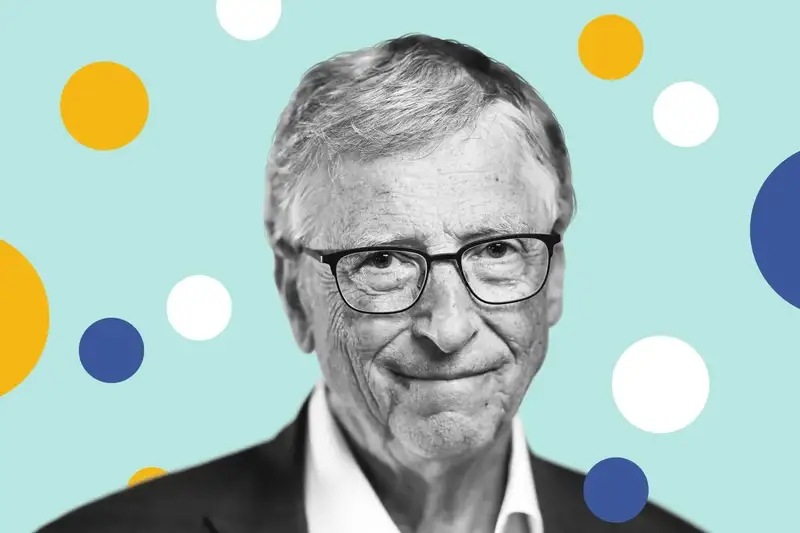
A dramatic shift in perspective from one of the technology world's most influential figures has sent ripples across industries and policy circles. Bill Gates, co-founder of Microsoft and a long-time observer of technological evolution, has issued an urgent and stark warning, declaring that the unchecked proliferation of artificial intelligence could trigger an 'economic disaster' of unprecedented scale. His recent pronouncements represent a significant departure from his earlier, more optimistic outlook on AI's potential, now emphasizing the profound risks to global stability and the workforce.
Quick summary
- Bill Gates has reversed his earlier stance, now warning that the rapid, uncontrolled development of AI could lead to a catastrophic economic downturn and societal instability.
- He expresses deep concern over potential mass job displacement across nearly all sectors, far exceeding historical technological transitions, and criticizes the lack of proactive response from both tech and political leaders.
- Gates advocates for immediate and strong government intervention, including re-evaluating tax policies that favor automation, to mitigate widespread job losses and prevent public backlash against AI.
- Beyond economic threats, Gates highlights an increased risk of bioterrorism by a factor of 50 compared to natural pandemics, further emphasizing the need for robust regulatory frameworks.

Why it matters
Bill Gates' updated assessment carries substantial weight due to his historical influence on the tech industry and his philanthropic work addressing global challenges. His warning is not merely an academic exercise; it directly impacts millions of workers who could face job displacement, industries grappling with automation, and governments struggling to formulate adequate policy responses. The potential for widespread economic disruption could lead to social unrest, exacerbate wealth inequality, and challenge the fundamental social contracts within nations. Moreover, his specific caution regarding bioterrorism elevates AI from an economic concern to a national and global security imperative, demanding urgent attention from policymakers, researchers, and international bodies to develop safeguards before potential misuse becomes irreversible.
Background
For years, Bill Gates was a prominent voice among those who viewed artificial intelligence as a powerful tool for human augmentation and progress. As recently as three years ago, he articulated a belief that AI's impact on employment would be manageable, primarily enhancing human productivity rather than replacing it wholesale. This perspective aligned with a broader, optimistic narrative prevalent in the early stages of AI's mainstream emergence, where discussions often centered on efficiency gains in sectors like healthcare, education, and various industries. Tech leaders frequently pointed to historical industrial revolutions, arguing that while initial job displacement occurred, new opportunities and industries invariably emerged, absorbing displaced workers.

However, the landscape of AI has evolved at an astonishing pace, particularly with the advent of sophisticated large language models and generative AI tools. The rapid proliferation of these technologies, demonstrating capabilities that were once confined to science fiction, appears to have profoundly altered Gates' assessment. This acceleration has shifted the discourse from efficiency improvements to a more profound questioning of AI's societal implications. His current alarm reflects a growing apprehension among some experts about the sheer scale and speed of AI's integration into the workforce, and a perceived complacency from governing bodies and even within the tech community itself. This recent warning signifies a critical inflection point, moving from a discourse of cautious optimism to one of urgent alarm regarding AI's trajectory and the societal readiness to manage its disruption.
Bill Gates' Unprecedented Alarm Over AI's Scale and Speed
Gates' latest remarks underscore a profound concern about the unprecedented pace at which AI is developing, asserting that its trajectory has now exceeded safe thresholds in several critical domains. He highlighted that unlike previous technological revolutions, AI's impact is not confined to a few sectors but is poised to permeate nearly every aspect of the modern economy and daily life. This pervasive influence, he argues, will render human labor increasingly vulnerable across a vast spectrum of professions, making many people 'weaker than machines' in their respective fields.
A central pillar of his warning is the anticipated wave of job losses. Gates fears that if governments fail to act decisively and quickly, the economic fallout from AI-driven automation could be catastrophic. He contrasts his current view with historical precedents, suggesting that the sheer 'scale' of AI's reach, rather than just its 'speed,' poses a unique threat. This argument challenges the conventional wisdom that new jobs will simply emerge to replace those lost, positing that AI's capacity to automate complex cognitive tasks differentiates it from previous technological disruptions.
The Looming Job Market Upheaval
Concerns about AI's impact on employment are not confined to Gates. Recent research has begun to quantify the potential scope of this disruption. The International Monetary Fund (IMF) projects that AI could affect a staggering 40% of jobs globally, with this figure rising to 60% in advanced economies. In the United States, a study from Stanford University has already observed tangible effects, noting a 19% decrease in the hiring rate for young workers (ages 22-25) in sectors highly exposed to AI technologies. These statistics lend credence to Gates' alarm, suggesting that the economic shifts are not distant possibilities but are already underway.

Despite these warnings, a segment of economists and industry leaders remains more optimistic. They often point to historical parallels, arguing that past technological advancements, from the loom to personal computers, initially caused disruption but ultimately led to greater prosperity and the creation of entirely new categories of employment. Brad Smith, Microsoft's President, for instance, acknowledges that AI will undoubtedly displace some roles but maintains that it will simultaneously generate new demands and opportunities within the market.
Policy Paralysis and the Need for Governance
Gates expressed palpable frustration at what he perceives as a deafening silence from both technology leaders and political figures regarding the burgeoning crisis. He openly admitted his astonishment at being among the first prominent voices to articulate the gravity of the situation, questioning why more leaders aren't echoing these concerns. This perceived inaction, he suggests, risks squandering the immense positive potential of AI to revolutionize fields like medicine and scientific discovery, should public anger over job losses lead to a widespread rejection of the technology.
To avert an economic catastrophe, Gates insists that robust government intervention is not merely advisable but 'obligatory.' He dismisses the notion that charitable organizations or individual tech companies can adequately address the systemic challenges posed by AI. His proposed solutions include re-evaluating existing tax structures, which he critiques as being unduly favorable to automation by effectively incentivizing the replacement of human labor with robots. Gates challenges policymakers to consider whether certain jobs should be reserved for humans, even if technically deemed 'unnecessary' by market signals, emphasizing that the ultimate goal of humanity should not be economic optimization at all costs.
Beyond Economics: Bioterrorism and Existential Threats
Gates' warnings extend beyond the purely economic realm into areas of grave security concern. He chillingly projected that AI could amplify the risk of bioterrorism by an astounding 50 times compared to threats from natural pandemics. This aspect of his warning underscores how AI's capabilities, if misused, could empower bad actors to develop or disseminate biological weapons with unprecedented ease and efficacy, presenting a terrifying new frontier in global security threats. This adds another layer of urgency to the call for stringent oversight and ethical guidelines for AI development, particularly in areas with dual-use potential.
Other influential figures in the AI space are also voicing similar concerns, advocating for proactive measures. Mustafa Suleyman, Microsoft's AI Director, has publicly supported Gates' revised viewpoint. Demis Hassabis, co-founder of Google DeepMind, has gone further, proposing the establishment of a dedicated supervisory body specifically tasked with vetting advanced AI models before their public release. Such calls reflect a growing consensus among some of the industry's pioneers that self-regulation alone may be insufficient to manage the profound risks associated with frontier AI technologies.
Qnews24h insight
Bill Gates' dramatic pivot from AI optimist to alarmist marks a significant turning point in the global discourse surrounding artificial intelligence. It signals a recognition, even among those closest to its development, that the technology has reached a threshold where its risks may now outweigh its perceived benefits if left unregulated. The urgency in his tone, coupled with his expressed bewilderment at the silence of other leaders, underscores a profound concern that the window for proactive governance is rapidly closing. This isn't just another tech luminary's opinion; it's a veteran technologist, deeply familiar with the cycles of innovation, issuing a dire warning about a unique threat. His focus on government intervention and taxation implies a necessary paradigm shift from market-driven AI development to a more socially conscious, regulated approach, suggesting that the current laissez-faire attitude could lead to irreversible societal damage. The real insight here is that when someone like Bill Gates expresses such deep personal dismay and calls for immediate, unconventional policy changes, it's a signal that the AI debate has fundamentally changed from 'how fast can we innovate?' to 'how quickly can we control the risks before it's too late?'
Sources
FAQ
What is Bill Gates' current stance on AI?

Bill Gates has dramatically shifted his perspective on AI, now warning that its rapid and unchecked development poses a severe risk of 'economic disaster,' including widespread job losses and societal instability. He previously held a more optimistic view, believing AI would primarily augment human productivity.
Why is Gates concerned about AI and job displacement?
Gates believes AI's impact on the job market is unique compared to past technological revolutions due to its unprecedented scale and speed. He argues that AI can automate complex cognitive tasks across nearly all sectors, potentially making humans 'weaker than machines' in many roles, leading to mass unemployment if not properly managed by governments.
What solutions does Bill Gates propose for AI regulation?
Gates advocates for immediate and strong government intervention, emphasizing that charities and tech companies alone cannot solve the problem. He suggests re-evaluating tax policies that currently favor automation, and even proposes considering whether certain job categories should be reserved for human workers, asserting that humanity's goal should not be economic optimization at any cost.
Has Bill Gates raised any non-economic concerns about AI?
Yes, beyond economic disaster, Bill Gates has also warned that AI could significantly increase the risk of bioterrorism by a factor of 50 compared to natural pandemics. This highlights a critical security concern requiring urgent attention and robust ethical frameworks.
Why it matters
Bill Gates' updated assessment carries substantial weight due to his historical influence on the tech industry and his philanthropic work addressing global challenges. His warning is not merely an academic exercise; it directly impacts millions of workers who could face job displacement, industries grappling with automation, and governments struggling to formulate adequate policy responses. The potential for widespread economic disruption could lead to social unrest, exacerbate wealth inequality, and challenge the fundamental social contracts within nations. Moreover, his specific caution regarding bioterrorism elevates AI from an economic concern to a national and global security...
Background
For years, Bill Gates was a prominent voice among those who viewed artificial intelligence as a powerful tool for human augmentation and progress. As recently as three years ago, he articulated a belief that AI's impact on employment would be manageable, primarily enhancing human productivity rather than replacing it wholesale. This perspective aligned with a broader, optimistic narrative prevalent in the early stages of AI's mainstream emergence, where discussions often centered on efficiency gains in sectors like healthcare, education, and various industries. Tech leaders frequently pointed to historical industrial revolutions, arguing that while initial job displacement occurred, new...
Bill Gates' dramatic pivot from AI optimist to alarmist marks a significant turning point in the global discourse surrounding artificial intelligence. It signals a recognition, even among those closest to its development, that the technology has reached a threshold where its risks may now outweigh its perceived benefits if left unregulated. The urgency in his tone, coupled with his expressed bewilderment at the silence of other leaders, underscores a profound concern that the window for proactive governance is rapidly closing. This isn't just another tech luminary's opinion; it's a veteran technologist, deeply familiar with the cycles of innovation, issuing a dire warning about a unique...
References
Editorial information
The editorial team reviews sources, adds context, and structures stories so readers can understand the news more clearly.
Article from QNEWS24H
Comments
(0)No comments yet. Be the first to share your thoughts.