Beyond the Silicon Bubble: How a New Hybrid Solar Breakthrough Could Salvage the Green Transition
- Traditional silicon solar manufacturing is facing a massive supply glut and financial crisis globally.
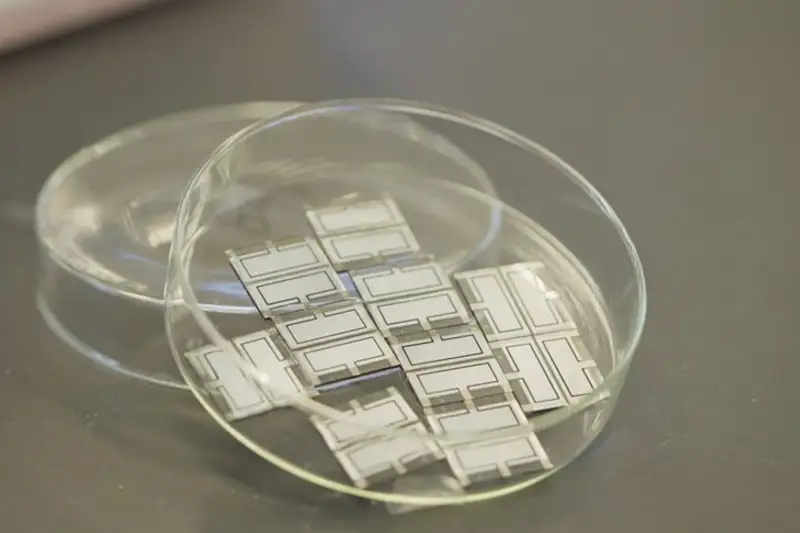
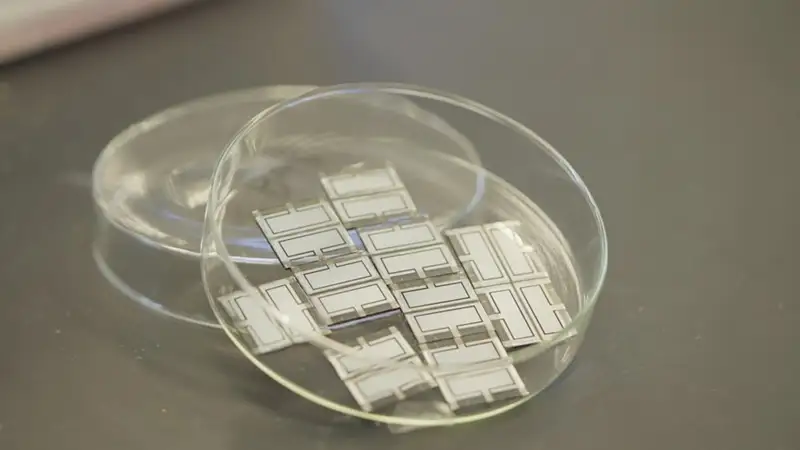
- Researchers at the Chinese Academy of Sciences (CAS) have engineered a highly stable perovskite-organic hybrid tandem solar cell with 28.04% efficiency.
- The breakthrough utilizes a smart molecule called TDB that chemically transforms under sunlight to lock unstable ions in place, solving the durability bottleneck.
The global solar energy market is currently caught in a paradoxical storm. While installation rates continue to climb worldwide, an aggressive manufacturing price war and structural overcapacity have pushed traditional silicon panel producers to the brink of financial collapse, triggering fears of a burst market bubble. Yet, amidst this economic instability, a paradigm-shifting breakthrough from researchers at the Chinese Academy of Sciences (CAS) offers an elegant escape hatch. By engineering a self-healing, highly efficient hybrid tandem solar cell that bypasses the limitations of silicon entirely, scientists may have just rewritten the rules of renewable energy generation.
Quick summary
- The Silicon Gluth Crisis: Traditional silicon solar manufacturers are grappling with a massive supply bubble, forcing market prices below actual production costs and driving numerous Western installation firms into insolvency.
- A Next-Generation Tandem Design: Chinese researchers have developed a hybrid perovskite-organic solar cell that achieves a record-breaking 28.04% stable power conversion efficiency by combining complementary light absorption layers.
- The Self-Healing TDB Molecule: The research team solved the historic material degradation problem of perovskite-based cells by introducing a smart additive ("TDB") that utilizes natural sunlight to lock unstable chemical ions in place.
Why it matters
For years, the green transition has been heavily dependent on a single, capital-intensive material: ultra-pure silicon. The production of silicon wafers requires massive energy consumption, complex high-temperature furnaces, and heavy infrastructure. This has not only concentrated supply chains in limited regions but has also created a volatile commodity cycle prone to boom-and-bust behavior.
A transition to hybrid perovskite-organic solar cells represents an industrial revolution. Because these cells are flexible, ultra-thin, and capable of being printed at low temperatures like ink on paper, they dramatically lower the barrier to entry for solar manufacturing. Furthermore, their extreme light weight minimizes shipping and installation costs, opening up entirely new use cases—ranging from building-integrated photovoltaics (BIPV) to off-grid consumer electronics, agricultural shading, and deep-space exploration where heavy silicon panels are functionally impractical.
Background
Over the past decade, the global solar market operated on a simple formula: scale up silicon production to drive down costs. While this successfully fueled the global adoption of solar energy, it eventually triggered a massive supply bubble. Companies produced far more silicon modules than the global grid infrastructure could integrate, causing prices to crash below sustainable manufacturing costs. Major photovolatic conglomerates have registered historic losses, while smaller installers in the United States and Europe have faced a wave of bankruptcies.
This market saturation coincided with a physical bottleneck. Traditional single-junction silicon solar panels are approaching their theoretical maximum efficiency limit (the Shockley-Queisser limit of roughly 29.4%). To extract more power from the sun, scientists had to look beyond single-material designs toward tandem cells, which stack different light-absorbing materials on top of each other.
While mixing perovskite (a synthetic crystal structure) and organic semiconductors has always been chemically promising, the resulting devices were notoriously fragile. Exposure to continuous sunlight caused the halogen ions (iodide and bromide) inside the perovskite film to separate and migrate, creating microscopic defects that degraded the solar cell's performance within days or weeks.
Qnews24h insight
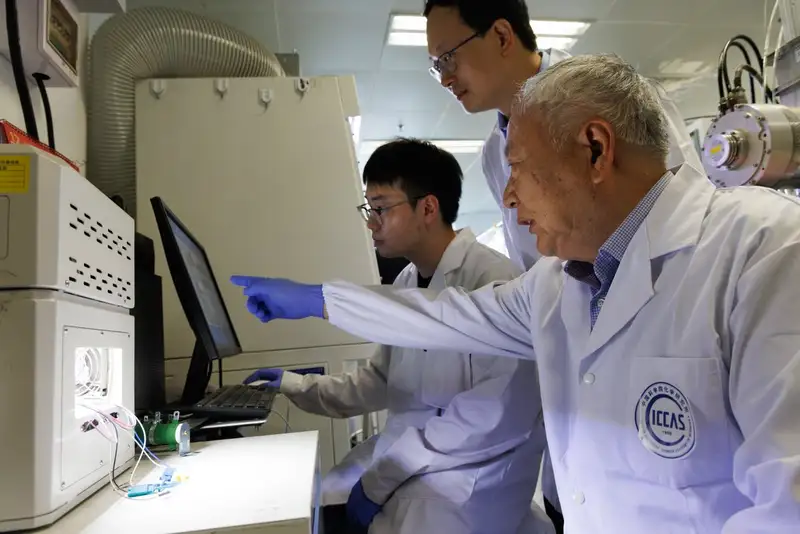
The innovation published in the journal Nature by Professor Meng Lei and his team at the Chinese Academy of Sciences is a brilliant display of material chemistry working in tandem with physics. Rather than trying to fight the degrading effects of sunlight, the researchers engineered a system that uses the sun’s own energy to stabilize itself.
The magic lies in a dual-stage stabilizer molecule named TDB. During the manufacturing phase, TDB regulates the crystallization speed of the liquid film to ensure the perovskite ions are evenly distributed. Then, once the panel is deployed in the field, solar radiation activates the TDB molecules, causing them to bind and lock the highly volatile halogen ions into place at the crystal boundary interfaces. This self-locking mechanism achieved a landmark stable efficiency of 28.04%.
From an international trade perspective, this breakthrough signals a shift in the renewable energy sector. While the West is currently trying to rebuild its own localized silicon supply chains to counter East Asian dominance, the technological frontier is already moving toward printed, organic, and hybrid chemical films. If this technology scales successfully to roll-to-roll manufacturing, the entire geopolitical struggle over silicon minerals could be rendered obsolete by chemical printing facilities.
Sources
This report is based on scientific research published in the journal Nature and coverage by international science desks, including reports from ChinaDaily and Xinhua.
Frequently Asked Questions
What is a tandem solar cell, and why is it better than traditional panels?
A tandem solar cell stacks two or more different materials to capture different segments of the solar spectrum. In this specific CAS research, the top perovskite layer absorbs high-energy light like ultraviolet, while the bottom organic layer absorbs near-infrared light. This collective teamwork allows the device to capture more energy than standard silicon-only panels.
What has prevented perovskite-organic hybrid solar cells from being commercialized?
The primary barrier has been durability. Under continuous sunlight and moisture, the internal chemical ions of perovskites tend to break down and migrate, quickly ruining the cell's electrical conductivity. The CAS team solved this using the TDB molecule, which acts as a molecular anchor to prevent this degradation under heat and light.
How are these new solar cells manufactured?
Unlike silicon cells, which require melting raw materials at temperatures exceeding 1400°C, perovskite-organic hybrid cells can be processed from liquid solutions at low temperatures. They can literally be printed onto thin, flexible plastic substrates using industrial inkjet or roll-to-roll printing techniques, drastically lowering energy use and production costs.
Why it matters
This technology moves solar power away from heavy, energy-intensive silicon manufacturing to lightweight, printable hybrid films. It lowers production costs, reduces dependency on localized silicon supply chains, and allows solar cells to be integrated into flexible surfaces, wearable tech, and space equipment.
Background
For a decade, the solar market scaled up traditional silicon to lower costs, causing a massive oversupply bubble. With silicon reaching its physical efficiency limits, scientists turned to tandem cells. However, combining perovskite and organic materials led to unstable structures that degraded rapidly under sunlight until this new molecular stabilization discovery.
The breakthrough by Professor Meng Lei's team at CAS showcases a shift from commodity-scale manufacturing to high-tech molecular chemistry. By utilizing sunlight to trigger a self-stabilizing chemical reaction inside the solar cell, this technology could bypass the entire silicon supply chain, shifting the geopolitical clean-tech race from raw mineral processing to advanced material IP.
References
Editorial information
The editorial team reviews sources, adds context, and structures stories so readers can understand the news more clearly.
Article from QNEWS24H
Comments
(0)No comments yet. Be the first to share your thoughts.