Apple's iOS 27 Unveils AI-Powered Password Changes: Convenience Meets Corporate Risk
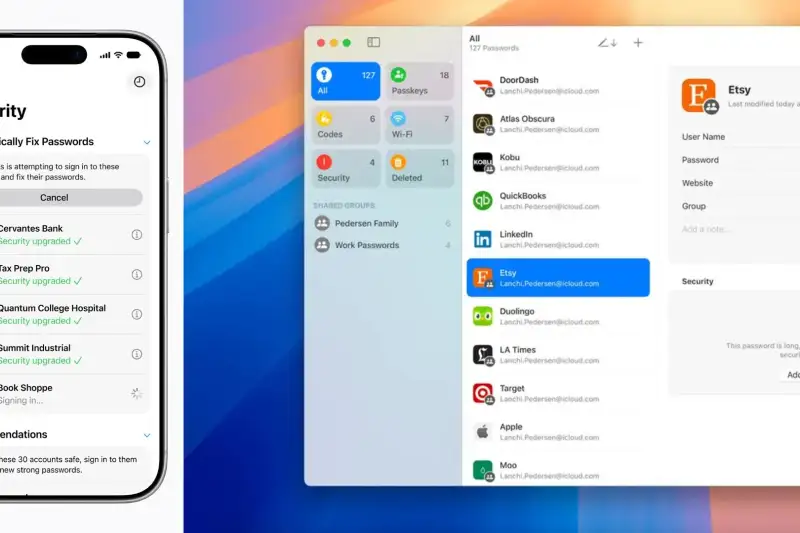
- iOS 27 introduces a groundbreaking agentic AI capability within its Passwords app, enabling one-tap, automatic updates for leaked or weak credentials.
- The AI autonomously navigates websites, fills forms, generates new passwords, and updates iCloud Keychain, even handling two-factor authentication (2FA) via temporary OTP...
- While offering immense convenience for individual users, this feature poses considerable security, compliance, and management challenges for corporate IT environments.
- Security experts emphasize the urgent need for Apple to integrate robust enterprise controls, such as Mobile Device Management (MDM) options, before the public release to mitigate...
Amidst the fanfare surrounding Siri AI advancements and new child safety features at Apple's recent Worldwide Developers Conference (WWDC), a quietly showcased innovation in iOS 27's Passwords application has profound implications, hinting at a new era of proactive device intelligence. This subtle yet significant reveal demonstrates Apple's foray into agentic AI, allowing the system to autonomously manage and update compromised user passwords, promising to eliminate a long-standing source of digital anxiety.
Quick summary
- iOS 27 introduces a groundbreaking agentic AI capability within its Passwords app, enabling one-tap, automatic updates for leaked or weak credentials.
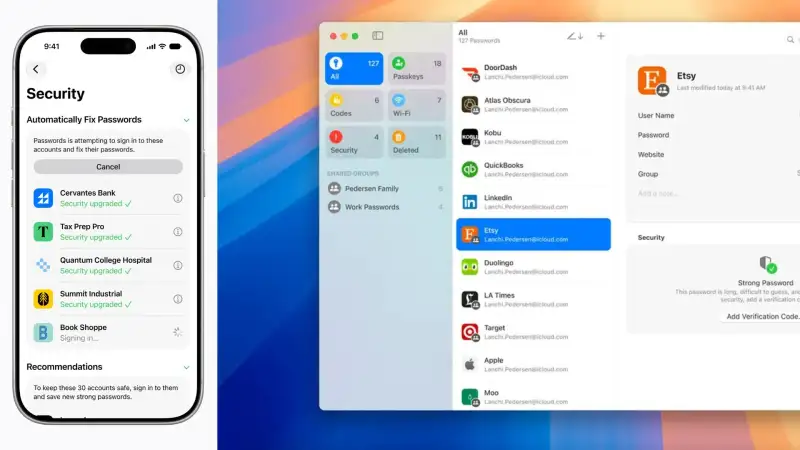
- The AI autonomously navigates websites, fills forms, generates new passwords, and updates iCloud Keychain, even handling two-factor authentication (2FA) via temporary OTP extraction from Messages or Mail.
- While offering immense convenience for individual users, this feature poses considerable security, compliance, and management challenges for corporate IT environments.
- Security experts emphasize the urgent need for Apple to integrate robust enterprise controls, such as Mobile Device Management (MDM) options, before the public release to mitigate potential business risks.
Why it matters
This development carries dual significance, reshaping both individual user experience and the complex landscape of enterprise security. For the average iPhone user, the feature promises an end to the tedious and often neglected task of manually updating weak or compromised passwords across numerous platforms. It addresses a critical pain point in personal cybersecurity, potentially elevating overall digital hygiene by making proactive security effortless.
However, the implications for businesses are far more intricate and potentially problematic. The automation of credential changes, while convenient for personal accounts, could inadvertently disrupt corporate systems, trigger compliance violations in highly regulated industries like finance and healthcare, and create unforeseen burdens for IT support departments. The absence of explicit logging or granular control over such autonomous actions raises alarms about accountability and data governance. Ultimately, Apple's implementation will influence how organizations manage employee devices and sensitive data, potentially necessitating a re-evaluation of current mobile security policies and MDM strategies.
Background
For years, managing digital identity has been a fragmented and often frustrating experience. Users have been bombarded with alerts about weak or compromised passwords, but the process of remediation—navigating to individual websites, logging in, and manually changing credentials—remained cumbersome. This friction often led to user fatigue, with many delaying or even ignoring these critical security recommendations, leaving them vulnerable to cyber threats.
Apple has consistently invested in bolstering its users' security, evolving its iCloud Keychain into a robust password manager that provides security recommendations and stores credentials securely. However, these features primarily offered passive assistance, alerting users to issues but requiring active intervention. The transition in iOS 27 marks a pivotal shift: from passively identifying vulnerabilities to actively remediating them. This move into 'agentic AI' — where artificial intelligence takes autonomous actions on behalf of the user — represents a significant leap from previous generations of digital assistance. While platforms like Siri have long processed commands, this new capability empowers the device to perform multi-step, complex tasks independently, truly changing the paradigm of how users interact with their digital security.
The Leap to Agentic AI: How It Works
The core of this new functionality lies in what Apple terms 'agentic AI,' an advanced form of artificial intelligence capable of performing actions and navigating complex digital environments without direct, step-by-step human instruction. Previously, if iOS detected a compromised password via its security monitoring, users would receive an alert and then be directed to manually visit the affected website to change their credentials.
With iOS 27's Developer Beta, this cumbersome multi-step process is condensed into a single tap. The underlying agentic AI, powered by Apple Foundation models, takes over. It autonomously navigates to the relevant website, intelligently identifies and fills out login and password change forms, generates a new, strong password, and then seamlessly updates this new credential within iCloud Keychain. Critically, to overcome the challenge of two-factor authentication (2FA), the AI can even request temporary access to the Messages or Mail application to automatically extract one-time passcodes (OTPs), ensuring a complete and uninterrupted password reset process.
Apple emphasizes that this sophisticated process runs primarily on the device, leveraging local processing power, with certain computationally intensive tasks handled by Private Cloud Compute. This hybrid approach is designed to maintain user privacy, as sensitive data is processed either locally or within a secure, private cloud environment, rather than on public cloud servers.
Convenience vs. Corporate Control: The Enterprise Dilemma
While the allure of effortless password management for individual users is undeniable, the autonomous nature of agentic AI introduces a complex set of challenges for enterprise environments. The primary concern stems from the potential for employees using personal iPhones for work-related tasks (a common practice in BYOD — Bring Your Own Device — scenarios) to inadvertently trigger the automatic password change feature on corporate accounts.
If an employee's work email or software-as-a-service (SaaS) login credentials are saved in their personal iCloud Keychain and flagged as compromised, a single tap could prompt the AI to autonomously modify these critical business accounts. This unauthorized alteration, even if well-intentioned, could violate corporate security policies, disrupt access for other team members, and potentially compromise data integrity. Furthermore, for accounts utilizing app-based 2FA (e.g., Google Authenticator, Microsoft Authenticator) instead of SMS or email codes, the agentic AI's inability to interact with these dedicated authenticator apps could lead to system errors, mass account lockouts, and a significant surge in helpdesk tickets for IT departments.
The implications are particularly severe in industries with stringent regulatory compliance requirements, such as finance, healthcare, and government. In these sectors, every change to an account, especially regarding login credentials, must be meticulously logged and auditable. An AI making autonomous changes without leaving a clear, traceable log could create significant compliance headaches and expose organizations to regulatory penalties.
Balancing Innovation and Security Governance
Apple's move with agentic AI in iOS 27 is a clear strategy to further entrench users within its ecosystem by offering unparalleled convenience and security integration. The seamless synchronization and automatic filling capabilities across Apple devices solidify the advantages of staying within the Cupertino giant's walled garden.
However, for the feature to gain widespread acceptance in the business world, Apple must swiftly address the corporate security concerns. Experts suggest the imperative addition of granular control options, most notably through enhanced Mobile Device Management (MDM) frameworks. These MDM solutions would allow corporate IT administrators to proactively manage, restrict, or entirely disable the agentic AI password change feature on employee devices, particularly for specified work-related applications or domains.
Such controls would provide businesses with the necessary governance to balance the convenience offered by Apple's innovation with their crucial security protocols and compliance obligations. The journey from developer beta to official release will be critical, as Apple navigates the complex terrain of consumer-centric innovation versus the rigorous demands of enterprise-grade security and manageability.
Qnews24h insight
Apple's bold move with agentic AI in iOS 27's password management highlights a growing tension between individual user convenience and the stringent demands of enterprise security and compliance. While pushing the boundaries of autonomous device interaction, the rollout underscores the critical need for robust, granular administrative controls. Without these, what promises to be a boon for personal cybersecurity could become a significant liability for organizations, forcing Apple to navigate complex trade-offs between innovation velocity and corporate adoption. The success of this feature in the wider market, particularly within professional settings, will hinge not just on its technological prowess, but on Apple's ability to empower IT departments with the tools to manage this new level of device autonomy responsibly.
Sources
Frequently Asked Questions (FAQ)
What is agentic AI in iOS 27's Passwords app?
Agentic AI refers to artificial intelligence that can take autonomous actions and perform complex, multi-step tasks on behalf of a user, without requiring direct, granular instructions for each step. In iOS 27's Passwords app, this means the AI can automatically navigate websites, fill forms, create new passwords, and update credentials in response to a single user tap.
How does the automatic password change feature work?
When iOS 27 detects a weak or compromised password, a user can initiate an automatic change with a single tap. The agentic AI then navigates to the relevant website, fills in login details, generates a new strong password, and updates it in the user's iCloud Keychain. For accounts with two-factor authentication, the AI can temporarily access Messages or Mail to retrieve one-time passcodes (OTPs) to complete the process.
What are the main security concerns for businesses regarding this feature?
For businesses, concerns include potential unauthorized changes to corporate accounts if employees save work credentials on personal iPhones, leading to policy violations and system disruptions. There are also risks of account lockouts for services using app-based 2FA, increased IT support burdens, and compliance issues in regulated industries due to a lack of clear audit trails for AI-driven credential changes.
Why it matters
This development carries dual significance, reshaping both individual user experience and the complex landscape of enterprise security. For the average iPhone user, the feature promises an end to the tedious and often neglected task of manually updating weak or compromised passwords across numerous platforms. It addresses a critical pain point in personal cybersecurity, potentially elevating overall digital hygiene by making proactive security effortless. However, the implications for businesses are far more intricate and potentially problematic. The automation of credential changes, while convenient for personal accounts, could inadvertently disrupt corporate systems, trigger compliance...
Background
For years, managing digital identity has been a fragmented and often frustrating experience. Users have been bombarded with alerts about weak or compromised passwords, but the process of remediation—navigating to individual websites, logging in, and manually changing credentials—remained cumbersome. This friction often led to user fatigue, with many delaying or even ignoring these critical security recommendations, leaving them vulnerable to cyber threats. Apple has consistently invested in bolstering its users' security, evolving its iCloud Keychain into a robust password manager that provides security recommendations and stores credentials securely. However, these features primarily...
Apple's bold move with agentic AI in iOS 27's password management highlights a growing tension between individual user convenience and the stringent demands of enterprise security and compliance. While pushing the boundaries of autonomous device interaction, the rollout underscores the critical need for robust, granular administrative controls. Without these, what promises to be a boon for personal cybersecurity could become a significant liability for organizations, forcing Apple to navigate complex trade-offs between innovation velocity and corporate adoption. The success of this feature in the wider market, particularly within professional settings, will hinge not just on its...
References
Editorial information
The editorial team reviews sources, adds context, and structures stories so readers can understand the news more clearly.
Article from QNEWS24H
Comments
(0)No comments yet. Be the first to share your thoughts.