Apple and Intel Forge Historic U.S. Chipmaking Alliance as AI Boom Realigns Global Supply Chains

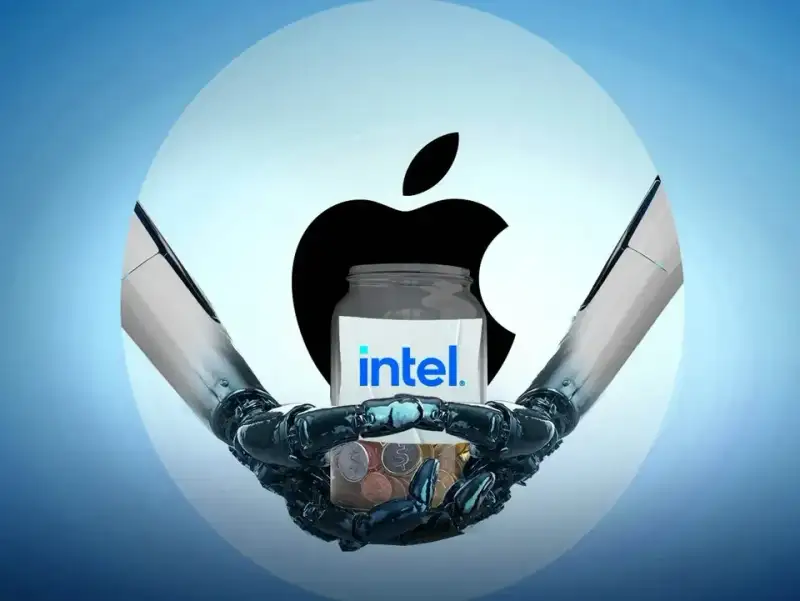
- Apple and Intel have inked a multi-year deal to manufacture chips inside the United States, reducing Apple's exclusive reliance on Taiwan's TSMC.
- Intel will focus on legacy and mid-range silicon, such as older M-series chips for iPads and MacBook Airs, rather than high-end 2nm or M5 chips.
- The partnership is driven by geopolitical pressures discussed at the G7 summit and TSMC capacity bottlenecks caused by Nvidia's surging AI chip demand.
In a major realignment of the global semiconductor landscape, Apple has agreed to a massive, multi-year contract with Intel to design and manufacture silicon directly on American soil. Announced by President Donald Trump on his Truth Social platform following intensive semiconductor supply chain discussions at the G7 summit, the deal signals a profound shift in Apple's historical reliance on Taiwanese giant TSMC. As geopolitical concerns over Taiwan intensify and the global artificial intelligence boom reshapes foundry priorities, this partnership represents both a major political milestone for domestic manufacturing and a vital strategic hedge for the world’s most valuable consumer technology company.
Quick summary
- A Historic Partnership: Apple has signed a multi-year agreement to have Intel manufacture custom chips inside the United States, shifting away from exclusive reliance on Taiwan's TSMC.
- Focus on Legacy Silicon: Intel will not produce cutting-edge 2nm or M5 chips; instead, it will focus on older M-series processors for iPads and MacBooks, and base-model iPhone chips.
- The Nvidia Impact: Due to insatiable demand for AI processors, Nvidia has displaced Apple as TSMC’s top-priority client, leading to supply constraints that forced Apple to seek alternative foundry partners.
Why it matters
This deal represents a seismic shift for the global technology ecosystem. For years, Apple’s single-source reliance on Taiwan Semiconductor Manufacturing Company (TSMC) was viewed as a potential single point of failure, vulnerable to both natural disasters and geopolitical conflict in the Taiwan Strait. By bringing a portion of its silicon supply chain back to the United States, Apple is mitigating extreme tail risks.
For Intel, this is a monumental validation of its "Intel Foundry Services" (IFS) strategy. Landing Apple as a cornerstone client is the ultimate proof of concept for Intel's ambitions to compete directly with TSMC and Samsung as a world-class contract manufacturer. It also fulfills a critical bipartisan political goal in Washington: restoring advanced semiconductor manufacturing leadership to American soil.
Background
Historically, Apple’s chip supply chain has undergone several massive transitions. In the early days of the iPhone, Apple relied on Samsung to fabricate its A-series processors. However, as the legal and commercial rivalry between the two giants intensified, Apple transitioned exclusively to TSMC. This partnership enabled Apple to pioneer successive generations of leading-edge lithography, from 7nm down to the latest 3nm nodes.

However, the macroeconomic landscape changed drastically in 2025 and 2026. The explosive rise of generative AI created an insatiable demand for advanced graphics processing units (GPUs). Companies like Nvidia secured massive swathes of TSMC's packaging and production capacity, effectively pushing Apple out of its long-held spot as TSMC's primary, undisputed customer. The resulting bottlenecks have already delayed critical Apple rollouts, including the Mac Studio M5 and touch-screen MacBook Pro models, while forcing the company to halt sales of certain Mac configurations due to memory component shortages. These supply constraints, combined with G7-level political pressure to diversify out of Taiwan, made a partnership with Intel inevitable.
The AI Boom and the Battle for TSMC's Capacity
The rise of artificial intelligence has fundamentally altered the power dynamics in Silicon Valley. TSMC’s advanced packaging technologies, such as Chip-on-Wafer-on-Substrate (CoWoS), have become the industry’s tightest bottleneck. Because Nvidia's ultra-high-margin H100, B200, and next-generation AI chips command premium prices, Nvidia has been able to outbid and out-negotiate traditional consumer electronics brands for TSMC's highly coveted fabrication lines.
As a result, Apple found itself facing unprecedented limits on its production volumes. By offloading the manufacturing of older M-series chips (such as those powering the MacBook Air and iPad Pro) and standard iPhone processors to Intel, Apple frees up TSMC’s highly limited, cutting-edge capacity. This allows TSMC to focus almost exclusively on producing Apple’s next-generation 2nm processors, which are slated to debut in the highly anticipated iPhone 18 series.
Intel’s 18A-P Roadmap and Technical Hurdles
While the deal is a massive PR and strategic win, the physical transition of silicon manufacturing will not happen overnight. Intel has only recently entered the limited testing phase for its advanced 18A-P (1.8-nanometer class) process node. Transitioning complex chip architectures to a new foundry is notoriously difficult, requiring extensive redesigns of physical layouts and intellectual property blocks.

Industry analysts, including Dan Ives, suggest that Intel will not be able to operate at maximum production capacity for Apple’s chips until mid-2027 at the earliest. Consequently, this multi-year deal is a slow-burn strategy. It acts as an incubation period during which Intel can mature its manufacturing yields while Apple progressively shifts low-risk, high-volume silicon packages away from Asian foundries.
Qnews24h insight
The Apple-Intel alliance is a marriage of convenience dictated by geopolitics and the realities of the AI gold rush. However, readers should maintain a cautious outlook. Intel is still in a transitional phase; its manufacturing capabilities have lagged behind TSMC's for nearly a decade. By assigning Intel older-generation silicon rather than its crown-jewel 2nm or M5 chips, Apple is managing its risk conservatively. Apple is essentially using Intel as a safety valve’a backup foundry to keep its high-volume, entry-level devices flowing while keeping TSMC focused on the ultra-premium tier. If Intel successfully delivers on this contract, it could permanently break TSMC’s monopoly on advanced silicon fabrication. If Intel stumbles on yield rates, however, Apple’s high-volume hardware lines could face unprecedented delivery friction in late 2027.
Sources
- znews.vn (https://znews.vn/cot-moc-dac-biet-cua-apple-va-intel-post1661134.html)
- AppleInsider (Investor notes by analyst Dan Ives)

Frequently Asked Questions
Will Intel manufacture the processors for the iPhone 18 Pro Max?
No. Intel will not manufacture cutting-edge processors like the A-series for the iPhone 18 Pro Max, nor will it build the M5 processors. These high-end chips will continue to be fabricated by TSMC using their next-generation 2nm node.
Why did Apple choose Intel instead of continuing exclusively with TSMC?
Apple was forced to diversify due to global chip shortages and the massive demand for AI processors, which saw Nvidia displace Apple as TSMC's top-priority customer. Geopolitical pressure to reduce single-source reliance on Taiwanese manufacturing also played a major role.
When will Intel-made Apple chips start appearing in consumer devices?
While testing has begun on Intel's 18A-P process node, Intel is not expected to reach maximum production capacity for Apple chips until at least mid-2027. Consumer devices featuring these chips will likely roll out gradually around that timeframe.
Why it matters
This partnership marks a critical turning point for global semiconductor supply chain diversification. By moving a portion of its silicon manufacturing to the US, Apple safeguards its hardware pipeline from potential geopolitical disruptions in Taiwan. For Intel, this deal serves as the ultimate validation of its foundry services, offering a massive boost to domestic US high-tech manufacturing.
Background
Prior to this deal, Apple relied almost exclusively on TSMC for its custom silicon, having previously transitioned away from Samsung. However, the generative AI boom of 2025-2026 allowed Nvidia to secure a massive share of TSMC's advanced packaging capacity, stripping Apple of its top-priority status. This bottleneck delayed several Mac products, forcing Apple to secure an alternative foundry partner.
Apple is executing a highly conservative, risk-managed pivot. By trusting Intel only with legacy and standard-tier chips (like base iPhone and older M-series processors), Apple ensures that any potential production or yield issues on Intel's new 18A-P node won't cripple its flagship iPhone 18 Pro Max or M5 launches, which remain safely in the hands of TSMC.
References
Editorial information
The editorial team reviews sources, adds context, and structures stories so readers can understand the news more clearly.
Article from QNEWS24H
Comments
(0)No comments yet. Be the first to share your thoughts.