US Tech Giants Clash: Apple's Push for Chinese Chips Tests Trump's Economic Balancing Act
- Apple is aggressively lobbying to use memory chips from Chinese manufacturers, specifically CXMT, to counter surging component costs driven by the global AI boom.
- US chip giant Micron Technology vehemently opposes this, arguing that integrating Chinese-made chips threatens domestic semiconductor production and national security, drawing...
- The conflict presents a significant challenge for the Trump administration, forcing a decision between prioritizing lower consumer prices (Apple's stance) and strengthening US...
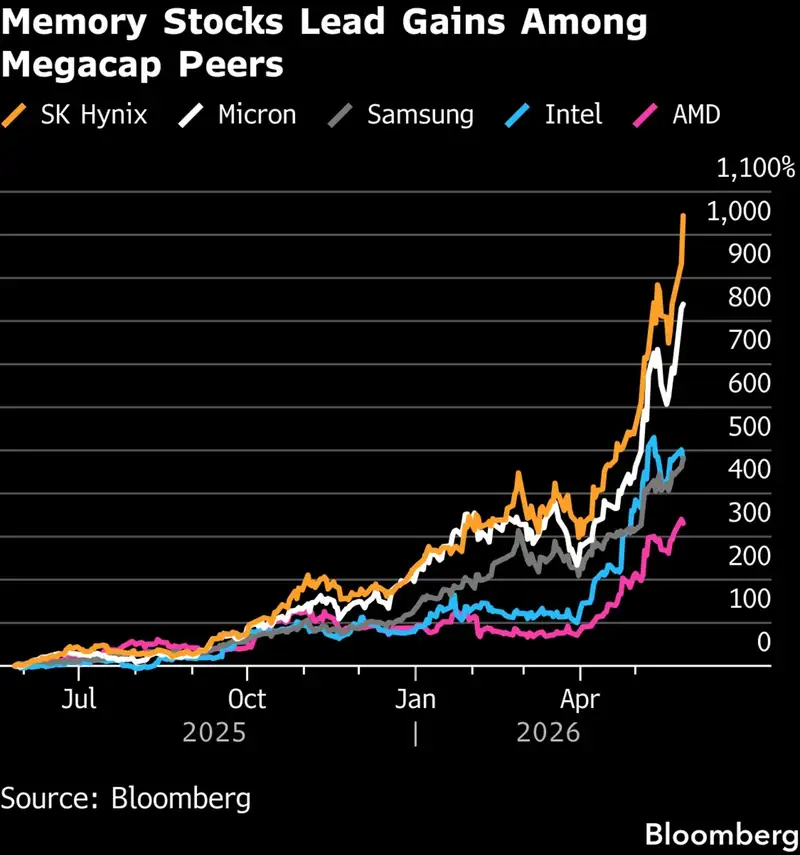
- The escalating demand for high-bandwidth memory (HBM) and DRAM, critical for AI, has empowered chip producers like Micron, reversing traditional power dynamics where Apple...
A formidable lobbying battle has ignited in Washington, pitting two of America's technology titans, Apple and Micron Technology, against each other. At its core, the dispute forces the US administration to confront a stark choice between its stated economic priorities: reducing consumer costs and bolstering domestic semiconductor manufacturing. As the artificial intelligence revolution fuels unprecedented demand for advanced memory chips, this clash reveals the profound complexities of global supply chains and national security interests in an increasingly interconnected world.
Quick summary
- Apple is aggressively lobbying to use memory chips from Chinese manufacturers, specifically CXMT, to counter surging component costs driven by the global AI boom.
- US chip giant Micron Technology vehemently opposes this, arguing that integrating Chinese-made chips threatens domestic semiconductor production and national security, drawing parallels to past industrial decline.
- The conflict presents a significant challenge for the Trump administration, forcing a decision between prioritizing lower consumer prices (Apple's stance) and strengthening US semiconductor independence (Micron's goal).
- The escalating demand for high-bandwidth memory (HBM) and DRAM, critical for AI, has empowered chip producers like Micron, reversing traditional power dynamics where Apple dictated pricing.
Why it matters
This intense lobbying effort carries significant implications for various stakeholders, extending far beyond the boardrooms of Apple and Micron. For consumers, the outcome could directly influence the pricing of popular electronics, including iPhones, as Apple seeks to manage production costs. Should Apple be restricted from sourcing cheaper components, these costs could be passed on.
For the US economy and national security, the debate touches upon the critical objective of semiconductor independence. Reliance on foreign, particularly Chinese, memory chip suppliers could expose the nation to supply chain vulnerabilities and potentially cede technological leadership. Micron's argument underscores a broader concern about protecting American manufacturing jobs and strategic industries against what it perceives as state-backed competition.
Moreover, the dispute highlights the fierce global competition in the AI hardware sector. As AI becomes increasingly central to economic and military power, control over critical components like advanced memory chips is paramount. The decision by the US administration will set a precedent for how American companies navigate the intricate balance between globalized supply chains, cost efficiency, and strategic national interests in the age of AI.
Background
The roots of this current conflict can be traced back years, long before the recent AI surge. For decades, Apple, as one of the world's largest purchasers of memory chips, exerted immense pricing pressure on its suppliers, including Micron. These intense negotiations often led to deep-seated resentments, with Apple leveraging its massive order volumes to secure the lowest possible costs for essential components, effectively dictating terms to maintain its healthy profit margins.
The landscape began to shift dramatically with the advent of the generative AI era. The explosion in demand for AI-specific hardware, particularly high-bandwidth memory (HBM) and dynamic random-access memory (DRAM), reshaped the market dynamics entirely. Data center giants, fueling the AI revolution, started acquiring vast quantities of memory chips at premium prices, fundamentally altering the supplier-customer relationship. This newfound leverage allowed memory chip manufacturers, particularly Micron, to command higher prices and reduce their dependence on single large customers like Apple.
Amidst this transformation, China's semiconductor industry has been rapidly advancing. Companies like ChangXin Memory Technologies (CXMT) have emerged as significant players in the global DRAM market. CXMT, currently the fourth-largest DRAM producer, is rapidly expanding its capacity, with projections suggesting it could account for 15% of global DRAM output by 2028 through new facilities in Hefei, Shanghai, and Beijing. However, this growth has not gone unnoticed by Washington, which views certain Chinese tech firms with suspicion, placing CXMT and Yangtze Memory Technologies (YMTC) on the Pentagon's 1260H list, a designation for companies with alleged ties to China's military.
The US government, under successive administrations, has increasingly prioritized strengthening domestic semiconductor production, culminating in initiatives like the CHIPS Act. This policy aims to reduce reliance on foreign manufacturing and bolster national security through self-sufficiency in critical technologies. Against this backdrop, Apple's exploration and technical testing of CXMT's chips, reportedly driven by rising costs from traditional suppliers, sets the stage for the current high-stakes political and economic showdown.
Qnews24h insight
The collision between Apple and Micron over sourcing memory chips encapsulates a critical geopolitical and economic dilemma for the United States. While Apple's pursuit of lower-cost Chinese components aligns with a short-term consumer benefit narrative—potentially leading to more affordable devices—it directly conflicts with the strategic imperative of securing domestic semiconductor independence. The administration's response will not merely address a corporate lobbying dispute; it will signal its commitment to balancing immediate economic benefits against long-term national security and technological sovereignty. This situation reveals the profound trade-offs inherent in a globalized tech supply chain, where economic efficiency often clashes with strategic resilience. Allowing extensive use of components from firms like CXMT, particularly those on national security watchlists, could inadvertently undermine the very domestic chip manufacturing capacity the US is trying to foster, a risk Micron has explicitly highlighted by referencing past industrial declines. The challenge for policymakers is to craft a solution that prevents perceived 'profiteering' by critical suppliers while simultaneously safeguarding the domestic industry against predatory competition and ensuring a robust, secure supply chain for future technological advancements, especially in the AI domain.
Sources
- {"title": "Apple đẩy ông Trump vào thế khó | Znews.vn", "url": "https://znews.vn/apple-day-ong-trump-vao-the-kho-post1672244.html"}
The High Stakes of Chip Sourcing: A Deeper Dive
The intensity of this dispute is heightened by the sheer scale of investment and the global strategic importance of the semiconductor industry. Micron, for its part, has committed to investing an staggering $250 billion in US manufacturing facilities, a move that directly supports the administration's goal of bringing chip production back home. This pledge positions Micron as a key player in the domestic economic revitalization narrative, making its opposition to Apple's China-focused strategy even more potent.
Apple's counter-argument revolves around what it terms 'price gouging.' The company points to Micron's reported gross profit margins, which have exceeded 80% during the AI boom, as evidence of unfair pricing practices. Furthermore, Apple accuses Micron of failing to reinvest sufficiently or quickly enough to expand supply, implying that the existing shortages are partly a result of Micron's own strategic decisions to prioritize high-margin AI customers over other industries.
This accusation, however, is met with strong resistance from within the chip industry. Many leaders argue that the current shortages are a direct consequence of the aggressive price-squeezing tactics employed by large customers like Apple during previous market downturns. The argument is that sustained pressure on prices disincentivized sufficient long-term investment in expanding manufacturing capacity, creating the very supply constraints now being experienced globally.
AI's Transformative Impact on Chip Dynamics
The AI revolution has indeed been a game-changer. The specialized demands of AI workloads for vast amounts of high-speed memory have made HBM and advanced DRAM technologies indispensable. This surge in demand has dramatically shifted the balance of power from major buyers like Apple to the chip manufacturers who can deliver these crucial components. Companies building AI data centers are now willing to pay premium prices, pushing general-purpose memory prices higher and creating scarcity for other sectors.
Beyond Apple, numerous other industries, from medical device manufacturers to the automotive sector, have felt the pinch of memory chip shortages. These industries have also appealed to the US government for intervention, highlighting the widespread impact of the current supply crunch. The challenge for the administration is therefore multifaceted: address immediate industry concerns, foster long-term domestic capacity, and navigate complex geopolitical considerations.
The Political Tightrope for Trump
President Trump finds himself in a precarious position. On one hand, his administration has consistently advocated for policies that prioritize American manufacturing and reduce reliance on foreign supply chains, especially from China. He has also championed consumer affordability. The Apple-Micron conflict places these two pillars in direct opposition.
To date, Trump has maintained a cautious stance, refraining from imposing further restrictions on Chinese companies while ongoing trade negotiations are active. He has also publicly praised both Apple and Micron for their substantial investments within the United States, indicating an attempt to balance these competing interests. However, the lobbying efforts of both tech giants are intensifying, suggesting that a definitive decision may soon become unavoidable. The outcome will not only impact the financial bottom line of these corporations but will also serve as a crucial test of the US government's ability to forge a coherent industrial strategy in an era defined by rapid technological change and geopolitical rivalry.
FAQ
- What is the core conflict between Apple and Micron?
Apple is lobbying to source memory chips from Chinese manufacturers like CXMT due to rising costs from traditional suppliers, driven by AI demand. Micron, the sole significant US memory chip producer, opposes this, arguing it undermines domestic production and national security. - How has the rise of AI influenced this dispute?
The explosion in demand for memory chips (HBM, DRAM) critical for AI has caused global shortages and price increases, shifting power to chip manufacturers like Micron. This has reduced Apple's traditional leverage to negotiate lower prices. - What are the potential implications for the US economy and consumers?
The outcome could affect consumer prices for electronics if Apple cannot source cheaper components. More broadly, it will influence US semiconductor independence, supply chain security, and the government's strategy for balancing economic efficiency with national security in critical technology sectors.






Why it matters
This intense lobbying effort carries significant implications for various stakeholders, extending far beyond the boardrooms of Apple and Micron. For consumers, the outcome could directly influence the pricing of popular electronics, including iPhones, as Apple seeks to manage production costs. Should Apple be restricted from sourcing cheaper components, these costs could be passed on. For the US economy and national security, the debate touches upon the critical objective of semiconductor independence. Reliance on foreign, particularly Chinese, memory chip suppliers could expose the nation to supply chain vulnerabilities and potentially cede technological leadership. Micron's argument...
Background
The roots of this current conflict can be traced back years, long before the recent AI surge. For decades, Apple, as one of the world's largest purchasers of memory chips, exerted immense pricing pressure on its suppliers, including Micron. These intense negotiations often led to deep-seated resentments, with Apple leveraging its massive order volumes to secure the lowest possible costs for essential components, effectively dictating terms to maintain its healthy profit margins. The landscape began to shift dramatically with the advent of the generative AI era. The explosion in demand for AI-specific hardware, particularly high-bandwidth memory (HBM) and dynamic random-access memory (DRAM),...
The collision between Apple and Micron over sourcing memory chips encapsulates a critical geopolitical and economic dilemma for the United States. While Apple's pursuit of lower-cost Chinese components aligns with a short-term consumer benefit narrative—potentially leading to more affordable devices—it directly conflicts with the strategic imperative of securing domestic semiconductor independence. The administration's response will not merely address a corporate lobbying dispute; it will signal its commitment to balancing immediate economic benefits against long-term national security and technological sovereignty. This situation reveals the profound trade-offs inherent in a globalized...
References
Editorial information
The editorial team reviews sources, adds context, and structures stories so readers can understand the news more clearly.
Article from QNEWS24H
Comments
(0)No comments yet. Be the first to share your thoughts.