Android Pulse: Google's Silent Guardian App Raises User Concern on Millions of Phones

- An enigmatic application named "Android Pulse," featuring a blank icon, spontaneously appeared in the update lists of millions of Android devices.
- Contrary to widespread user fears of malware, it has been confirmed as a legitimate, Google-developed system tool.
- Its primary function is to covertly monitor and detect unusual or malicious software behavior on Android smartphones, enhancing device security.
- Silently rolled out by Google in March 2026, the tool has undergone multiple internal updates and boasts over 10 million installations via Google Play.
A wave of confusion and concern swept across millions of Android users recently as an unfamiliar, seemingly blank application mysteriously appeared in their Google Play Store update queues. This unannounced arrival, labeled "Android Pulse," sparked immediate apprehension among users, many of whom feared their devices might have been compromised by malware or a sophisticated cyberattack. The unexpected nature of its appearance, coupled with a lack of clear identification, quickly became a trending topic across tech communities and social media platforms.
Quick summary

- An enigmatic application named "Android Pulse," featuring a blank icon, spontaneously appeared in the update lists of millions of Android devices.
- Contrary to widespread user fears of malware, it has been confirmed as a legitimate, Google-developed system tool.
- Its primary function is to covertly monitor and detect unusual or malicious software behavior on Android smartphones, enhancing device security.
- Silently rolled out by Google in March 2026, the tool has undergone multiple internal updates and boasts over 10 million installations via Google Play.



Why it matters
The sudden appearance of Android Pulse highlights a growing tension between user transparency and the imperative for robust, proactive digital security. For millions of Android users, it underscores the often-invisible mechanisms at play protecting their devices, while simultaneously raising questions about control and notification. This development signifies Google's intensifying efforts to bolster the Android ecosystem against an ever-evolving threat landscape, shifting towards deeper, system-level monitoring. It impacts user trust by deploying tools without explicit prior consent or detailed explanations, yet it ultimately aims to deliver a more secure and smoother user experience by autonomously neutralizing potential threats before they manifest. For the industry, it sets a precedent for how platform owners might deploy security features, possibly influencing future disclosure practices and user interaction with system-level software.

Background
The Android operating system, with its open-source nature and vast global user base, has historically been a frequent target for malware and security vulnerabilities. Over the years, Google has implemented numerous layers of defense, including Google Play Protect, which scans apps for malicious behavior, and regular security updates. However, these measures often react to known threats or rely on user intervention for updates. The digital threat landscape has become increasingly sophisticated, with malicious actors constantly developing new ways to bypass traditional security protocols.

This escalating challenge has pushed platform developers like Google to explore more embedded, proactive, and less obtrusive methods of system security. The silent release of Android Pulse in March 2026, preceding several internal updates and its widespread deployment to over 10 million devices, including flagship models like the Pixel 11 Pro XL, reflects a strategic shift. It indicates a move towards continuous, real-time background monitoring, aiming to detect anomalous application behavior that might signal a novel threat, rather than just scanning for known signatures. This approach contrasts with previous models that often required user awareness or manual intervention, signaling Google's deeper integration of security at the core OS level.
Qnews24h insight

Google's silent deployment of "Android Pulse" represents a strategic balancing act between comprehensive security and user autonomy. While the intention to safeguard millions of Android devices from evolving threats is clear and commendable, the lack of prior notification or a readily identifiable icon for a tool performing deep system monitoring naturally triggers user apprehension. This move suggests that Google prioritizes a seamless, always-on security posture, perhaps believing that explicit user interaction or complex explanations might hinder widespread adoption or effectiveness. However, the initial confusion and concern underscore a critical insight: even essential security tools require a degree of transparency or effective communication strategy to maintain user trust. The "blank icon" decision, possibly intended to signify a background service rather than a user-facing application, inadvertently fueled suspicion. Moving forward, Google and other platform providers face the ongoing challenge of enhancing security without eroding user confidence through opaque processes, suggesting a need for more proactive, clear communication about system-level operations, even for beneficial tools.
The Unsettling Appearance on Millions of Android Devices
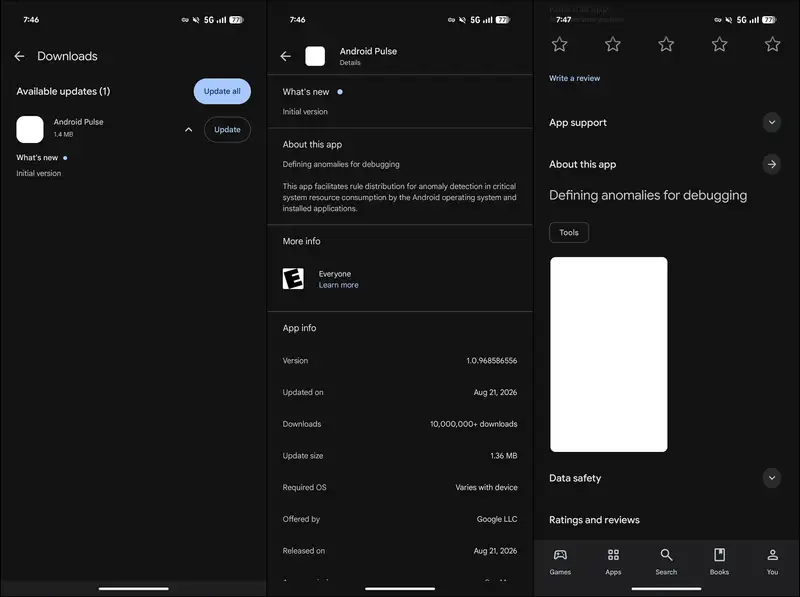
For many Android users, the notification was unsettling: an update available for an application they didn't recognize, featuring a completely blank icon and the cryptic name "Android Pulse." This unexpected entry into their Google Play Store update queue sparked a flurry of online discussions, Reddit threads, and social media posts, with users sharing screenshots and expressing concerns. The primary fear revolved around the possibility of a sophisticated malware infection or a privacy breach, given the application's unannounced arrival and lack of clear identification. In an era where digital security threats are rampant and users are increasingly vigilant about unauthorized software, such an opaque development naturally fueled widespread anxiety.
The sudden nature of its appearance, without any accompanying official announcement or explanation from Google, exacerbated the confusion. Users found themselves grappling with the dilemma of whether to proceed with an update for an unknown entity or risk potential security vulnerabilities by ignoring it. This initial wave of uncertainty highlighted a significant communication gap between the tech giant and its vast user base, particularly regarding system-level tools that operate in the background.
Google's Silent Guardian: Unveiling Android Pulse's True Purpose
Despite the initial alarm, the mysterious "Android Pulse" application is, in fact, a legitimate and crucial tool developed by Google itself. Its core function is to act as a silent guardian, diligently working in the background to monitor and detect unusual software behavior on Android devices. Unlike traditional antivirus applications that often rely on signature-based detection of known malware, Android Pulse appears to employ more sophisticated behavioral analysis, aiming to identify novel threats or suspicious activities that deviate from normal application patterns.
This proactive approach signifies Google's ongoing commitment to strengthening the security posture of its mobile operating system. By automatically scanning and optimizing system processes, Android Pulse aims to improve the overall smoothness and responsiveness of Android devices, ensuring a consistent and reliable user experience. Its fully automated, background operation means users are not required to configure settings or perform manual scans, reflecting a design philosophy focused on seamless, invisible protection.
Extensive Deployment and Quiet Integration
The scale of Android Pulse's deployment is substantial, reflecting Google's strategic intent. Data indicates that the application was quietly released by Google as early as March 2026. Since its initial rollout, it has undergone at least six internal updates, suggesting continuous refinement and improvement by Google's development teams. The rapid adoption is further evidenced by its installation count, which has already surpassed 10 million downloads on the Google Play Store.
This widespread integration extends even to the latest and most advanced Android devices. For instance, high-end smartphones like the recently released Pixel 11 Pro XL have been found to have Android Pulse pre-installed, operating silently from the moment the device is set up. This pre-installation on flagship models underscores Google's commitment to baking this security and optimization tool directly into the core Android experience, ensuring that even cutting-edge hardware benefits from its protective and performance-enhancing capabilities. The sheer volume of deployments highlights Google's conviction in the tool's importance for the health of the Android ecosystem.
The Philosophy Behind a Blank Icon and Silent Operation
The decision by Google to present Android Pulse with a blank, featureless icon and to deploy it silently without explicit user prompts raises several interesting questions about design philosophy and user interaction. One perspective suggests that the blank icon is intentional, designed to signify a background system process rather than a user-facing application requiring interaction. By keeping it visually unobtrusive, Google might aim to avoid cluttering the app drawer or confusing users with another icon they don't directly "use."
Furthermore, the silent, automated operation aligns with a trend in modern operating systems to manage complex background tasks without requiring constant user input. For security and optimization tools, this approach can be highly effective: it ensures consistent protection without relying on user vigilance to initiate scans or approve updates. However, as demonstrated by the initial user reaction, this approach also carries the risk of generating distrust when users discover such a powerful, low-level tool without prior explanation. It implies a trade-off: maximum protection and efficiency versus maximum user awareness and control.
Navigating the Balance Between User Trust and System Security
The Android Pulse incident serves as a pertinent case study in the delicate balance that technology giants must strike between ensuring robust system security and maintaining user trust. While Google's intention to protect users from an increasingly complex threat landscape is understandable and necessary, the method of deploying a significant system-level tool silently can erode confidence. Users typically expect transparency regarding software that operates with deep system privileges, particularly when it appears unannounced.
Going forward, this event may prompt Google to refine its communication strategies for such embedded tools. Perhaps a brief, easily understandable notification about new system services, explaining their purpose and benefits, could alleviate user anxiety while still allowing for seamless, background operation. The incident underscores the importance of not just what a company deploys to enhance security, but how it communicates that deployment to its user base, especially when dealing with millions of individuals globally who rely on their devices for sensitive personal and professional tasks.
The Future of Android Security: More Integrated, Less Visible
The introduction of Android Pulse offers a glimpse into the evolving future of Android security, characterized by increasingly integrated and less visible protective layers. As cyber threats become more sophisticated and harder to detect through traditional means, operating system developers are moving towards embedding security measures deeper within the system architecture. This trend suggests a future where device protection is less about user-installed antivirus apps and more about inherent, OS-level safeguards that operate continuously and autonomously.
This shift promises a more resilient and secure Android experience for the average user, who may not possess the technical expertise to navigate complex security settings. However, it also places a greater responsibility on platform providers to ensure these powerful background tools are transparently developed, thoroughly vetted, and continually updated. The long-term implications for user control over their devices and the potential for these tools to evolve will be a subject of ongoing observation and discussion within the tech community.
Sources
Why it matters
The sudden appearance of Android Pulse highlights a growing tension between user transparency and the imperative for robust, proactive digital security. For millions of Android users, it underscores the often-invisible mechanisms at play protecting their devices, while simultaneously raising questions about control and notification. This development signifies Google's intensifying efforts to bolster the Android ecosystem against an ever-evolving threat landscape, shifting towards deeper, system-level monitoring. It impacts user trust by deploying tools without explicit prior consent or detailed explanations, yet it ultimately aims to deliver a more secure and smoother user experience by...
Background
The Android operating system, with its open-source nature and vast global user base, has historically been a frequent target for malware and security vulnerabilities. Over the years, Google has implemented numerous layers of defense, including Google Play Protect, which scans apps for malicious behavior, and regular security updates. However, these measures often react to known threats or rely on user intervention for updates. The digital threat landscape has become increasingly sophisticated, with malicious actors constantly developing new ways to bypass traditional security protocols. This escalating challenge has pushed platform developers like Google to explore more embedded, proactive,...
Google's silent deployment of "Android Pulse" represents a strategic balancing act between comprehensive security and user autonomy. While the intention to safeguard millions of Android devices from evolving threats is clear and commendable, the lack of prior notification or a readily identifiable icon for a tool performing deep system monitoring naturally triggers user apprehension. This move suggests that Google prioritizes a seamless, always-on security posture, perhaps believing that explicit user interaction or complex explanations might hinder widespread adoption or effectiveness. However, the initial confusion and concern underscore a critical insight: even essential security tools...
References
Editorial information
The editorial team reviews sources, adds context, and structures stories so readers can understand the news more clearly.
Article from QNEWS24H
Comments
(0)No comments yet. Be the first to share your thoughts.