The Algorithmic Tsunami: How AI-Generated Music is Redefining the Multi-Billion-Dollar Industry
- Generative AI platforms like Suno, Udio, and AIVA are flooding streaming services with synthetic tracks, shifting production capabilities from studios to simple text prompts.
- Major record labels are launching massive copyright lawsuits against AI tech firms for training their models on copyrighted musical catalogs without permission.
- Professional artists argue that while AI can easily mimic technical elements and music theory, it cannot replicate the lived human experiences and authentic emotions that define...
A digital deluge is quietly sweeping through the global music industry. Every day, millions of newly minted tracks are being uploaded directly to streaming platforms, bypasssing traditional studios, instruments, and human songwriters altogether. Driven by advanced neural networks capable of translating simple text prompts into polished, broadcast-ready songs, this algorithmic wave is transforming the creative landscape. While proponents hail this era as the ultimate democratization of music production, established industry giants and independent artists alike are sounding the alarm over what they see as an existential threat to intellectual property, human livelihoods, and the very soul of musical expression.
Quick summary
- Explosive Volume: Generative AI engines such as Suno, Udio, and AIVA are generating an unprecedented volume of synthetic music, enabling virtual bands and digital artists to amass millions of streams.
- Legal Flashpoint: Major record labels and music publishers have initiated high-stakes copyright lawsuits, accusing AI development firms of training their models on copyrighted musical catalogs without permission.
- The Human Factor: Industry professionals and independent artists argue that while algorithms can synthesize pitch-perfect harmonies, they cannot replicate the lived human experiences and vulnerability that define authentic art.
Why it matters
The rise of AI music represents far more than a novelty tech trend; it is a fundamental disruption of the global entertainment economy. For streaming platforms, the influx of endless, low-cost synthetic tracks threatens to dilute the royalty pools that human musicians rely on for their survival. If platforms are flooded with automated content, the payout per stream for independent artists could drop precipitously. Furthermore, the outcome of current copyright disputes will establish legal precedents for intellectual property in the era of generative AI, determining whether tech corporations can freely scrape human culture to build commercial competitors. Ultimately, this shift challenges society's definition of authorship and creative value.
Background
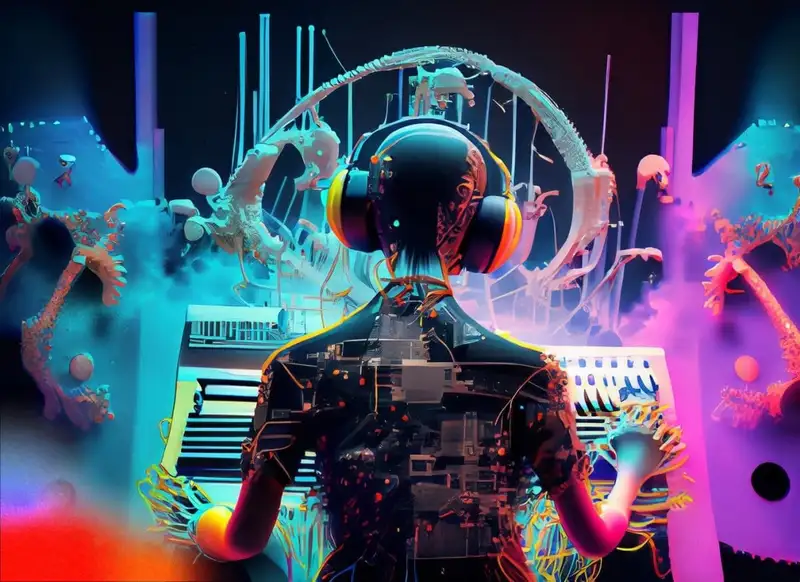
For years, technology and music have evolved hand-in-hand. Software tools like digital audio workstations (DAWs), auto-tune, and digital synthesizers initially faced skepticism before becoming industry standards. However, those older tools still required human intention, timing, and direction. The current paradigm shift represents a leap from utility to autonomous agency. Today's AI models operate similarly to Large Language Models (LLMs) like ChatGPT; they are trained on immense datasets of existing audio to identify patterns, harmonic structures, rhythms, and vocal timbres. Instead of just editing sound, they generate entirely new compositions from scratch, complete with coherent lyrics and convincing vocal performances.
The Rise of Virtual Icons and Synthetic Streams
This technological leap has already moved beyond experimental labs and into the mainstream consumer market. Virtual acts like Velvet Sundown, whose discography is generated entirely by algorithms, have secured millions of plays across major streaming platforms. In another striking development, virtual artist Xania Monet secured a professional recording contract, proving that the line between human performers and algorithmic constructs is becoming increasingly blurred. These successes are no longer isolated incidents but rather proof-of-concept indicators for a highly automated entertainment market.

From Ideation to Mastering: The AI Music Toolkit
To understand the scale of this revolution, one must look at the diverse ecosystem of tools now available to creators and non-musicians alike. The production chain has been thoroughly modularized by AI:
- Ideation and Composition: Platforms like BandLab SongStarter allow users to generate initial song ideas based on simple mood inputs, genres, or lyric snippets. Similarly, AIVA acts as a co-composer, generating complex instrumental tracks across multiple genres including classical, jazz, and cinematic orchestrations.
- Post-Production and Technical Polishing: Specialized software such as Mix Monolith and LANDR AI Mastering have automated the tedious, highly technical processes of mixing and mastering. What once required thousands of dollars of studio gear and an experienced audio engineer can now be achieved in seconds for a fraction of the cost.
- End-to-End Generation: Breakthrough applications like Suno and Udio represent the most disruptive tier. By inputting a basic prompt, users receive a fully realized song, complete with custom vocals, instrumentation, and lyric sheets that mimic professional studio recordings.
The Impending Legal and Ethical Battleground
As the volume of synthetic music grows, so does the anger of the creative community. The core of the controversy lies in how these AI models are trained. To generate realistic acoustic guitars, emotional vocal vibratos, or complex drum patterns, these systems must analyze millions of existing, copyrighted tracks. Investigators and major labels allege that AI developers scraped massive catalogs of legendary artists without licensing agreements, compensation, or attribution.
This has triggered a wave of high-profile lawsuits from major record labels. The plaintiffs argue that these generative models are effectively cannibalizing the very artists whose work they were trained on. The legal debate centers not only on the replication of exact melodies, but also on the unauthorized mimicking of a specific artist’s unique vocal identity and stylistic footprint—a concept that traditional copyright laws were never designed to police.
The Limits of the Machine: Human Vulnerability as a Shield
Despite the rapid technical evolution of algorithmic generators, many creators remain confident that machines cannot completely replace human artistry. The argument hinges on the distinction between technical perfection and genuine emotional resonance.
Independent singer-songwriter Khánh Linh argues that while AI can be an incredibly useful assistant for generating draft chords, arranging harmonies, or developing quick demos, it fundamentally lacks the core element of authentic art: lived experience. "You can use algorithms to fake a melody, but you cannot fake human suffering or personal growth," she explains.

Linh emphasizes that the value of music does not lie solely in its mathematical arrangement, but in the emotional bridge it builds between the creator and the listener. "The core value of a song is empathy and connection. When I pour my own struggles and real-life memories into a track, the audience hears their own lives reflected back at them. That soulful connection is what turns sound into culture and memory, rather than just a sequence of mathematically optimized frequencies."
Qnews24h insight
The music industry is hurtling toward a bifurcated future. We are likely to see a distinct division in the market. On one hand, "utility music"—such as background tracks for corporate videos, low-fi study beats, video game ambiances, and commercial jingles—will be almost entirely colonized by cheap, on-demand AI systems. This will severely impact the income of working-class session musicians and commercial composers who rely on sync licensing fees.
On the other hand, "identity-driven music"—where the listener's relationship with the artist's personal narrative, flaws, political stances, and live performances is paramount—will likely see its value premiumized. Human imperfection and authenticity will become a luxury brand. To survive this algorithmic tsunami, future artists must focus on building direct, authentic communities and emphasizing their personal narratives. Technology can democratize the creation of sound, but it cannot automate the cultural movements that make music truly matter.
Sources
- Original reporting and analysis inspired by industry coverage on Soha.vn.
Why it matters
The rise of generative AI music threatens the financial stability of independent musicians by diluting streaming royalty pools with millions of automated, low-cost songs. It also forces a critical legal and cultural debate on the definition of copyright, authorship, and the economic value of human creativity in the digital age.
Background
Historically, technological advancements like synthesizers and digital workstations served as tools for human artists. The current era of generative AI marks a transition to autonomous creation, where neural networks trained on massive musical libraries can compose, sing, and master entire tracks without any human performance required.
The music industry will likely split into two distinct sectors: commodity background music, which will be completely dominated by low-cost AI, and identity-driven art, where human vulnerability, live performances, and authentic personal narratives will become highly valued luxury assets.
References
Editorial information
The editorial team reviews sources, adds context, and structures stories so readers can understand the news more clearly.
Article from QNEWS24H
Comments
(0)No comments yet. Be the first to share your thoughts.