AI Voice Recorders: The Future of Dictation or a Privacy Minefield?

- The Comulytic Note Pro is a compact AI voice recorder offering high-accuracy transcription and organization of audio.
- It provides free basic transcription and AI summaries via an app, with advanced features requiring a paid subscription.
- The device excels in speech-to-text accuracy but shows inconsistency in differentiating multiple speakers.
- Concerns include privacy, proprietary charging, and aggressive in-app premium feature promotion.
In an era where digital tools constantly reshape our workflows, the humble voice recorder has undergone a significant transformation. Once a staple for journalists, lawyers, and busy professionals, its evolution has now been supercharged by artificial intelligence. The arrival of devices like the Comulytic Note Pro AI Voice Recorder prompts a re-evaluation of how we capture thoughts, meetings, and crucial information, bridging the gap between nostalgic dictation methods and the cutting-edge capabilities of AI-driven transcription and summarization.
Quick summary
- The Comulytic Note Pro is a credit card-sized AI voice recorder designed for discreet, high-accuracy transcription and organization of audio.
- It boasts excellent speech-to-text accuracy (claimed >98%), a triple-mic array with AI noise reduction, and long battery life (45 hours recording, 107 days standby).
- The device pairs with an app for AI processing, offering basic transcription for free, but advanced features like instant abstracts and enhanced summaries require a paid subscription.
- Concerns persist regarding speaker differentiation, the pervasive 'upselling' within the companion app, the use of proprietary charging, and significant privacy implications surrounding AI-processed recordings and consent laws.
Why it matters
The resurgence of portable voice recording, now amplified by artificial intelligence, holds profound implications for personal and professional productivity, accessibility, and data privacy. For individuals with physical challenges that impede traditional typing or notetaking, such devices offer a vital pathway to maintain efficiency. For busy professionals, they promise to streamline meeting minutes, brainstorming sessions, and idea capture, potentially freeing up valuable time. However, this convenience comes with trade-offs. The increasing reliance on third-party AI for transcription and summarization raises critical questions about data security, the potential for 'AI fingerprints' on content, and the complexities of consent in recording conversations, especially across different jurisdictions. The integration of AI tools also shifts the economic model, moving from one-time hardware purchases to ongoing subscription services for advanced features, impacting user costs and long-term value.
Background
The journey from manual shorthand and clunky tape recorders to today's sleek AI-powered voice devices highlights decades of technological advancement aimed at capturing the spoken word. Early dictation machines, often reliant on physical tapes or, later, digital files, necessitated manual transcription, a time-consuming and often costly process. The late 1990s saw the emergence of rudimentary speech-to-text software, which, while promising, was often frustratingly inaccurate and cumbersome, struggling with accents, background noise, and nuanced speech. Keyboards largely remained the dominant input method for precision and speed.
More recently, significant leaps in natural language processing (NLP) and machine learning have revolutionized speech-to-text accuracy. Major tech players like Apple and Google have integrated highly effective dictation features into their operating systems, making voice input a viable alternative to typing for many. This backdrop sets the stage for dedicated AI voice recorders like the Comulytic Note Pro, which aim to offer a specialized, always-on solution. These devices capitalize on matured AI capabilities to not only transcribe but also to organize and summarize, moving beyond simple voice capture to intelligent data processing. This evolution addresses a growing demand for hands-free, efficient information capture, especially as modern lifestyles become increasingly mobile and multitasking-oriented.
Qnews24h insight
The Comulytic Note Pro, while undeniably showcasing impressive technological strides in transcription accuracy, serves as a microcosm of the broader challenges and opportunities within the current AI landscape. Its 'free' basic transcription model, coupled with aggressive in-app upsells for advanced AI features, reveals a common industry trend: leveraging a foundational, accessible service to drive subscription revenue for more sophisticated AI functionalities. This approach, while commercially sound, risks segmenting users and could lead to 'feature fatigue' or frustration if the core free offering feels intentionally limited to push paid tiers. Furthermore, the reliance on third-party AI services, despite claims of robust encryption and compliance (SOC 2 Type 2, HIPAA, ISO 27001, GDPR, CCPA, CPRA), introduces an inherent trust element. Users are implicitly asked to trust not only the device manufacturer but also the underlying AI providers with sensitive verbal data. The noted inconsistency in speaker differentiation, a crucial feature for meeting summaries, suggests that while raw speech-to-text is highly refined, the 'intelligent' parsing of complex human interactions still presents a significant hurdle for current AI, underscoring the gap between impressive singular task performance and nuanced multi-participant understanding. This device, therefore, is not merely a tool for recording but a case study in the evolving economics and ethical considerations of pervasive AI integration.
Sources
- This pocket AI voice recorder took me back to the good old days of dictation (and shorthand) | ZDNET

The Comulytic Note Pro: Design and Core Functionality
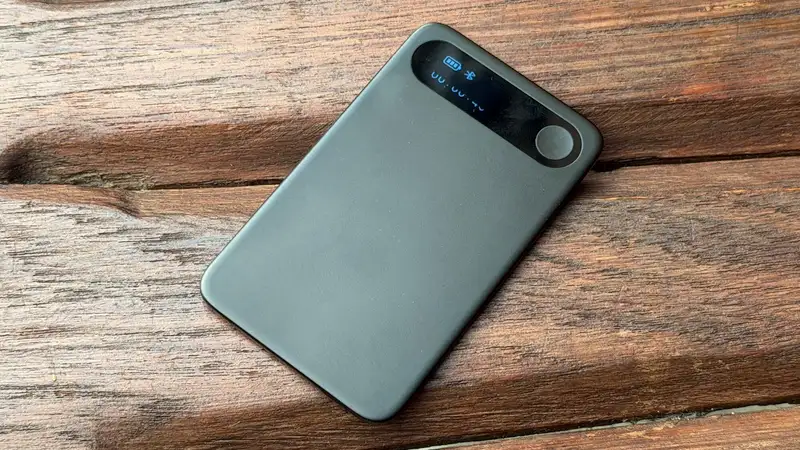
Measuring approximately 3.37 x 2.04 x 0.12 inches and weighing a mere ounce, the Comulytic Note Pro is designed for ultimate portability and discretion. Its form factor, reminiscent of a credit card stack, allows it to slip easily into a wallet or pocket. The device features a minimalist interface: a tiny 128x80-pixel display and a single button for starting and stopping recordings, emphasizing ease of use over complex on-device controls.
Underneath its unassuming exterior, the Note Pro packs a sophisticated triple-microphone array. This setup, combined with AI-driven noise reduction, allows for clear audio capture from a range of up to 15 feet. With 64GB of internal storage, it can hold extensive hours of recordings. Powering this is a battery that offers an impressive 45 hours of continuous recording or an astounding 107 days of standby time, minimizing the need for frequent recharges.
The AI Engine: App Integration and Capabilities
The true intelligence of the Comulytic Note Pro lies not within the recorder itself, but in its companion app, available for both iOS and Android. Once recordings are offloaded via a simple connection process, the app becomes the central hub for all AI-powered functionalities. Every device comes with a free Starter Plan, providing unlimited basic transcription and AI summaries. This baseline offering ensures that users can access the core value proposition without immediate additional cost.
However, the app prominently promotes its premium features. Advanced Summary, Instant Abstract, and the 'Ask Comulytic Assistant'—tools designed for deeper analysis and interaction with recorded content—are locked behind a subscription paywall, starting at $10 a month or $120 for an annual plan. While these features can significantly enhance productivity, their constant promotion within the app can be perceived as intrusive by some users. The underlying AI, Comulytic clarifies, leverages third-party services, raising questions about data handling and security protocols, despite the company's assurances of AES encryption and compliance with major privacy standards like SOC 2 Type 2, HIPAA, ISO 27001, GDPR, CCPA, and CPRA.
Performance and User Experience: Hits and Misses
In real-world testing across various environments, the Comulytic Note Pro demonstrated remarkable speech-to-text accuracy. It consistently surpassed the advertised 98% accuracy, even without extensive voice profile training. This level of precision rivals that of leading dictation features found in major smartphone and computer operating systems, making it a highly reliable tool for converting spoken words into text.
However, the device's ability to differentiate between multiple speakers in a recording proved less consistent. This feature, crucial for accurately summarizing meetings or interviews, worked sporadically, sometimes failing mid-recording before unexpectedly resuming. This inconsistency can be a significant drawback for users needing precise attribution in multi-participant discussions.
Another point of contention is the proprietary magnetic charging cable. While the battery life is exceptional, relying on a unique cable for charging adds an extra item to manage and raises concerns about replacement availability and potential obsolescence. The lack of wireless charging, a common feature in similarly sized devices like Bluetooth finder cards, feels like a missed opportunity for enhanced user convenience.
Privacy, AI Ethics, and Public Perception
Beyond its technical performance, the Comulytic Note Pro taps into broader societal discussions surrounding AI, privacy, and the ethics of recording. The review highlights concerns about AI taking 'liberties' with transcription, potentially altering the fidelity of the original recording compared to human transcribers. This leads to the notion of 'AI fingerprints'—a future where AI-generated or processed content could be identifiable, potentially impacting its perceived authenticity or reliability.
The act of recording conversations also brings forth a complex web of legal and social considerations. Consent laws vary significantly by territory, making it imperative for users to understand and adhere to local regulations regarding recording others. Furthermore, the increasing prevalence of discreet recording devices, following the public's mixed reception to technologies like Google Glass and Meta Glasses, means users might face social sensitivity or even backlash. The reviewer's tactic of wearing AirPods to appear to be on a call rather than recording discreetly underscores the evolving social etiquette around such technology.
Cost and Value Proposition
Currently priced at $116 (with a promotional 10% discount from its usual price), the Comulytic Note Pro presents a hardware-software ecosystem. For users primarily seeking robust, single-speaker voice-to-text transcription, the device offers strong value, leveraging its free basic AI features. However, the decision to invest in the monthly or annual subscription for advanced functionalities becomes a critical consideration. The significant price difference between monthly ($14.99) and annual ($120) premium plans encourages a longer-term commitment, prompting users to carefully weigh their needs against the ongoing cost.
Ultimately, the Comulytic Note Pro appeals to tech-savvy individuals who value innovative productivity tools and are comfortable with AI integration. For those averse to proprietary charging cables, constant subscription prompts, or with deeper privacy concerns about AI's role in processing their speech, the device might represent a step too far into the AI-augmented future.
FAQ
-
What is the Comulytic Note Pro AI Voice Recorder?
It is a credit card-sized, portable voice recorder that uses artificial intelligence via a companion app to transcribe, summarize, and organize spoken audio. It's designed for capturing notes, meetings, and memos efficiently.
-
Does the Comulytic Note Pro require a subscription?
The device comes with a free Starter Plan that offers unlimited basic transcription and AI summaries. However, advanced features like Advanced Summary, Instant Abstract, and the 'Ask Comulytic Assistant' require a paid monthly or annual subscription.
-
How accurate is the transcription?
The review indicates that the Comulytic Note Pro offers excellent speech-to-text accuracy, often exceeding its claimed 98%, even without specific voice profile training. However, its ability to reliably differentiate between multiple speakers in a single recording can be inconsistent.
-
What are the main concerns with using such a device?
Key concerns include privacy (especially regarding third-party AI processing and consent laws for recording), the use of proprietary charging cables, the consistent in-app 'upselling' for premium features, and potential 'AI fingerprints' on the processed content.
Why it matters
The rise of AI voice recorders like the Comulytic Note Pro is transforming productivity and accessibility, particularly for those with typing difficulties or busy schedules. However, it simultaneously compels a critical examination of data privacy, the ethical implications of AI-processed personal information, and the sustainability of subscription-based models for essential features. This technology highlights the ongoing tension between convenience and the protection of digital autonomy in an increasingly AI-driven world.
Background
The evolution of dictation technology has moved from manual shorthand and analog recorders to early, often unreliable, speech-to-text software in the late 1990s. While keyboards remained dominant, recent advancements in AI and natural language processing have dramatically improved dictation accuracy in mainstream devices. This progress has paved the way for specialized AI voice recorders that not only transcribe but also intelligently process and summarize audio, addressing a growing demand for efficient, hands-free information capture beyond traditional methods.
The Comulytic Note Pro illustrates a pivotal trend in consumer AI: the strategic offering of a robust core feature for free, designed to funnel users into a subscription ecosystem for enhanced capabilities. While its remarkable transcription accuracy demonstrates AI's technical maturity, the inconsistent multi-speaker differentiation underscores lingering challenges in complex contextual understanding. This product exemplifies the ongoing tension between user convenience, data privacy concerns with third-party AI processing, and the industry's shift towards monetizing advanced AI features through recurring payments, signaling a future where even basic productivity tools might come with an...
References
Editorial information
The editorial team reviews sources, adds context, and structures stories so readers can understand the news more clearly.
Article from QNEWS24H
Comments
(0)No comments yet. Be the first to share your thoughts.