AI in Sports Officiating: Precision vs. Accountability on the Field
- AI systems like Hawk-Eye, VAR, and semi-automated offside are increasingly pivotal in major sports officiating, aiming for unprecedented accuracy.
- Recent incidents at Wimbledon and the World Cup highlighted significant flaws, including technical malfunctions and controversial hyper-precise calls.
- A critical 'responsibility gap' exists, with no clear accountability mechanism when AI systems make errors, leaving athletes without direct recourse.
- Experts warn that the rapid deployment of AI in sports is outpacing the development of adequate governance and oversight frameworks.
A sudden 'Out' call at Wimbledon brings a match to a halt. A top player, Anastasia Pavlyuchenkova, stops in her tracks, trusting the automated system. But within seconds, the realization hits: the advanced line-calling technology has malfunctioned, emitting a false signal. The point, a crucial moment in a Grand Slam, must be replayed, leaving players and spectators alike grappling with a fundamental question: When the ultimate decision-maker is an algorithm, who bears the burden of responsibility for its errors?
Quick summary
- Advanced AI systems like Hawk-Eye, VAR, and semi-automated offside are increasingly pivotal in major sports, aiming for unprecedented accuracy in officiating.
- Recent incidents, including a system malfunction at Wimbledon and a controversial hyper-precise offside call at the World Cup, have highlighted the significant limitations and potential for controversy with AI in high-stakes environments.
- A critical 'responsibility gap' currently exists, where accountability for AI errors is fragmented among federations, technology providers, and operators, leaving athletes with insufficient recourse.
- Experts warn that the rapid deployment of AI in sports is far outpacing the development of adequate governance, oversight, and dispute resolution mechanisms for these powerful technologies.

Why it matters
The burgeoning reliance on artificial intelligence in sports officiating touches upon the very core of athletic competition: fairness, integrity, and the human element. For athletes, the inability to effectively challenge an algorithmic error can be profoundly disempowering, potentially altering careers, affecting prize money, and undermining years of dedication. For fans, trust in the game's impartiality can erode if decisions, however precise, lack transparent explanation or accountability. This issue extends beyond individual matches, influencing the economic landscape of sports, including sponsorships and betting, where the perception of unbiased officiating is paramount. Furthermore, it serves as a microcosm for broader societal debates on AI governance, raising critical questions about how we integrate intelligent systems into high-stakes domains while preserving human values and establishing clear lines of responsibility when technology falters.
Background
For decades, sports officiating has been an almost exclusively human endeavor, prone to human error but also imbued with a degree of discretion and the possibility of human interaction and appeal. The journey towards technological assistance began incrementally, starting with relatively simple innovations like photo finishes in racing or electronic timing in track and field. The early 21st century saw the introduction of more sophisticated systems, such as goal-line technology in football, designed to resolve clear-cut decisions. However, the true inflection point arrived with systems like Hawk-Eye in tennis and cricket, which transformed from review tools into primary decision-makers, effectively replacing human line judges in many major tournaments.
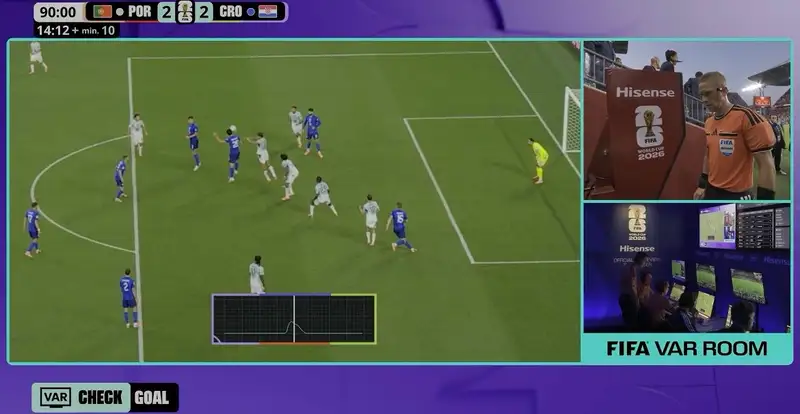
In football, the Video Assistant Referee (VAR) system brought a new layer of scrutiny, allowing match officials to review key incidents on a monitor. More recently, the advent of semi-automated offside technology further pushed the boundaries, using advanced camera tracking and ball sensors to generate 3D models and pinpoint offside positions with millimetric precision. These systems, distinct from generative AI models like ChatGPT, operate by processing vast amounts of sensory data through pre-programmed algorithms to deliver rapid, data-driven verdicts. The shift has been profound: from technology merely assisting human judgment, it has evolved into a realm where algorithms frequently dictate the final outcome, fundamentally altering the dynamic between human officials, technology, and the players on the field.
Qnews24h insight
The current discourse surrounding AI in sports officiating reveals a critical and growing disconnect: while the drive for objective precision is laudable and technologically impressive, it has largely overshadowed the fundamental human need for accountability and transparent recourse. Sports federations, in their earnest pursuit of eradicating human error, appear to have accelerated the deployment of sophisticated algorithmic systems without establishing equally robust frameworks for their governance, oversight, and, crucially, their fallibility. The dilemma is not whether AI can be precise, but whether absolute precision, divorced from human interpretation and a clear chain of responsibility, truly serves the 'spirit of the game.' When a system can detect a fractional touch on a player's hair to disallow a goal, it raises questions about whether sports should always operate on such hyper-literal interpretations, or if there remains a necessary space for the 'benefit of the doubt' and human discretion. The current trajectory risks converting complex, nuanced sporting moments into binary outcomes delivered by an inscrutable black box, leaving athletes and fans feeling increasingly disempowered and eroding the very trust that underpins competitive integrity.
The Algorithmic Court: AI's Growing Footprint in Sports
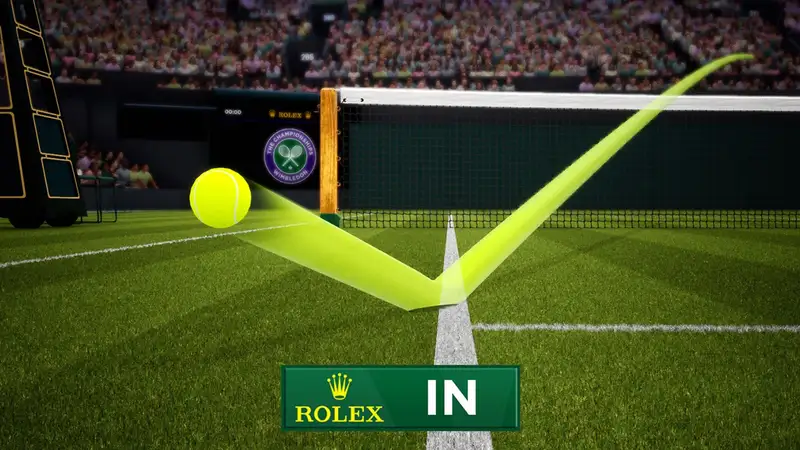
The integration of AI into sports has been rapid and far-reaching. In tennis, Hawk-Eye has become synonymous with instant replay and, increasingly, autonomous line calling. Utilizing an array of high-speed cameras, the system triangulates the ball's trajectory, generating a 3D model that determines whether a shot is in or out with an accuracy measured in mere millimeters. This precision has virtually eliminated human line judge errors, making it a staple at tournaments like Wimbledon, where human officials now often defer entirely to its judgment.
Football has embraced its own suite of AI tools. VAR, or Video Assistant Referee, allows officials to review crucial moments like goals, penalties, and red cards, with video footage offering a second look at potentially game-changing incidents. More recently, the semi-automated offside system, first deployed at major international tournaments, leverages dedicated tracking cameras and a sensor within the match ball to provide real-time data to a central AI system. This system can then rapidly generate 3D animations to visualize offside positions, significantly speeding up decision-making.
It is crucial to understand that these systems, unlike the generative AI models that create text or images, are designed for analytical precision. They do not 'think' or 'reason' in a human sense; instead, they process vast datasets, apply predefined algorithms, and output results. Their strength lies in their speed, consistency, and ability to detect details imperceptible to the human eye, aiming to remove the subjective element from critical calls.
When Precision Backfires: Incidents and Their Fallout
Despite their sophisticated design, AI officiating systems are not infallible, and their errors can have significant ramifications. The incident at Wimbledon 2025 involving Anastasia Pavlyuchenkova starkly illustrated one type of failure: a technical glitch. In this instance, the automatic line-calling system issued a false 'out' signal at the wrong time, disrupting the match and necessitating a re-play of the point. This incident underscored a fundamental weakness: when the technology itself malfunctions, and there's no immediate, transparent mechanism for review or override, the integrity of the game is compromised, and the athlete is left in an untenable position.
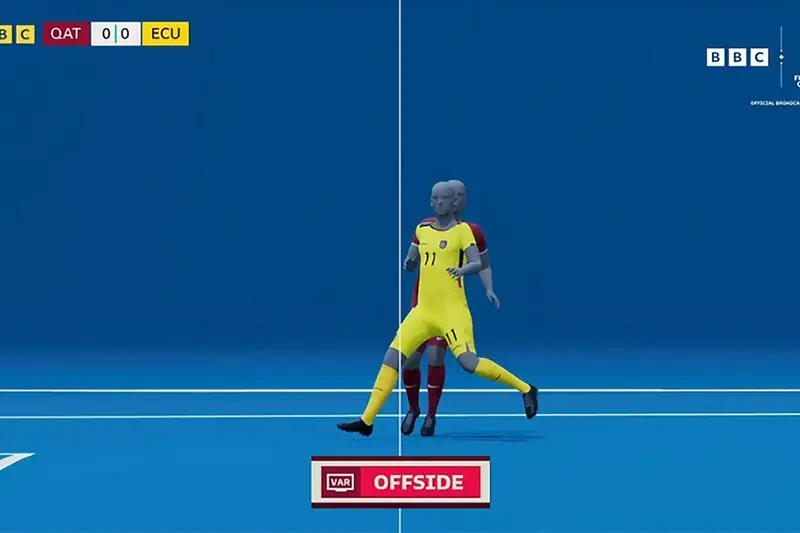
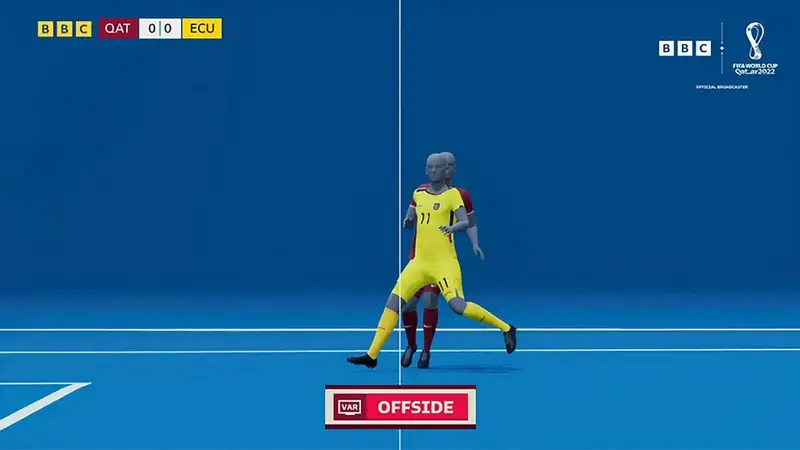
A different kind of challenge emerged from a recent World Cup incident. A late equalizer by Croatia was disallowed after the semi-automated offside system detected the slightest touch on a player's hair, Mantanovic, before the ball entered the net. To the naked eye, the contact was almost imperceptible. While the system's data was technically accurate to the millisecond and millimeter, the decision sparked a fierce debate: should such minute, barely consequential contacts, which traditionally might have been overlooked, be grounds for disallowing a goal in the spirit of the game? This incident highlighted the tension between absolute algorithmic precision and the nuanced interpretation that human officials often bring to the field.
These two cases represent distinct facets of the problem: one, a direct technical error; the other, an issue with how hyper-accuracy intersects with the established, often more forgiving, traditions of sport. Both, however, point to a broader concern about the human element in an increasingly automated environment.
The Unaddressed Question of Accountability
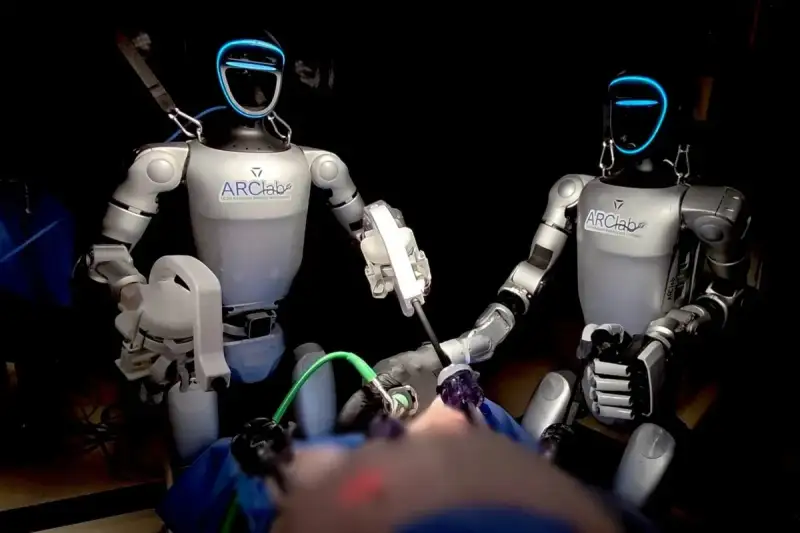
Perhaps the most significant challenge presented by the proliferation of AI in sports is the glaring 'responsibility gap.' When a human referee makes an error, there is a clear individual or body to question: the referee themselves, or the governing sports federation. While sanctions or apologies may follow, there is a mechanism for acknowledging the mistake and, potentially, learning from it.
With AI systems, this clarity vanishes. As the Znews.vn article highlights, when an algorithm delivers a faulty decision, accountability is diffused. Is it the fault of the technology provider, whose software or hardware malfunctioned? Is it the sports federation, for implementing a system without sufficient safeguards? Or is it the operational team managing the system on the day? The lack of a single, identifiable entity to bear responsibility leaves athletes, coaches, and fans feeling frustrated and without proper recourse.
David Sumpter, a mathematician who researches data and AI in football, articulates this problem succinctly. He suggests that sports organizations are adopting cutting-edge technology at a pace far exceeding their capacity to establish robust regulatory and oversight mechanisms. Essentially, the AI is on the field, making calls, before the rules governing its behavior and accountability are fully developed.
Eroding Trust: The Athlete's Dilemma
For an athlete, the stakes are incredibly high. A single call, whether correct or incorrect, can determine the outcome of a match, influence their career trajectory, or impact their financial earnings. When a human official makes an error, players can protest, appeal, or at least receive an explanation, however unsatisfactory. There is a human-to-human interaction, an opportunity to convey frustration or seek clarity.
However, when an algorithm makes a contested call, this avenue for dialogue is effectively closed. As the source material notes, players are left with little option but to accept the machine's verdict, as no established mechanism exists to 'dialogue' with an AI. This power imbalance can be profoundly disempowering, fostering a sense of helplessness and potentially eroding trust in the fairness of the competition itself. If players feel they cannot challenge decisions, even when they suspect an error, it risks transforming the dynamic of sports from a contest of skill and spirit into a submission to technological decree.

Beyond Accuracy: The Human Element of Sport
While AI undoubtedly brings an unprecedented level of accuracy to sports, the essence of competition has never solely resided in numerical precision. Sports are dynamic, often chaotic, and frequently involve subjective interpretation. Moments of controversy, human error, and the subsequent discussions are, paradoxically, a part of the sporting narrative. The 'spirit of the game' often transcends mere data points, encompassing sportsmanship, intent, and the flow of play.
A correct decision, particularly one that is highly controversial or counter-intuitive, still requires explanation and justification. A wrong decision, by extension, requires someone to take responsibility and offer accountability. As the Znews.vn article aptly concludes, AI has so far excelled at the former – delivering precise verdicts – but the latter remains an unresolved challenge for major sports organizations worldwide. The future of sports officiating lies not just in perfecting the algorithms, but in wisely integrating them within a human-centric framework that prioritizes transparency, accountability, and the enduring values of fair play.
Sources
FAQ
What types of AI are currently used in sports officiating?
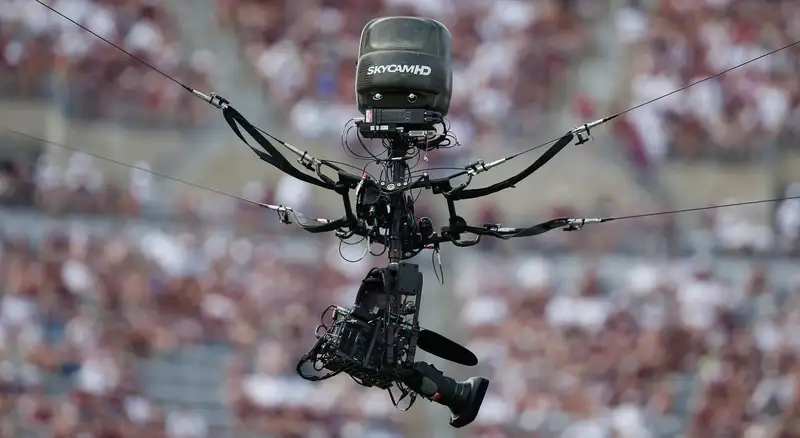
AI in sports officiating primarily involves data-processing algorithms rather than generative AI. Key examples include Hawk-Eye for line calling in tennis, Video Assistant Referee (VAR) in football for reviewing critical incidents, and semi-automated offside technology which uses advanced tracking to determine offside positions with high precision.
What specific incidents have highlighted concerns about AI in sports?
Recent incidents include a technical malfunction of the automatic line-calling system at Wimbledon 2025, which led to an incorrect 'out' call and a re-played point. Another was a controversial decision at a World Cup match where an AI system disallowed Croatia's equalizer due to detecting a minimal, barely visible touch on a player's hair, raising questions about hyper-precision versus human judgment.
Who is responsible when an AI officiating system makes an error?
A significant 'responsibility gap' exists. When AI systems make errors, accountability is often fragmented and unclear, spread among the sports federation organizing the event, the technology provider that developed the system, and the team operating the technology. This diffusion of responsibility often leaves athletes without a clear avenue for recourse or appeal.
How do AI officiating systems differ from generative AI like ChatGPT?
AI officiating systems like Hawk-Eye and VAR are designed to process specific data inputs (from cameras, sensors, etc.) through pre-programmed algorithms to provide objective, data-driven outputs. They do not 'think,' 'reason,' or generate novel content like generative AI models such as ChatGPT, which are trained on vast datasets to understand and create human-like text or other media.
Why it matters
The increasing reliance on AI in sports officiating impacts the core principles of fairness and integrity, affecting athlete careers, fan trust, and the financial landscape of sports. It poses critical questions about establishing accountability when algorithms err, preserving the human element in competition, and developing robust governance for AI in high-stakes domains.
Background
Historically, sports officiating relied solely on human judgment. The introduction of technologies like goal-line tech evolved into sophisticated AI systems such as Hawk-Eye in tennis, VAR in football, and semi-automated offside, transforming from assistance tools into primary decision-makers. These systems, which process sensory data through pre-programmed algorithms, aim to eliminate human error but have shifted decision-making power from officials to algorithms, creating new challenges.
The current dilemma in sports officiating isn't merely about technological capability, but the failure to establish robust human oversight and clear accountability protocols for AI systems. This creates a trust deficit and risks undermining the very spirit of fair play the technology was meant to enhance. The reliance on AI risks converting nuanced human judgment into absolute binary decisions without the necessary recourse, highlighting that technological advancement must be matched by ethical and governance frameworks to truly serve the integrity of sport.
References
Editorial information
The editorial team reviews sources, adds context, and structures stories so readers can understand the news more clearly.
Article from QNEWS24H
Comments
(0)No comments yet. Be the first to share your thoughts.