AI Server Boom Triggers MacBook Air Shortages and Apple Price Hikes

- Rapid construction of AI data centers in the United States is pulling critical memory components, including DDR5 RAM and SSD storage modules, away from consumer hardware...
- Apple has raised hardware prices across several product lines by $100 to $400, pushing the entry-level MacBook Air M5 from its original launch pricing up to $1,299.
- Persistent inventory bottlenecks have forced Apple to add explicit availability disclaimers to its promotional campaigns and warn investors of potential constraints on upcoming...
The relentless buildout of artificial intelligence infrastructure across North America is sending shockwaves through the global consumer electronics supply chain. What began as an insatiable enterprise demand for high-performance server GPUs has escalated into a widespread crunch for critical memory and storage components, leaving hardware giants like Apple struggling to maintain steady inventory levels for mainstream consumer devices. As hyper-scaler data center operators scramble to secure vast volumes of high-speed memory modules, personal computer buyers are beginning to bear the financial burden through inflated retail price tags and reduced device availability.
Quick summary
- Rapid construction of AI data centers in the United States is pulling critical memory components, including DDR5 RAM and SSD storage modules, away from consumer hardware manufacturers.
- Apple has raised hardware prices across several product lines by $100 to $400, pushing the entry-level MacBook Air M5 from its original launch pricing up to $1,299.
- Persistent inventory bottlenecks have forced Apple to add explicit availability disclaimers to its promotional campaigns and warn investors of potential constraints on upcoming quarterly revenue.
Why it matters
The ongoing memory supply crunch marks a structural turning point in how artificial intelligence investments impact ordinary tech consumers. For years, steady advancements in semiconductor manufacturing allowed laptop and smartphone makers to offer better specs at stable or decreasing price points. However, the aggressive capital expenditures by tech companies building out AI clusters have fundamentally altered supply dynamics. High-capacity SSDs and advanced DRAM chips are being diverted into server racks, creating a structural deficit for standard personal computing hardware. This shift means consumers face higher entry costs, while manufacturers are compelled to reframe baseline hardware specifications to justify mandatory price increases.
Background
The root of the current supply strain traces back to early 2026, when tech companies accelerated their construction of AI-dedicated data facilities across North America. To power complex machine learning models, server architectures require massive arrays of high-bandwidth memory and fast solid-state storage. By mid-2026, wholesale spot prices for enterprise-grade SSDs and DDR5 memory modules surged dramatically, spilling over into the broader consumer electronics supply chain.
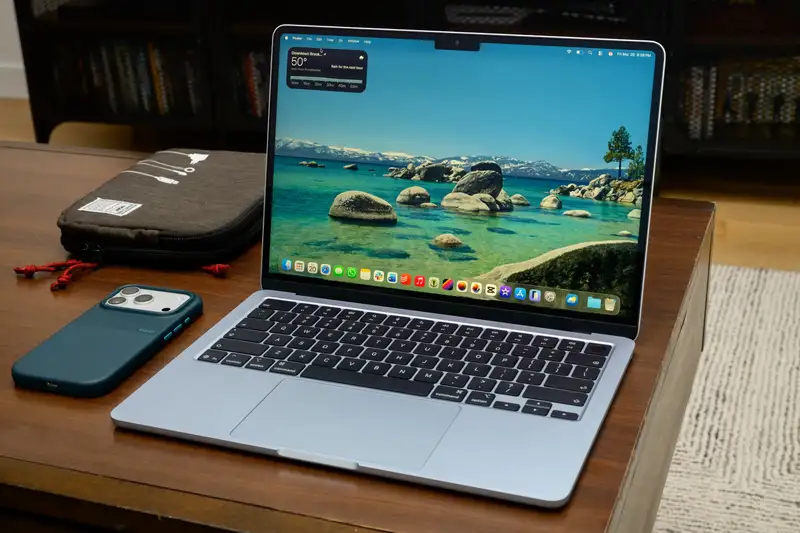
Apple introduced its latest MacBook Air M5 in March 2026, positioning the base model at $1,099—a $100 increase over the prior generation's $999 starting price, offset by doubling default storage to 512GB. However, as memory component costs continued to climb through the second quarter of 2026, Apple made an unprecedented mid-cycle pricing adjustment in June, elevating the MacBook Air base price further to $1,299. This escalation reflects a broader trend across Apple's lineup, where custom configurations and select Mac models experienced price increases ranging between $100 and $400.
Rising Memory Costs and Apple's Price Adjustments
Navigating component volatility is not new for Apple, but the scale of current price hikes highlights the severe pressure on hardware gross margins. When Apple updated its hardware pricing in late June, the company attempted to mitigate consumer friction by standardizing higher base storage tiers. By doubling the base SSD capacity on select models to 512GB, Apple sought to soften the impact of the price increases for customers who typically upgraded their storage at purchase.
Despite these tactical moves, retail availability has worsened. Supply shortages have become particularly noticeable in high-volume products like the MacBook Air M5. Typically, a laptop situated midway through its product cycle enjoys abundant stock across retail channels. However, Apple recently included unusual disclaimers in its annual back-to-school marketing campaigns, explicitly warning students and educators that MacBook Air shipments remain subject to strictly limited availability.
Supply Chain Constraints Across the Mac Lineup
During recent financial disclosures, Apple executive leadership alerted investors that component constraints could restrain overall revenue growth in the upcoming fiscal quarter. Executive transitions have also added an intriguing layer to Apple's long-term posture; as veteran CEO Tim Cook prepares to conclude his 15-year tenure overseeing earnings calls, incoming executive leadership under John Ternus faces the immediate hurdle of navigating a tightening global supply chain.
Simultaneously, regulatory and geopolitical considerations continue to complicate hardware sourcing. US lawmakers have scrutinised Apple's memory procurement strategies, expressing concerns over potential reliance on foreign chip suppliers. Balancing domestic regulatory pressure, supply chain resilience, and rising component acquisition costs leaves Apple with limited flexibility beyond raising retail prices or restricting production volumes.
The Broader Impact of the Artificial Intelligence Gold Rush
The competition for silicon components extends far beyond consumer laptops. Leaders across the technology sector have underscored how data center infrastructure investments are reshaping the broader economy. Nvidia CEO Jensen Huang recently noted that the massive surge in data center construction is generating unprecedented demand across non-tech industries, boosting wages for specialized construction workers, electricians, and infrastructure engineers.
Meanwhile, AI pioneer OpenAI has launched broad initiative programs distributing top-tier ChatGPT research access to over 100,000 researchers worldwide. As software capabilities advance, the underlying hardware required to support both cloud training and local AI execution grows increasingly demanding. When cloud operators prioritize memory allocation for enterprise AI clusters, standard personal computers inevitably face supply bottlenecks, illustrating how hyper-scaler capital deployment directly ripples into the everyday consumer marketplace.
Qnews24h insight
Apple's decision to pass component cost increases directly to consumers reflects a deliberate shift in margin protection strategy. Historically, Apple has absorbed short-term component price fluctuations to preserve market share and maintain predictable device release cycles. The willingness to adjust hardware prices mid-cycle indicates that executive leadership views memory component inflation not as a temporary blip, but as a multi-quarter structural reality driven by the AI boom.
If hyper-scale data center expansion continues at its current pace, consumer hardware manufacturers will need to rethink product architecture. Expect Apple and competing PC vendors to lean heavily on unified memory architecture efficiencies and software optimization rather than simply stuffing more physical DRAM or storage into baseline consumer devices. For buyers, the era of routine hardware specification upgrades at stable price points may be temporarily paused as the tech ecosystem prioritizes AI infrastructure over consumer client hardware.
Frequently Asked Questions
Why are MacBook Air prices increasing in 2026?
MacBook Air prices have increased due to a global shortage and price surge in DDR5 RAM and SSD memory components, driven by massive demand from AI data center expansions across North America.
How much did the MacBook Air M5 price increase?
The MacBook Air M5 launched in March 2026 at $1,099 (up from $999 for prior generations with a storage boost to 512GB). Due to rising component costs, Apple raised the starting price again in June 2026 to $1,299.
Will other Apple products be affected by component shortages?
Yes. Apple has already adjusted pricing on various Mac configurations by $100 to $400 and warned investors that supply constraints could impact sales volume across multiple product lines in upcoming quarters.
Sources
Original report sourced from Znews.vn.



Why it matters
The ongoing memory supply crunch marks a structural turning point in how artificial intelligence investments impact ordinary tech consumers. For years, steady advancements in semiconductor manufacturing allowed laptop and smartphone makers to offer better specs at stable or decreasing price points. However, the aggressive capital expenditures by tech companies building out AI clusters have fundamentally altered supply dynamics. High-capacity SSDs and advanced DRAM chips are being diverted into server racks, creating a structural deficit for standard personal computing hardware. This shift means consumers face higher entry costs, while manufacturers are compelled to reframe baseline hardware...
Background
The root of the current supply strain traces back to early 2026, when tech companies accelerated their construction of AI-dedicated data facilities across North America. To power complex machine learning models, server architectures require massive arrays of high-bandwidth memory and fast solid-state storage. By mid-2026, wholesale spot prices for enterprise-grade SSDs and DDR5 memory modules surged dramatically, spilling over into the broader consumer electronics supply chain. Apple introduced its latest MacBook Air M5 in March 2026, positioning the base model at $1,099—a $100 increase over the prior generation's $999 starting price, offset by doubling default storage to 512GB. However, as...
Apple's decision to pass component cost increases directly to consumers reflects a deliberate shift in margin protection strategy. Historically, Apple has absorbed short-term component price fluctuations to preserve market share and maintain predictable device release cycles. The willingness to adjust hardware prices mid-cycle indicates that executive leadership views memory component inflation not as a temporary blip, but as a multi-quarter structural reality driven by the AI boom. If hyper-scale data center expansion continues at its current pace, consumer hardware manufacturers will need to rethink product architecture. Expect Apple and competing PC vendors to lean heavily on unified...
References
Editorial information
The editorial team reviews sources, adds context, and structures stories so readers can understand the news more clearly.
Article from QNEWS24H
Comments
(0)No comments yet. Be the first to share your thoughts.