Adobe Subscription Scam: Fake Charges Hit Users Amid Rising Digital Payments

- A Photoshop user faced three months of fraudulent charges (approx. $58/month) disguised as an Adobe payment, in addition to their legitimate $23 subscription.
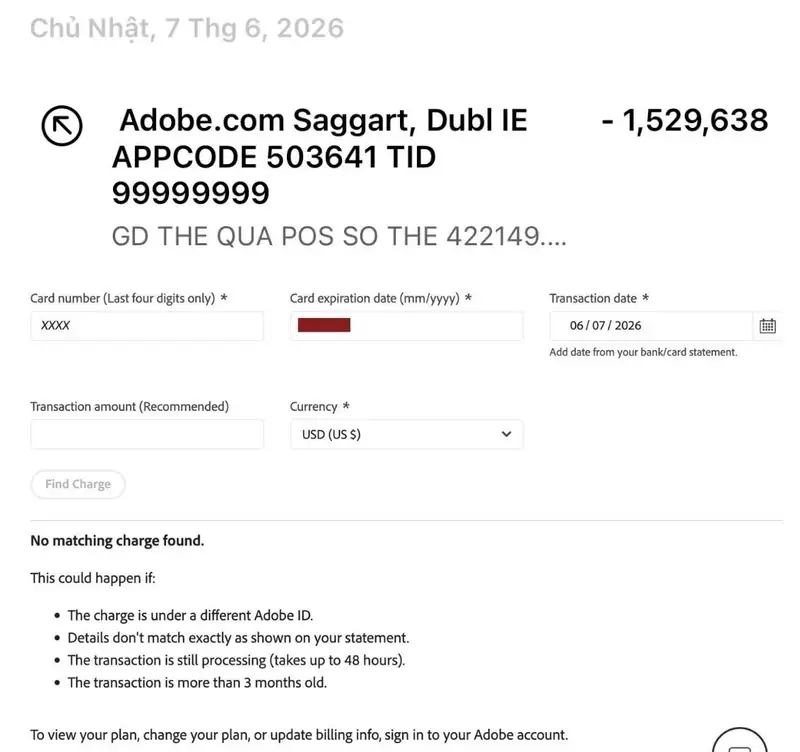
- The scam relied on a deceptive transaction label, 'Adobe.com Saggart, Dubl IE', to mimic a genuine European billing location and evade immediate detection.
- Experts recommend physically covering your credit card's CVV after memorizing it and diligently checking bank statements to identify suspicious transactions early.
- The incident underscores the heightened risks of sophisticated digital payment fraud amidst increasing adoption of online subscriptions and stricter copyright enforcement.
A growing number of digital consumers are finding themselves ensnared in a sophisticated credit card scam, with fraudsters siphoning funds by mimicking legitimate Adobe subscription charges. This insidious scheme exploits the increasing reliance on online payments and the subtle art of deception, leaving victims unknowingly paying for services they never authorized, often for months before detection.
Quick summary
- A legitimate Adobe Photoshop user discovered an unauthorized additional charge of approximately $58 per month for three consecutive months, appearing alongside their genuine $23 Adobe subscription fee.
- The fraudulent transaction was deceptively labeled 'Adobe.com Saggart, Dubl IE' on bank statements, leading victims to mistakenly believe it was another legitimate Adobe charge.
- Experts suggest credit card information may be compromised through point-of-sale skimmers or insecure online payment platforms, emphasizing the importance of securing CVV codes and vigilant bank statement review.
- The scam underscores the rising risks associated with increased digital payment adoption and a growing push for licensed software use in emerging digital economies.
Why it matters
This scam highlights a critical vulnerability in the modern digital economy, affecting not just individual consumers but also the broader trust in online payment systems and subscription models. For everyday users, it means an ongoing drain on personal finances, coupled with the frustration and time-consuming process of disputing fraudulent charges and securing compromised accounts. For businesses and payment providers, it signals an urgent need for enhanced security protocols and clearer transaction labeling to prevent such sophisticated mimicry. As more countries, including Vietnam, push for widespread adoption of legitimate software and digital transactions, the attack surface for such scams grows. The incident serves as a stark reminder that convenience in digital payments must be balanced with robust personal security practices to safeguard against increasingly cunning financial predators.
Background
In recent years, countries like Vietnam have significantly ramped up efforts to enforce software copyright laws, leading to a noticeable shift towards the adoption of legitimate, paid software across businesses and government agencies. This policy push, while beneficial for intellectual property rights, has concurrently fostered an environment where international digital payment methods, like credit and debit card subscriptions, have become commonplace. Adobe's suite of creative tools, including Photoshop, stands as a prime example of software increasingly acquired through monthly subscriptions.
However, this increased digital financial integration, while offering unparalleled convenience, also introduces new avenues for exploitation by cybercriminals. Previously, scams involving fake Adobe products or phishing attempts to steal login credentials have surfaced. The current wave of fraud represents an evolution of these tactics, moving beyond product piracy or simple phishing to directly target financial credentials and exploit the inherent trust users place in recurring charges from established brands. The stage was set for a scam of this nature as consumers grew accustomed to seeing 'Adobe' on their bank statements, making it easier for a fraudulent look-alike charge to slip under the radar.
Qnews24h insight
The emergence of this Adobe-disguised credit card scam points to a concerning trend in digital fraud: a shift towards leveraging familiarity and established billing patterns to achieve illicit gains. While previous scams often relied on outright deception or technical trickery, this particular scheme capitalizes on the habitual nature of subscription payments. By creating a transaction label ('Adobe.com Saggart, Dubl IE') that closely mirrors legitimate billing details, fraudsters exploit a consumer's tendency to quickly scan bank statements for unusual amounts rather than scrutinize every line item. This not only makes detection difficult but also delays it, allowing the scam to persist for multiple billing cycles. For financial institutions and consumers alike, it underscores the need for proactive vigilance that goes beyond just identifying unknown transactions, extending to a careful verification of even seemingly familiar charges. The evolving sophistication of these attacks demands an equally sophisticated and continuous commitment to digital financial literacy and security measures.
The Deceptive Billing Cycle
The scam came to light when a Photoshop subscriber, who was faithfully paying their legitimate $23 monthly fee, noticed a troubling discrepancy in their bank statement. For three consecutive months, an additional charge of approximately 1.5 million Vietnamese dong (over $58 USD) appeared. This extra deduction was not an anomaly; it was a consistent, significant drain on their finances, cleverly masked by a familiar name.
What made the fraud particularly insidious was the transaction's appearance: 'Adobe.com Saggart, Dubl IE'. To an unsuspecting eye, this would seem entirely plausible, given that Saggart, Dublin, Ireland, is a known operational hub for Adobe's European payment processing. The victim initially overlooked the charge, attributing it to potential variations in subscription costs or international transaction fees. It was only upon a meticulous review of their actual Adobe account's payment history that the discrepancy became clear; Adobe's official system only reflected the expected $23 charge, with no record of the additional $58 deduction.

Unmasking the Fraud: How Data is Compromised
Security experts believe that the underlying cause of such fraud often stems from the initial compromise of credit card data. One primary method involves physical card skimmers installed at point-of-sale terminals, such as those found at gas stations, ATMs, or even some retail outlets. When a user swipes their card, the device illicitly reads and stores the card number, expiration date, and potentially the CVV (Card Verification Value).
Another common vector is through insecure online purchasing environments. This could range from websites lacking robust SSL encryption to compromised e-commerce platforms where malicious code intercepts payment details as they are entered. Once the fraudsters obtain these sensitive details, they can then initiate unauthorized transactions, often testing small amounts before launching more substantial, recurring charges like those seen in the Adobe scam.
Safeguarding Digital Transactions
Protecting oneself from such sophisticated scams requires a multi-pronged approach and unwavering vigilance. The most crucial advice from cybersecurity professionals is to always shield your card's CVV code. Many recommend memorizing it and then physically obscuring or covering the three or four-digit security code on the back of the card. This simple step can significantly reduce the risk if your physical card is lost or stolen, or if a skimming device attempts to capture full card details.
Beyond physical security, diligent financial monitoring is paramount. Regularly checking bank and credit card statements – ideally several times a month – allows for prompt detection of any suspicious activity. Setting up transaction alerts with your bank, which notify you via SMS or email for every purchase, can provide real-time awareness and enable immediate action if an unauthorized charge appears. Furthermore, using strong, unique passwords for all online accounts and enabling two-factor authentication (2FA) adds another layer of security, making it much harder for fraudsters to access compromised accounts even if they have some of your credentials.

The Evolving Landscape of Online Security
The Adobe scam is a potent reminder that the battle against cybercrime is a continuous, evolving one. As consumers become more aware of traditional phishing emails and suspicious links, fraudsters adapt their strategies, opting for more subtle and technically sophisticated approaches that exploit routine behaviors and perceived trust. The widespread adoption of digital payment systems, while offering undeniable convenience, inherently expands the attack surface for criminals.
This necessitates not only individual responsibility but also a concerted effort from financial institutions, software providers, and regulatory bodies. Banks must enhance fraud detection systems, while companies like Adobe must continue to educate users on payment security and ensure clear, unambiguous billing statements. Ultimately, a vigilant, informed consumer base, coupled with robust industry security measures, forms the strongest defense against the ever-present threat of financial fraud in our increasingly digital world.
Sources

FAQ
Q1: How can I differentiate between a legitimate Adobe charge and a fraudulent one?
A1: Always cross-reference any suspicious charge with your official Adobe account's payment history on their website. Legitimate charges will appear there. Also, pay close attention to the full transaction description on your bank statement; fraudulent ones may have slightly different merchant names or locations, even if they include 'Adobe.com'.
Q2: What steps should I take if I discover a fraudulent Adobe charge on my statement?
A2: Immediately contact your bank or credit card provider to report the unauthorized transaction and initiate a chargeback. You should also cancel the compromised card and request a new one. It's advisable to change passwords for your Adobe account and any other online services that might have used the same compromised card details.
Q3: How can I better protect my credit card information from being stolen by scammers?
A3: Protect your CVV code by memorizing it and obscuring it on your card. Regularly monitor your bank statements for unusual activity and set up transaction alerts. When shopping online, ensure the website uses secure 'HTTPS' connections and has a padlock icon in the address bar. Avoid using public Wi-Fi for financial transactions, and be wary of suspicious links or emails that could lead to phishing sites.
Why it matters
This scam highlights the critical vulnerability of modern digital payment systems, impacting consumer trust and personal finances. As more individuals and businesses adopt online subscriptions and digital transactions, the sophistication of fraud increases, demanding greater vigilance from users and enhanced security from financial institutions to protect against subtle, yet costly, deception.
Background
The current scam emerges against a backdrop of increasing digital payment adoption and stricter copyright enforcement in regions like Vietnam, fostering a surge in legitimate paid software subscriptions, including Adobe products. This growing reliance on recurring online payments, while convenient, has created fertile ground for advanced financial fraud. Past security issues, such as phishing or pirated software, have now evolved into sophisticated card data theft, capitalizing on users' familiarity with established brand names like Adobe on their bank statements.
The Adobe subscription scam exemplifies a troubling evolution in digital fraud, moving beyond overt phishing to exploit consumer trust in familiar billing patterns. By meticulously mimicking legitimate transaction details, fraudsters leverage human psychology—the quick scan of a bank statement—to prolong their illicit activities. This sophisticated approach demands a paradigm shift in consumer vigilance, urging not just a search for unknown charges, but a critical examination of all transactions, even seemingly familiar ones. For the digital economy, it signals an urgent need for financial institutions and service providers to implement more transparent billing descriptors and proactive...
References
Editorial information
The editorial team reviews sources, adds context, and structures stories so readers can understand the news more clearly.
Article from QNEWS24H
Comments
(0)No comments yet. Be the first to share your thoughts.