Why AA Batteries Endure in Modern Tech Despite Rechargeable Advances
- AA and AAA disposable batteries offer significantly longer operational lifespans for many low-power devices compared to frequently recharging integrated battery solutions.
- Device manufacturers often choose disposable batteries due to lower production costs, avoiding the expense and complexity of integrating rechargeable cells and their necessary...
- AAA batteries are specifically favored for compact devices with minimal power requirements, such as remote controls and small clocks, where space is a critical constraint.
- Despite contributing to environmental waste and recurring consumer costs, the practical advantages of disposable batteries continue to secure their market presence in various...
In an era dominated by sleek smartphones and integrated rechargeable batteries, it might seem counterintuitive that many contemporary electronic devices still rely on the venerable AA battery. From the smart locks securing our homes to the remote controls dictating our entertainment, these cylindrical power cells persist, challenging the narrative of an all-rechargeable future. This enduring preference isn't a technological oversight but rather a deliberate choice rooted in pragmatic considerations of utility, cost, and device application.
Quick summary
- AA and AAA disposable batteries offer significantly longer operational lifespans for many low-power devices compared to frequently recharging integrated battery solutions.
- Device manufacturers often choose disposable batteries due to lower production costs, avoiding the expense and complexity of integrating rechargeable cells and their necessary circuitry.
- AAA batteries are specifically favored for compact devices with minimal power requirements, such as remote controls and small clocks, where space is a critical constraint.
- Despite contributing to environmental waste and recurring consumer costs, the practical advantages of disposable batteries continue to secure their market presence in various sectors.
Why it matters
The continued prevalence of AA and AAA batteries has significant implications for both consumers and manufacturers. For users, it directly impacts daily convenience and long-term expenses. While the 'set it and forget it' nature of a device that runs for a year on disposable batteries is appealing, the cumulative cost of replacements and the environmental burden of discarded cells are notable drawbacks. This dynamic forces consumers to weigh immediate convenience against ecological responsibility and financial outlay.
For manufacturers, the choice of power source is a fundamental design decision influencing production costs, retail pricing, and product functionality. Opting for disposable batteries can lower the bill of materials, streamline manufacturing processes, and ultimately offer products at more competitive price points. Conversely, transitioning to integrated rechargeable solutions, while potentially appealing to environmentally conscious consumers, entails higher development costs and a more complex product architecture. This strategic tension dictates product innovation trajectories and market segment targeting, influencing everything from the longevity of smart home ecosystems to the accessibility of essential peripherals.
Background
The evolution of portable power has seen a dramatic shift over the past few decades. The widespread adoption of devices like smartphones, laptops, and tablets has largely been enabled by advancements in lithium-ion (Li-ion) battery technology. These rechargeable cells offer high energy density, allowing for powerful performance in compact form factors, and the convenience of being recharged hundreds, even thousands, of times. This revolution led many to believe that disposable batteries, primarily alkaline AA and AAA types, would soon become obsolete.
However, while Li-ion batteries excelled in high-drain, frequently used portable electronics, a distinct niche remained for traditional alkaline cells. Devices requiring infrequent charging, ultra-long standby times, or operating in environments where charging infrastructure is inconvenient, continued to rely on a power source that offered immediate power without the need for an initial charge cycle. This segmentation of the battery market reflects a practical adaptation to diverse power requirements rather than a failure of new technologies to fully displace old ones. The existing manufacturing infrastructure for AA/AAA batteries, coupled with their standardized sizes and voltage outputs, also created a powerful inertia against a complete paradigm shift, particularly in cost-sensitive segments.
Qnews24h insight
The enduring role of AA and AAA batteries in a technologically advanced world offers a compelling insight into the nuanced nature of innovation. It underscores that 'newer' or 'more advanced' technology isn't always the optimal solution for every application. Instead, it highlights how practical utility, cost-efficiency, and established consumer behaviors can create powerful market inertia, even in the face of ostensibly superior alternatives. The continued reliance on disposable batteries for devices like smart locks or remote controls isn't a sign of stagnation, but rather a testament to a pragmatic design philosophy where the 'boring', reliable, and cost-effective solution often wins out for specific, critical functions. This suggests a future where battery technology will likely remain a diversified ecosystem, with both advanced rechargeable cells and conventional disposables coexisting, each serving the applications where their specific advantages are most pronounced. The key takeaway is that innovation isn't solely about pushing boundaries, but also about optimizing existing solutions for maximum practical benefit.
The Enduring Power of Alkaline
One of the primary drivers behind the sustained popularity of AA batteries is their unparalleled longevity in certain applications. While constantly charging a smartphone is a daily ritual for many, the prospect of doing the same for a wireless mouse, a wall clock, or a smart door lock is significantly less appealing. For these types of devices, the convenience of a power source that can last for months, or even over a year, far outweighs the perceived benefits of a rechargeable alternative that might demand attention every few weeks or months.
Longevity Outweighs Rechargeable Convenience
Consider a smart lock, a staple in many modern homes. A device powered by AA batteries might function reliably for up to 12 months before needing replacements. A comparable smart lock equipped with an integrated rechargeable battery, however, might require recharging every three months. This stark difference in maintenance frequency illustrates a crucial point: for devices not subject to continuous, high-drain usage, the 'set it and forget it' nature of disposable batteries is a significant advantage. This extended operational period reduces user friction and increases overall satisfaction, making disposable options highly competitive for a wide range of gadgets.
Economic Factors for Manufacturers
Beyond user convenience, manufacturing economics play a pivotal role in the persistence of AA and AAA batteries. Integrating a rechargeable lithium-ion battery into a device is not merely about including the battery itself. It necessitates additional, complex circuitry for charging, overcharge protection, temperature management, and power regulation. These components add significantly to the bill of materials, increase design complexity, and can lengthen development cycles. For products manufactured at scale, even a small increase in per-unit cost can translate to millions in additional expenses.
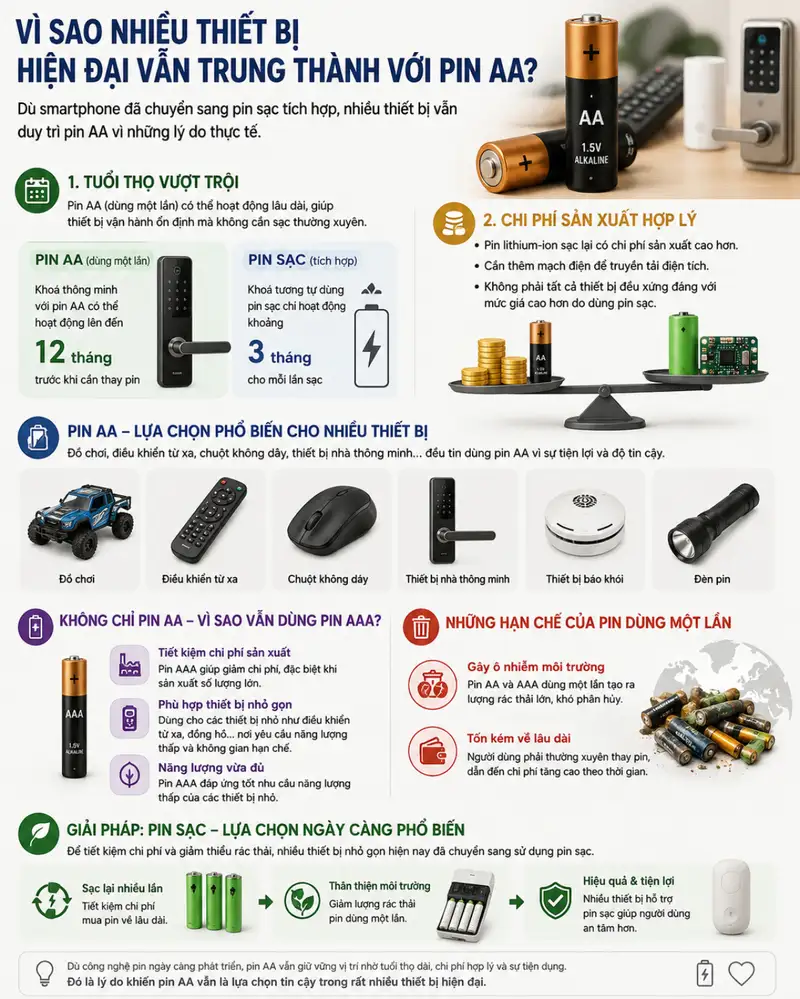
In contrast, designing a device around standard AA or AAA batteries is often simpler and more cost-effective. The manufacturer only needs to include a battery compartment and basic contacts, keeping production costs lower. This cost-saving can then be passed on to the consumer, making the final product more affordable. For many budget-conscious segments of the electronics market, this economic advantage is a deciding factor.
The Niche for AAA Batteries
While AA batteries are ubiquitous, their smaller sibling, the AAA battery, also holds a significant market share, particularly in compact electronics. The reason is simple: space and power requirements. Devices such as TV remote controls, small alarm clocks, and certain portable medical instruments have limited internal volume. AAA batteries, being physically smaller, are ideally suited for these applications where energy demand is low and miniaturization is paramount. Their size allows for sleeker, more ergonomic designs that would be impossible with larger power sources.
Furthermore, many of these small devices require very little power to operate effectively. A remote control, for instance, only draws power intermittently when a button is pressed. In such scenarios, the energy density of a large rechargeable battery would be overkill, adding unnecessary bulk and cost. AAA batteries provide an efficient, compact, and readily available power solution tailored to these specific needs, further reinforcing the market's reliance on disposable options.
Environmental Trade-offs and Consumer Costs
Despite their practical advantages, the widespread use of single-use AA and AAA batteries presents significant environmental challenges. The disposal of millions of alkaline batteries annually contributes to substantial waste streams, posing concerns about landfill accumulation and potential soil and water contamination if not properly recycled. While recycling programs exist, battery recycling rates often lag behind other materials, exacerbating the ecological footprint.
For consumers, the convenience of disposable batteries comes with a recurring financial cost. Regularly purchasing replacement batteries can add up over time, especially for households with numerous battery-powered devices. This economic strain, coupled with growing environmental awareness, has prompted some manufacturers to explore alternatives. Consequently, certain compact devices are now being designed with integrated rechargeable batteries, aiming to reduce both consumer expenditure on replacements and the overall environmental impact. This shift, while not universal, indicates a growing recognition of the need to balance convenience with sustainability in product design.
A Shifting Landscape?
While disposable batteries retain their dominance in specific niches, the broader landscape of portable power is undoubtedly evolving. The rise of USB-C charging, increasingly efficient wireless charging, and advancements in battery technology that allow for more compact and powerful rechargeable cells will continue to push the boundaries. However, this evolution is unlikely to lead to the complete eradication of AA and AAA batteries.
Instead, we are witnessing a further segmentation of the market. High-use, high-drain, and frequently interactive devices will increasingly feature integrated rechargeable power, offering a premium experience. Simultaneously, low-drain, long-life, and cost-sensitive applications will continue to find value in the simplicity and immediate utility of disposable batteries. The future points towards a diverse power ecosystem, where the choice of battery technology is meticulously matched to the specific demands and commercial realities of each device category, ensuring that both cutting-edge and time-tested solutions retain their indispensable roles.
Sources
FAQ
Why do smart devices still use AA batteries?
Many smart devices, especially those with low power requirements like smart locks or sensors, use AA batteries because they offer a significantly longer operational lifespan (up to 12 months) compared to integrated rechargeable batteries which might need charging every few months. This provides greater convenience by reducing the frequency of maintenance.
Are rechargeable batteries always better than disposable AAs?
Not necessarily. While rechargeable batteries are more environmentally friendly and cost-effective over their lifespan for frequently used, high-drain devices, disposable AAs are often preferred for devices requiring infrequent power changes and long standby times. Additionally, integrating rechargeable batteries increases manufacturing costs and design complexity for manufacturers.
What are the environmental impacts of disposable batteries?
Disposable batteries contribute significantly to landfill waste. If not properly recycled, they can release harmful chemicals into the environment, posing risks to soil and water. The sheer volume of discarded batteries annually makes their environmental footprint a notable concern.
Why are AAA batteries used instead of AA in some devices?
AAA batteries are primarily used in smaller devices such as remote controls, small clocks, and compact gadgets. Their smaller physical size allows for more compact and ergonomic device designs where space is limited and power requirements are generally low. Using AAAs helps reduce the overall bulk and weight of these devices.
Why it matters
The choice between disposable and rechargeable batteries profoundly impacts both consumers and manufacturers. For users, it dictates daily convenience, maintenance frequency, and long-term expenses, balancing initial ease with environmental and financial costs. For manufacturers, it's a critical design decision affecting production costs, product pricing, and market appeal, influencing innovation and market competitiveness. This ongoing debate shapes how devices are built, priced, and used in our modern world.
Background
The past decades have seen a surge in lithium-ion (Li-ion) battery technology, driving the rise of powerful, rechargeable devices like smartphones and laptops. This led to expectations that traditional alkaline AA/AAA batteries would become obsolete. However, while Li-ion excels in high-drain, portable electronics, disposable batteries maintained a crucial niche in devices requiring extended standby times or infrequent power replacement. This market segmentation, coupled with the existing infrastructure and standardized formats of AA/AAA cells, has prevented a complete transition, highlighting distinct advantages for different power needs.
The enduring role of AA and AAA batteries in a technologically advanced world offers a compelling insight into the nuanced nature of innovation. It underscores that 'newer' or 'more advanced' technology isn't always the optimal solution for every application. Instead, it highlights how practical utility, cost-efficiency, and established consumer behaviors can create powerful market inertia, even in the face of ostensibly superior alternatives. The continued reliance on disposable batteries for devices like smart locks or remote controls isn't a sign of stagnation, but rather a testament to a pragmatic design philosophy where the 'boring,' reliable, and cost-effective solution often wins out...
References
Editorial information
The editorial team reviews sources, adds context, and structures stories so readers can understand the news more clearly.
Article from QNEWS24H
Comments
(0)No comments yet. Be the first to share your thoughts.