13-Year-Old Earns $3,000 in 3 Days with AI-Powered Study App, Sparks Debate

- 13-year-old Shanghai student Zhu Shuhan developed an AI-powered study app, 'Zaichang', earning over $3,000 profit in three days.
- She created the app's core functions in 3-4 days by prompting AI with natural language, despite no traditional programming knowledge.
- The 'Zaichang' app functions as a 'virtual parent,' monitoring students via camera for distractions, providing voice reminders, and generating study reports.
- Her success highlights AI's role in democratizing software development but also sparks debate on essential legal and operational support for youth ventures.
A remarkable achievement by a 13-year-old student from Shanghai is reshaping perceptions of who can innovate in the age of artificial intelligence. Zhu Shuhan, an eighth-grader with no prior programming experience, developed an AI-powered study application that netted over $3,000 in just three days. Her story underscores a profound shift in how technology can be created, empowering individuals with compelling ideas to bypass traditional technical barriers, yet it also casts a spotlight on the often-overlooked practicalities of launching and sustaining a digital product.
Quick summary
- A 13-year-old Shanghai student, Zhu Shuhan, developed an AI-powered study supervision app, 'Zaichang,' earning over $3,000 profit in three days.
- She created the core functionality of the app in just 3-4 days by using natural language to prompt an AI model to generate code, despite having no traditional programming skills.
- The 'Zaichang' app uses a 'virtual parent' concept, monitoring students via camera for distractions and providing voice reminders and study reports.
- Her success, alongside other young AI entrepreneurs in China, highlights AI's role in democratizing software development, though it also sparks debate regarding the essential legal and operational support systems for such ventures.
Why it matters
The success of Zhu Shuhan's 'Zaichang' app holds significant implications for several sectors, from education to technology and even youth policy. Firstly, it offers a tangible example of how artificial intelligence is lowering the entry barrier for software development, shifting the emphasis from coding proficiency to conceptual thinking and problem-solving. This paradigm shift could redefine educational priorities, pushing for curricula that foster creativity and critical thinking alongside basic AI literacy, rather than rote programming.
For parents and educators, 'Zaichang' presents an innovative, albeit controversial, approach to student supervision. Its design addresses a common challenge in home-based learning – maintaining focus without intrusive parental presence. This model could inspire new tools that balance productivity with privacy, resonating with a generation accustomed to digital independence. Furthermore, Zhu Shuhan's rapid financial success serves as a powerful motivator for young aspiring entrepreneurs, demonstrating that significant impact and income are achievable without extensive formal training.
Beyond the immediate financial gain, her story amplifies discussions around the regulatory and infrastructural support needed for nascent digital businesses. The community's skepticism regarding the ease of navigating legal, copyright, payment gateway, and server cost hurdles highlights a critical gap. As more young innovators emerge with AI-powered ideas, governments and industry leaders will need to consider how to create frameworks that support innovation while ensuring compliance and sustainability, preventing promising ventures from faltering due to administrative complexities.
Background
The narrative of young innovators leveraging technology is not entirely new, but the rapid ascent of AI has introduced a distinct acceleration to this trend. Zhu Shuhan's journey began with a personal challenge: finding a subtle yet effective way to maintain focus during her studies without constant parental oversight. This common adolescent desire for autonomy within a structured learning environment became the genesis of her application idea. Recognizing the limitations of traditional supervision, she sought a digital solution.
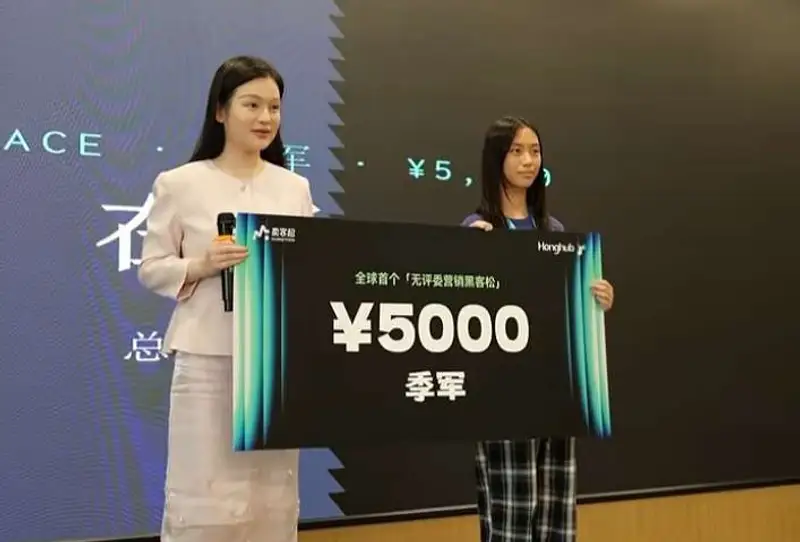
Her creation, 'Zaichang' (meaning 'at the scene' or 'on site'), emerged from a software innovation competition held in Hangzhou from August 21-23. Notably, this contest eschewed traditional judging panels and scorecards; success was solely measured by the number of actual users willing to purchase the product. This market-driven approach to evaluation directly rewarded practical utility and user appeal, making Zhu Shuhan's sales figures a clear indicator of her product's impact.
What truly sets her story apart is her methodological approach. Having only been exposed to AI technology for about a year and lacking any programming background, Zhu Shuhan circumvented the steep learning curve of coding by employing natural language processing. She simply described her vision to an AI model, which then generated the necessary source code. This 'idea-to-code' pipeline, completed within an astonishing three to four days for the core functionalities, exemplifies AI's power to democratize development, turning abstract concepts into tangible products with unprecedented speed and efficiency.

Her experience is not isolated. Across China, a cohort of young individuals is increasingly turning to AI to realize entrepreneurial ambitions. Lu Sitong, also 13, has reportedly developed over 100 AI applications, while 14-year-old Jiang Muran garnered significant awards for his ClawFounder project. These instances collectively point to a growing movement where AI is not merely a tool for established tech giants, but a accessible medium for young minds to translate creative thoughts into real-world applications, fundamentally altering the landscape of innovation.
Qnews24h insight
Zhu Shuhan's success, while inspiring, offers a dual perspective on the future of AI-driven innovation. On one hand, it heralds an era where the primary bottleneck to technological creation is no longer technical expertise, but rather the quality and relevance of an idea itself. AI tools are increasingly acting as powerful enablers, flattening the skill curve and allowing diverse voices to contribute to the digital landscape. This shift could lead to an explosion of novel solutions, tailored to specific, often niche, needs by those who intimately understand them—like a student designing a study aid.
However, the skepticism voiced by the online community regarding the practicalities of her venture is a crucial counterbalance. The journey from a functional prototype to a sustainable, legally compliant, and financially viable product involves a complex web of regulatory hurdles, intellectual property rights, payment processing, and infrastructure management (like server costs). These are aspects that typically require significant adult guidance, legal counsel, and financial backing. While AI democratizes creation, it does not, at present, democratize the operational infrastructure necessary for a legitimate business.
Therefore, the real insight here is that while AI empowers individual creativity to an unprecedented degree, the ecosystem for nurturing and commercializing these ideas still largely operates on traditional principles. For these young AI-powered entrepreneurs to truly thrive, society needs to develop equally innovative support systems that bridge the gap between AI-assisted ideation and the often-mundane, yet critical, requirements of business operation. Without such support, many brilliant AI-generated ideas from young minds might remain fascinating experiments rather than sustainable contributions to the market, highlighting a new form of digital divide: not just access to AI, but access to the scaffolding needed to turn AI-powered concepts into reality.
The 'Zaichang' Application: A Closer Look
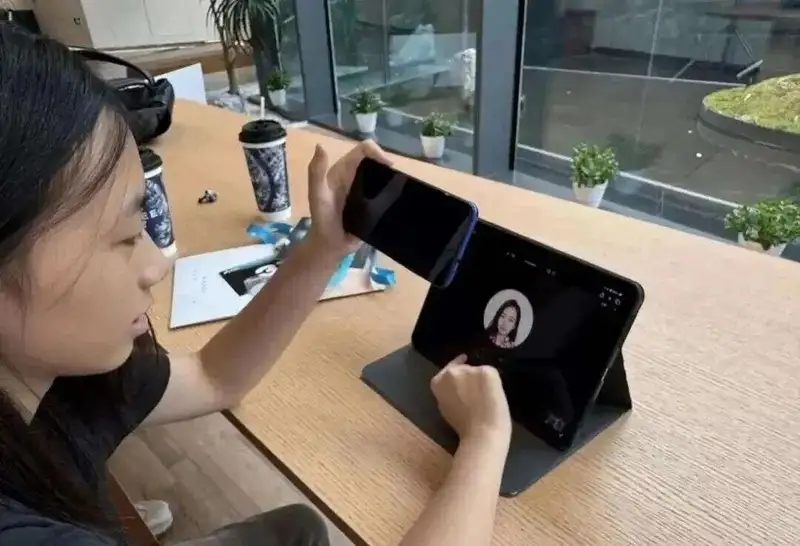
At the heart of Zhu Shuhan's achievement is her application, 'Zaichang,' a name that loosely translates to 'at the scene' or 'on-site.' Designed as a virtual tutor, its primary function is to provide unobtrusive study supervision. Users initiate the process by uploading a photograph of a parent, creating a 'virtual parent' persona within the application. This virtual entity then leverages the device's camera to monitor the student's learning environment.
The system is programmed to detect common distractions: if it identifies the student using their phone when they shouldn't be, or if they leave their designated study area, 'Zaichang' automatically issues gentle voice reminders. Crucially, it doesn't just nag; after each study session, the application compiles and presents a comprehensive report, offering insights into the student's focus levels and adherence to study routines. This data-driven feedback mechanism provides a structured way for students and parents to track progress without constant direct intervention, aligning with Zhu Shuhan's goal of fostering a less intrusive form of monitoring.
AI's Role in Lowering Technical Barriers
The most compelling aspect of Zhu Shuhan's story is the method of her app's creation. Her admission of not knowing how to program and only having a year's acquaintance with AI technology shatters conventional notions of what it takes to develop software. Instead of writing lines of code, she utilized natural language to articulate her ideas to an AI model, which then took on the complex task of generating the underlying programming code.
This approach signifies a monumental shift in software development. Previously, a creative idea would hit a wall if the originator lacked the highly specialized skill of coding. Now, AI acts as an interpreter, translating human concepts into machine instructions, thereby significantly lowering the technical barrier to entry. This empowers a new generation of 'AI-native' creators, whose primary skill lies in imaginative problem-solving and effective communication with AI tools, rather than mastery of programming syntax. The anecdote of completing the core functionality in just 3-4 days further underscores AI's efficiency in accelerating the development cycle.
The Broader Ecosystem of Young AI Innovators
Zhu Shuhan's achievement is not an isolated incident but rather a microcosm of a larger trend emerging in China. Stories like hers are increasingly common, signaling a burgeoning ecosystem where young individuals are leveraging AI to explore entrepreneurial paths. The mention of Lu Sitong, another 13-year-old, who has crafted over a hundred AI applications, and Jiang Muran, 14, who won accolades for his ClawFounder project, illustrate that this is a widespread phenomenon. These examples collectively demonstrate that AI is not just a tool for learning but a platform for early-stage entrepreneurship.
This phenomenon prompts a reconsideration of what 'early career' might mean for future generations. For many, formal education and apprenticeships are the traditional routes. However, AI is enabling a path where direct market engagement and product creation can begin much earlier. This shift could cultivate a generation of innovators with practical experience in product development and market validation long before they enter higher education or the traditional workforce, potentially reshaping future economies and labor markets.
Navigating the Unseen Challenges: A Critical Debate
Despite the inspiring narrative of innovation, the online community has raised pertinent questions about the practical realities of launching and maintaining such a venture. The creation of the 'Zaichang' app's core functionality with AI is one thing; navigating the complex landscape of legal and operational requirements for a public-facing software product is another entirely. Issues such as ICP (Internet Content Provider) registration, securing software copyrights, establishing reliable payment gateways, and managing ongoing server costs are formidable challenges for any startup, let alone one spearheaded by a 13-year-old.

These questions highlight a critical gap between the technical ease of AI-powered creation and the persistent complexities of legal and business infrastructure. While AI democratizes the 'making' process, the 'selling' and 'sustaining' aspects remain largely undemocratized, often requiring significant adult support, legal expertise, and financial resources. This ongoing debate is essential, as it prevents an oversimplified view of AI entrepreneurship and encourages a more holistic discussion about the support systems needed to ensure these youthful innovations can transition from impressive personal projects to viable, compliant, and impactful businesses.
Sources
FAQ
Q1: How did a 13-year-old develop an app and earn money without knowing how to code?
A1: Zhu Shuhan utilized artificial intelligence tools. Instead of writing traditional programming code herself, she used natural language to describe her ideas and the desired functionalities of her app to an AI model. This AI then generated the necessary code, effectively translating her conceptual vision into a functional application within just a few days.
Q2: What exactly does Zhu Shuhan's 'Zaichang' app do?
A2: The 'Zaichang' app is a study supervision tool. Users upload a photo of a parent to create a 'virtual parent' within the app. Using the device's camera, the app monitors the student's study behavior. If it detects distractions like phone usage or the student leaving their desk, it provides voice reminders. After each session, it generates a report summarizing the student's focus and adherence to study rules.
Q3: What challenges might young AI entrepreneurs face, even with powerful AI tools?
A3: While AI lowers the technical barrier to creating software, young entrepreneurs still face significant practical and legal challenges. These can include navigating legal requirements like ICP registration and software copyright, setting up payment gateways, managing ongoing server and maintenance costs, and understanding business operations. These complexities often require substantial adult guidance, legal expertise, and financial resources, which are not directly provided by AI development tools.
Q4: Does this trend mean traditional programming skills will become obsolete?
A4: Not necessarily. While AI democratizes software creation by enabling non-coders to develop applications, traditional programming skills remain crucial for complex systems, debugging AI-generated code, optimizing performance, and building the AI tools themselves. The shift suggests that future skillsets might emphasize problem-solving, creative ideation, and effective prompting of AI, alongside or instead of deep coding mastery, for certain types of applications.
Why it matters
The success of 'Zaichang' offers a powerful case study for the transformative impact of AI on education and entrepreneurship. It signals a shift where innovative ideas, rather than deep coding expertise, become the primary currency of technological creation, potentially reshaping future curricula and skill development. For families, it introduces new models for academic supervision that balance oversight with student autonomy. Crucially, the public's skepticism about the venture's operational sustainability underscores a broader challenge: how societies must adapt legal and logistical frameworks to support a new generation of AI-enabled creators, ensuring their brilliant ideas can thrive...
Background
The genesis of 'Zaichang' lies in Zhu Shuhan's personal quest for an effective, yet unobtrusive, study aid. Her solution was a direct response to the common challenge faced by students and parents in maintaining focus during study sessions. The app gained prominence through a unique software innovation competition in Hangzhou, where success was judged not by a panel, but purely by actual user purchases—a market-driven validation that saw her app sell 90 copies. Remarkably, Zhu Shuhan, with only a year's exposure to AI and no programming background, utilized natural language prompts to have an AI model generate the core code for her application in just days. This pioneering approach is part...
While Zhu Shuhan's achievement undeniably showcases AI's power to democratize technical creation, it simultaneously illuminates a crucial distinction: AI democratizes *ideation and rudimentary development*, but not necessarily *sustainable business operation*. Her story empowers aspiring young minds by proving that a compelling idea, effectively communicated to AI, can manifest as a functional product. However, the subsequent public debate regarding legal registrations, copyright, payment gateways, and server costs points to a persistent reality: the infrastructure of commerce and law remains complex and traditional. The true 'insight' lies in recognizing that for this burgeoning wave of...
References
Editorial information
The editorial team reviews sources, adds context, and structures stories so readers can understand the news more clearly.
Article from QNEWS24H
Comments
(0)No comments yet. Be the first to share your thoughts.